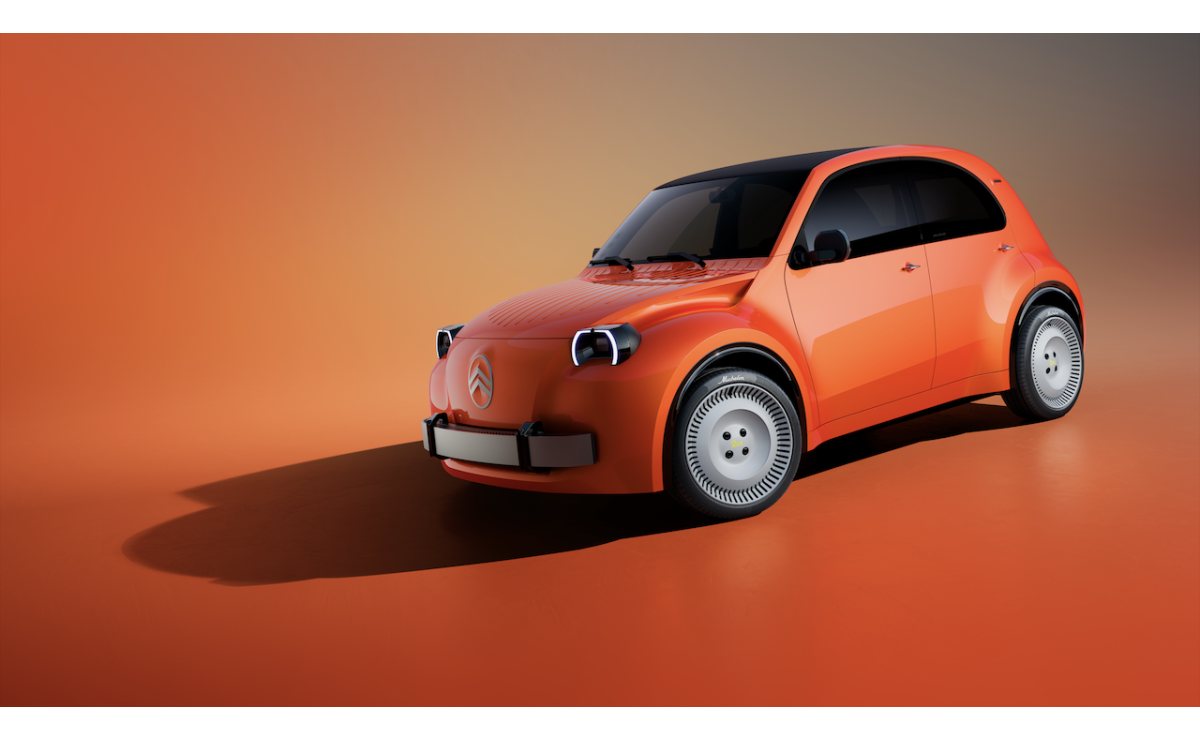
A few lines are enough to bring the Duck to mind: an arched roof, prominent wings and a friendly face. The 2 CV Concept unveiled in Paris now brings that heritage back by name. Yet Citroën has returned to the theme before. The C3, for example, showed much earlier how a familiar outline could be turned into a contemporary small car.
What does the new 2 CV Concept promise?
The electric study shown in Paris in 2026 previews a future model intended to sit between Ami and C3. The figures below describe the manufacturer’s targets. They set a direction for development; they do not amount to a final Hungarian price list or an orderable production car. Citroën, 12 October 2026
- Length
- 3.76 metres
- Target weight
- Around 1 tonne
- Intended introduction
- By 2028
- Target starting price
- Around €15,000
- Planned production
- Europe
Separate round headlamps, a curved bonnet, an arched roof and a fabric opening roof directly recall the original. Inside, the study features a removable front bench, a portable Radioën radio and basket-like storage. Familiarity extends to how the car can be used: a stop can become a picnic. Official design and interior presentation
The original Duck began with a practical question
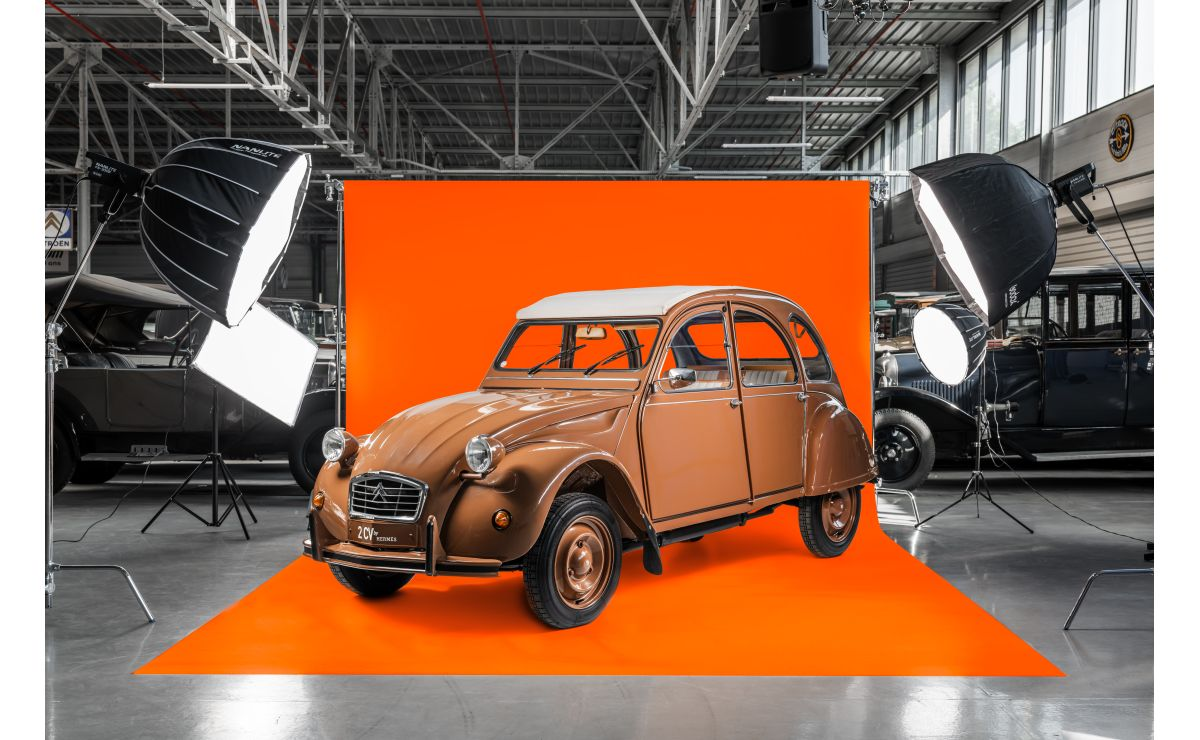
How could people own a car when existing choices were too expensive and too complicated? That question underpinned the TPV, or Toute Petite Voiture, programme launched in 1936. In Citroën’s account, a memorable requirement was that eggs should survive travel over rough ground. War delayed the unveiling; the 2CV finally appeared before the Paris public on 7 October 1948, with production following in 1949. Citroën’s history of the 2CV
The early car’s 375 cc air-cooled twin produced just 9 hp. Front-wheel drive, supple suspension and straightforward construction served everyday needs. That is also a useful way to read its shape: a tall cabin, a light roof and simple panels solved practical problems before becoming objects of nostalgia. Citroën on the original engineering brief
The 2CV name referred to its French tax rating, not an output of two actual horsepower. In Hungary it is affectionately called Kacsa, or Duck; other countries developed their own nicknames. Production ended at Mangualde in Portugal on 27 July 1990. Citroën records 5,114,969 examples, including vans. DPMA on the name; Citroën production figures
The family: direct developments and mechanical relatives
It is easy to draw the Duck’s family tree too broadly. A similar roofline, shared mechanical foundations and a belief in inexpensive transport are three different connections. The early derivatives form a genuine product family; among later tributes, the more useful question is which details their designers chose to revisit.
| Model | Introduction | Connection to the Duck |
|---|---|---|
| 2CV Fourgonnette | 1951 | The Duck’s commercial derivative: familiar front end and a box-shaped load area. |
| Dyane / Dyane 6 | 1967 / 1968 | A modernisation of the 2CV idea, with more angular bodywork, integrated headlamps and a large tailgate. |
| Acadiane | 1978 | A Dyane front end continuing the load-body concept of the 2CV AK 400. |
Citroën documents the Dyane’s development in its anniversary retrospective and the van lineage in its Acadiane history.
The Ami 6, introduced in 1961, and later the Ami 8 also belong in the story, but the Ami 6’s reverse-rake rear window was a distinct design idea. Its inherited engineering and ride comfort provide the important 2CV connection. The Méhari of 1968 used Dyane 6 foundations and an ABS plastic body: an open-air branch of the family with a very different silhouette. Ami 6; Méhari
The C3 brought the Duck’s roofline back to everyday traffic
The first C3 is one of the clearest modern examples. Citroën’s own archive links the rounded, generously glazed C3 Lumière concept of 1998 to the 2CV. This direction led to the first C3, unveiled in 2001 and launched in 2002. Its tall, arched roof and rounded proportions explain the resemblance. Citroën Origins on the C3’s origins; C3 and Pluriel launch chronology
The second C3, introduced in 2009, continued the rounded overall character. This is best understood as design continuity: the C3 badge alone does not prove that every subsequent generation reworked the 2CV’s shape. For the first C3 and its precursor, the manufacturer’s historical connection is explicit. The C3’s design evolution – AutoWeek
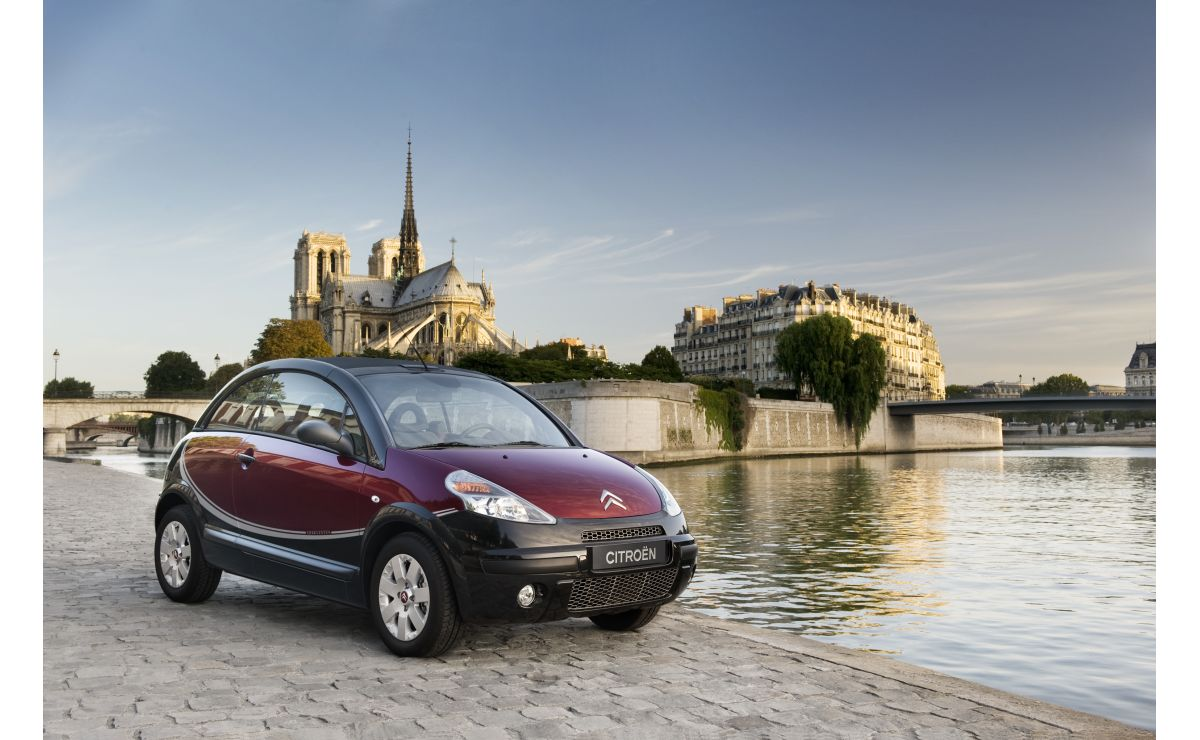
The C3 Pluriel arrived in 2003, putting open-air driving and body configurability centre stage. The connection became particularly explicit with the Charleston edition in 2008: its burgundy-and-black treatment paid tribute to the 2CV Charleston of 1980. The Pluriel therefore revisited both the experience of travelling under an open sky and a recognisable historical colour scheme. Citroën’s C3 Pluriel history; Original 2008 Charleston brochure
Revolte, Berlingo and Ami: three different returns
The Revolte of 2009 made a more conspicuous return to the Duck, reinterpreting its curved bonnet, roofline and pronounced wings in a low, elegant study. The plug-in hybrid city car also brought luxury into the equation. The Survolt of 2010, developed from that direction, forms a sporting offshoot: its connection runs through Revolte, so it should not be treated as an equally direct Duck successor. Original Revolte manufacturer release reproduced by Autoblog; Citroën on Revolte and Survolt
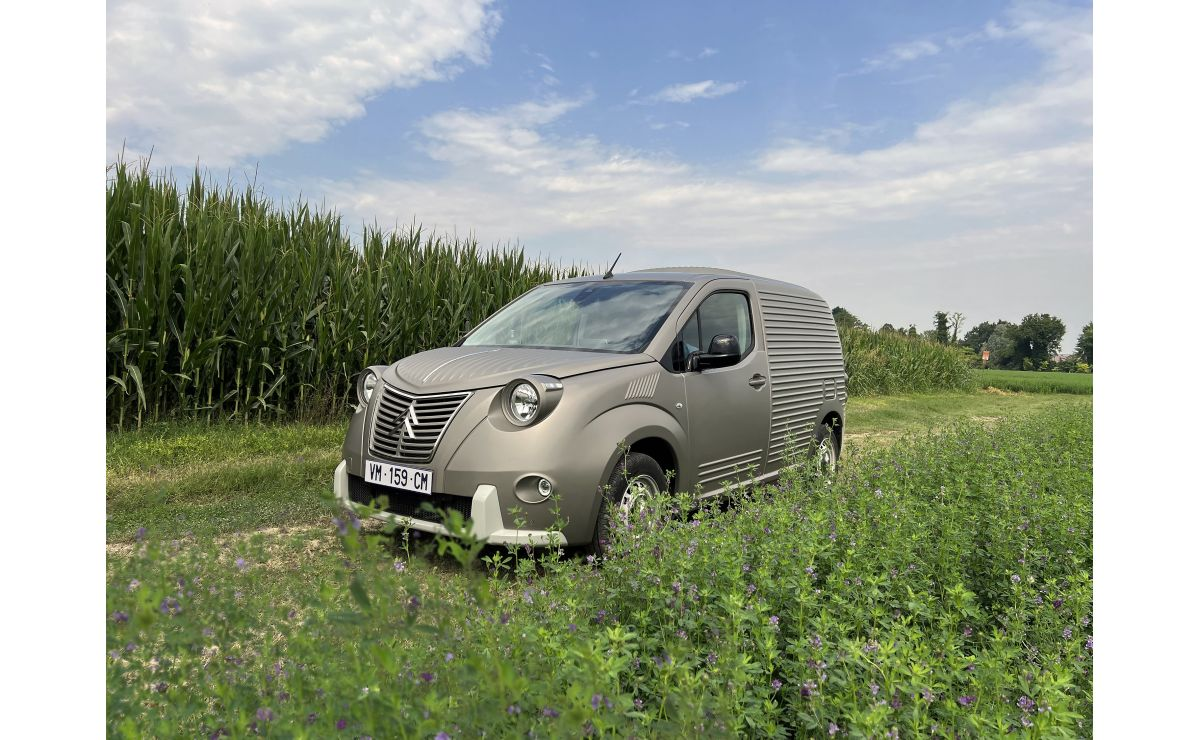
The Berlingo 2CV Fourgonnette by Caselani, presented in 2022, is a particularly tangible tribute. Working with Citroën, the Italian coachbuilder gave a modern Berlingo round headlamps, a rounded nose and corrugated surfaces. It is an officially licensed Caselani conversion; the standard Berlingo should not automatically be described as sharing that design. Citroën and Caselani’s announcement
Today’s electric Ami is a vehicle on a different scale, but it also carries deliberate references. Citroën explicitly links the wing striations of the update revealed in 2024 for 2025 to the 2CV. Ami Buggy Vision combined this motif with upward-opening windows and round yellow lamps. The resemblance lies in selected details; the box-shaped Ami does not reproduce the classic Duck’s entire silhouette. Citroën: new Ami and Ami Buggy Vision
Where the idea mattered more than the outline
The C1 Airscape, with its opening roof, and the electric E-Mehari, looking back to the original Méhari, connect to the open-air sense of freedom. Citroën’s heritage site names them in that context. The Oli concept of 2022 pursued simplicity and lower weight through an angular design. These relationships help explain the brand, but do not establish that those cars reused the 2CV’s body shape. Citroën Origins; E-Mehari; Oli
There is another new arrival in the Paris story: the 2 CV Fourgonnette Concept revisits the proportions of the old van. Citroën describes it as a separate design exercise and explicitly says that it does not preview a production model in the short term. The passenger car’s launch target should therefore not automatically be extended to the van. Official status of the Fourgonnette Concept
The old name will have to mean something on the price list
Our editorial reading is that the most interesting question concerns whether recognisable styling will be matched by simplicity in use. An arched roof and round lamps can already work on a show stand. Affordability, repairability and everyday usefulness will have to prove themselves in the production car. The C3, Pluriel and other tributes demonstrate how many ways there are to remember an old car. The next meaningful step would be for a new 2CV to appeal again to people who simply want sensible transport at a sensible price.
This article uses sources checked through 14 October 2026. Launch and price targets may change. The historical overview distinguishes manufacturer-documented design references, mechanical relationships and editorial interpretation.
Sources22
- Citroën – 2CV Concept, gyári bemutató / official reveal (2026-10-12)
- Citroën – 2 CV Concept: forma és utastér / design and interior (2026-10-11)
- Citroën – 75 years of the 2CV (2023-09-25)
- Citroën – La 2CV, symbole de liberté (2019-07-31)
- DPMA – The 2CV: a design milestone
- Citroën – El Citroën Dyane cumple 50 años (2017-08-16)
- Citroën – 100 Jahre Citroën: Acadiane (2019-10-28)
- Citroën – 60th anniversary of Ami 6 (2021-04-21)
- Citroën – Méhari: 55 ans (2023-05-16)
- Citroën Origins – C3 Lumière and the first C3
- AutoWeek – C3 Concept: design continuity into the second C3 (2012)
- Citroën – 20 years of the C3 Pluriel (2023-06-15)
- Citroën – REVOLTe launch press release, reproduced by Autoblog (2009-09-16)
- Citroën – Decenni di creazioni visionarie: Revolte and Survolt (2020)
- Citroën – Berlingo 2CV Fourgonnette by Caselani (2022-09-23)
- Citroën – New Ami and Ami Buggy Vision (2024-10-14)
- Citroën – 2 CV Fourgonnette Concept (2026-10-12)
- Citroën Origins – 2CV: C1 Airscape and E-Mehari connections
- Citroën – E-Mehari: a free spirit (2015-12-07)
- Citroën – Oli: design and simplicity (2022-09-29)
- Citroën C3 Pluriel Charleston – original September 2008 brochure, archived by C3Pluriel.fr
- Citroën 2 CV Concept — official press release and image (2026-10-11)