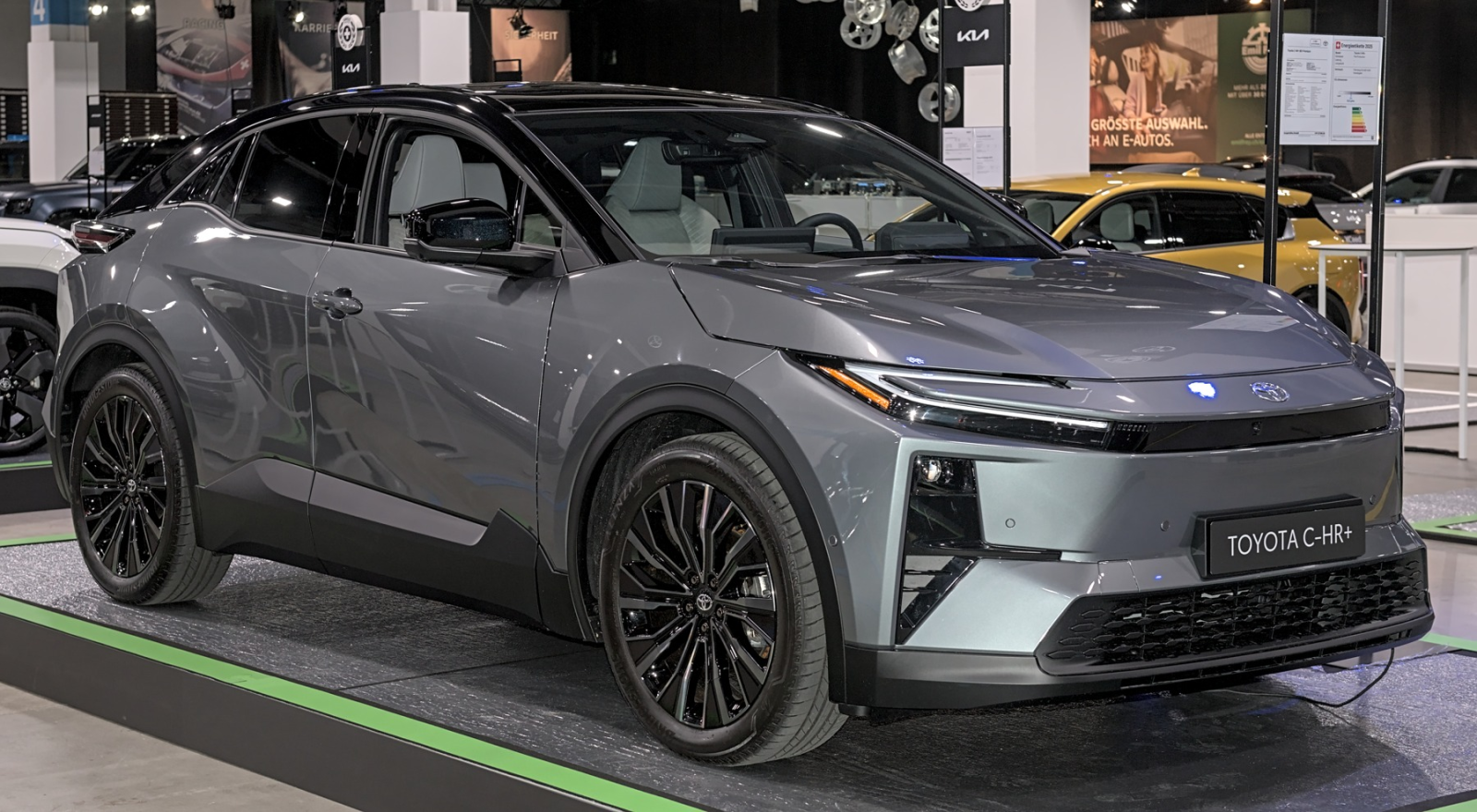
The Toyota C-HR+ inherits a familiar name and a demanding brief. Hybrid C-HR buyers have come to expect distinctive styling, easy everyday driving and the reassurance of an established manufacturer. The electric newcomer must deliver those benefits through a different ownership routine. It has credible ingredients for success, but the hybrid’s reputation is a starting point, not proof of the EV’s long-term reliability. This review separates the established record from what a recently introduced model can actually demonstrate.
This is a source-based assessment checked on 24 October 2026, rather than an EVTopic road test. European introduction began in March 2026. Specifications, trim names and delivery dates still need to be checked country by country; a European launch does not mean every version is offered everywhere. European launch information.
The legacy: two hybrid generations, one recognisable idea
Launched in 2016, the original C-HR gave Toyota’s hybrid technology a much bolder silhouette. Its 1.8-litre hybrid was later joined by a 2.0-litre option. That generation now matters chiefly as a used-car proposition. A strong model reputation cannot replace inspection of an individual car, its maintenance history and outstanding repairs. Toyota’s first-generation archive.
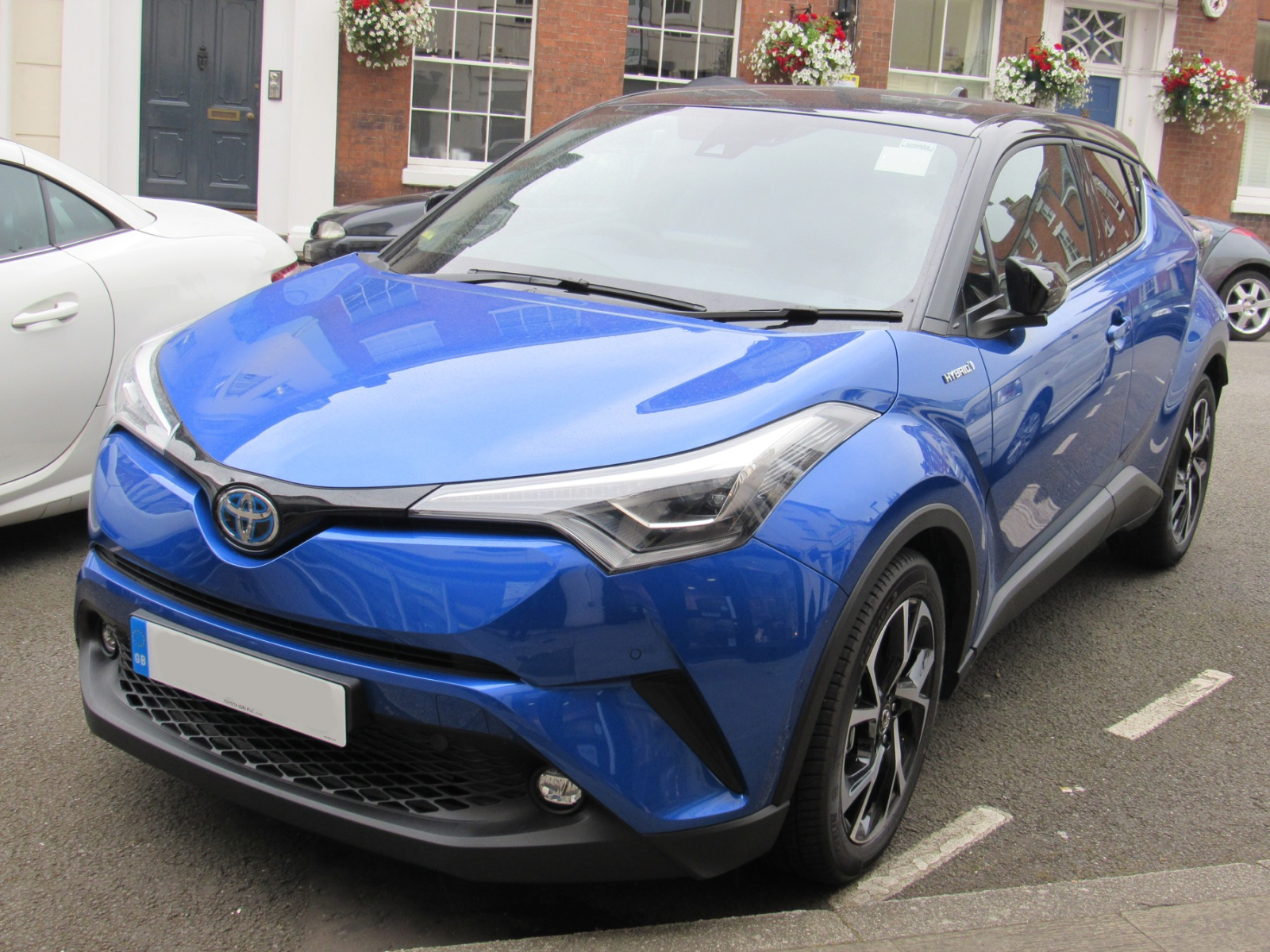
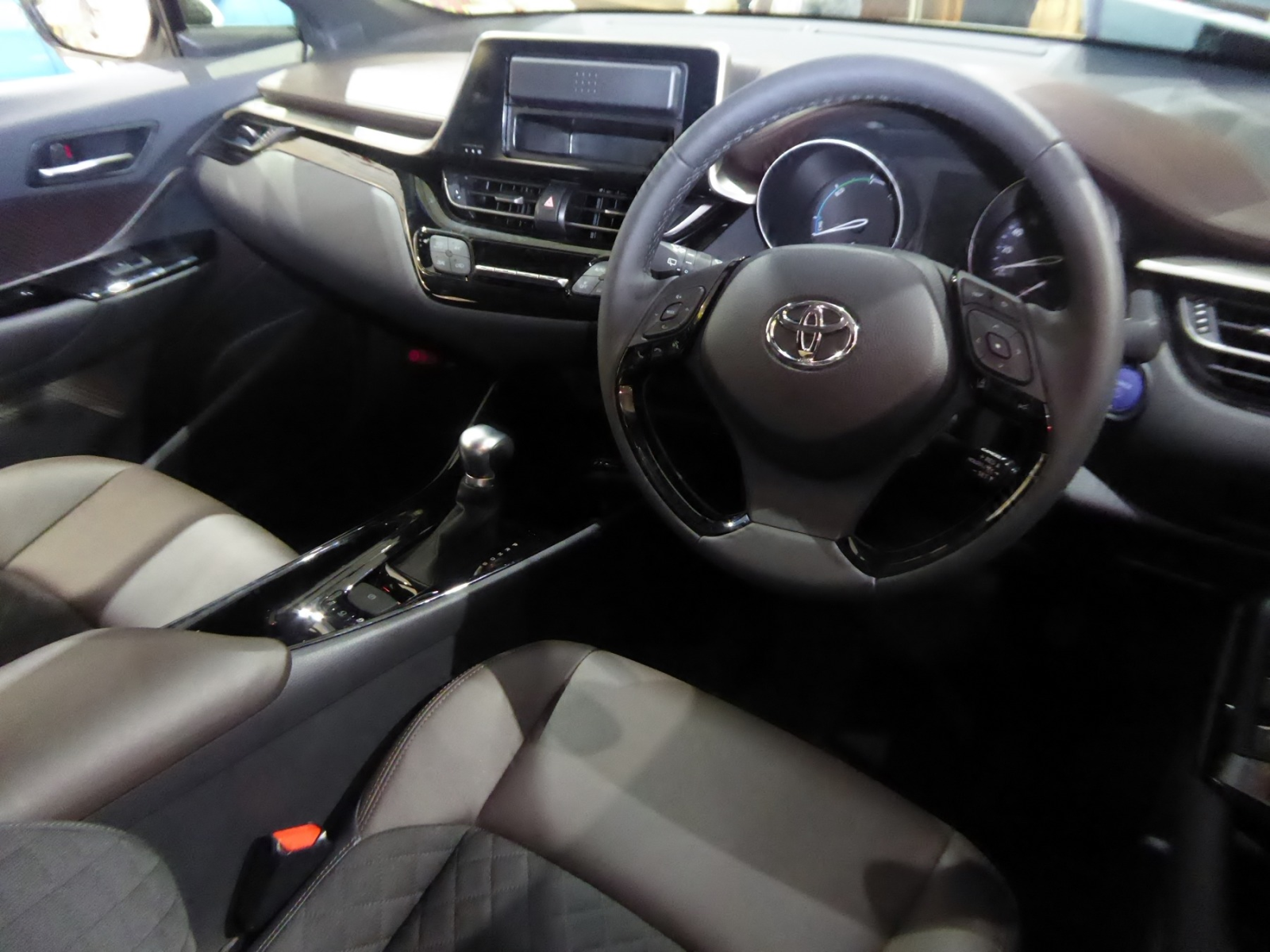
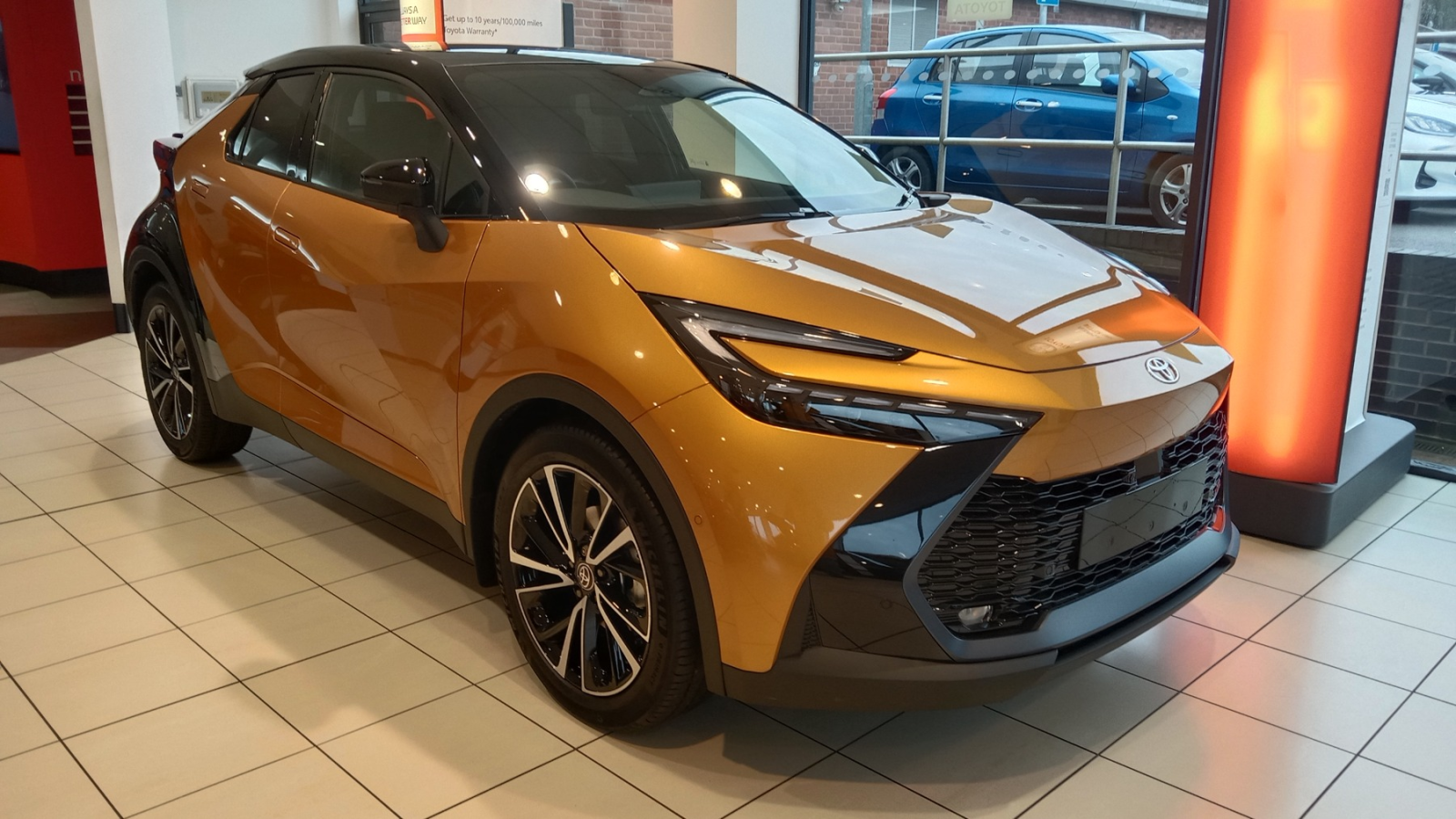
The second generation, unveiled in 2023, retained the expressive shape while adding a plug-in hybrid alongside conventional full hybrids. A HEV needs no external charging; a PHEV rewards regular plugging in. Toyota quotes up to 66 km of combined WLTP electric range for the European plug-in version. That can cover many commutes, but it is a different proposition from a battery-electric car designed to travel hundreds of kilometres between charges. Current hybrid family; European PHEV range example, Hungary.
| Version | Energy supply | Best-fit use case |
|---|---|---|
| C-HR HEV, both generations | Petrol; the car manages its small hybrid battery | Drivers without dependable charging access |
| Second-generation C-HR PHEV | Petrol plus external electricity | Frequent electric commutes with petrol flexibility on longer journeys |
| C-HR+ BEV | External electricity, no petrol engine | Drivers with a workable routine for daily and long-distance charging |
Popularity is measurable. Toyota’s June 2026 anniversary announcement put cumulative European C-HR sales above 1.2 million. Toyota Motor Europe reported 143,166 C-HRs sold in 2025. Those figures establish a substantial customer base, although the reporting region extends beyond the EU27 and does not establish an EU segment-leading ranking. Ten-year retrospective; 2025 sales figures.
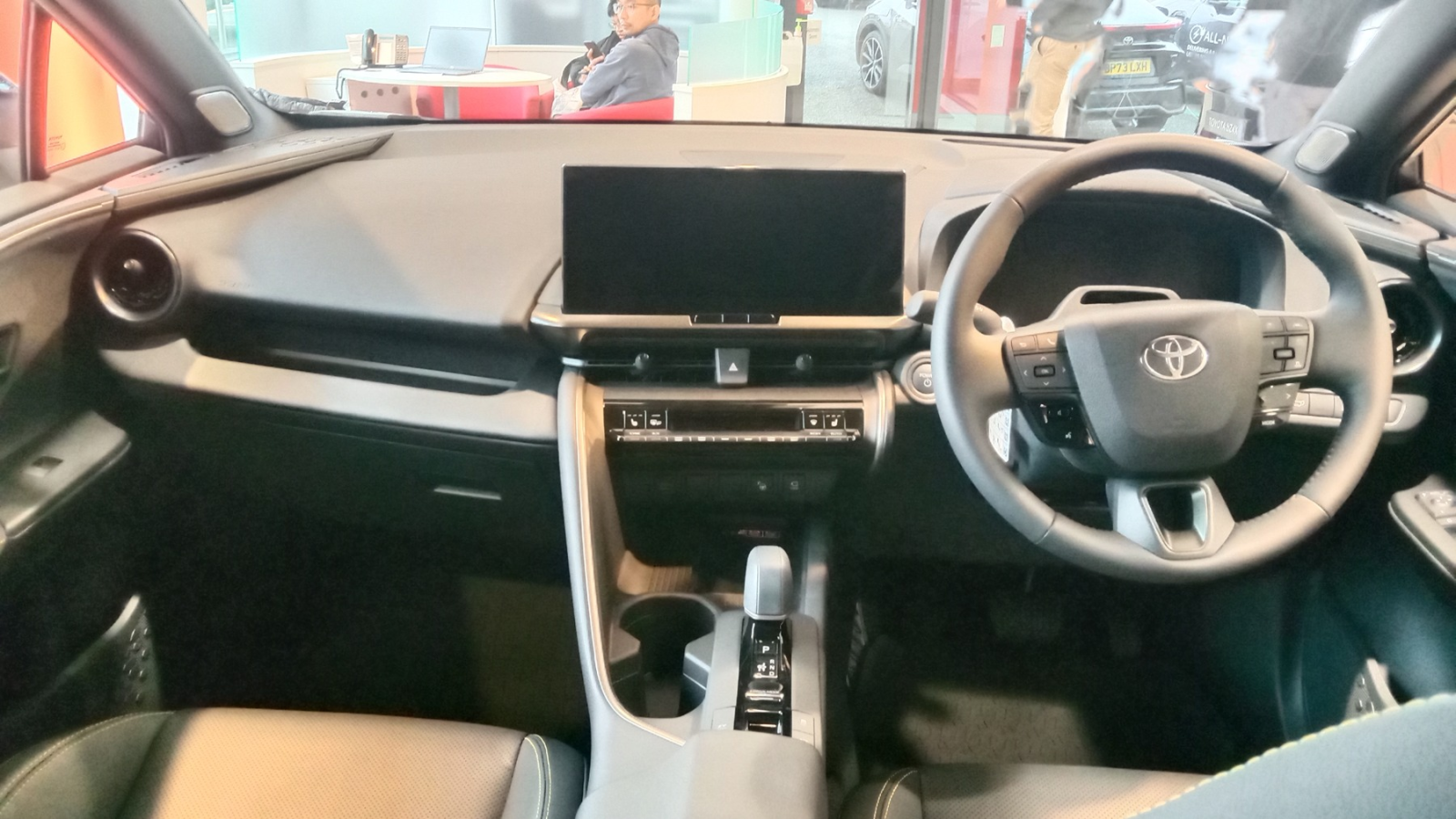
Reliability: a strong record with a significant qualification
The 2026 OCU survey with European partner organisations drew on 85,590 drivers. It placed the 2016–2023 C-HR 1.8 among models scoring at least 96 points for reliability. This supports the reputation of that particular version. It is a survey score, not a claim that 96 per cent of cars never developed a fault, and it cannot be transferred to the second generation or the C-HR+. OCU’s 2026 findings.
ADAC’s 2026 statistics, based on 2025 roadside breakdowns, nevertheless found poor results for 2020–2022 C-HRs, principally involving the 12-volt battery. This is distinct from traction-battery failure. Toyota says larger auxiliary batteries entered C-HR production in February 2026; the older registration cohorts in the statistics cannot yet demonstrate the effect. ADAC results and Toyota’s response.
These findings can coexist: owner-reported faults and roadside immobilisation measure different experiences. A durable hybrid drivetrain can sit alongside an inconvenient starting problem. The defensible conclusion is that the earlier 1.8 has strong consumer-survey evidence, with a breakdown-related caveat. Neither a brand badge nor one favourable ranking settles every aspect of dependability.
What makes the C-HR+ a separate car?
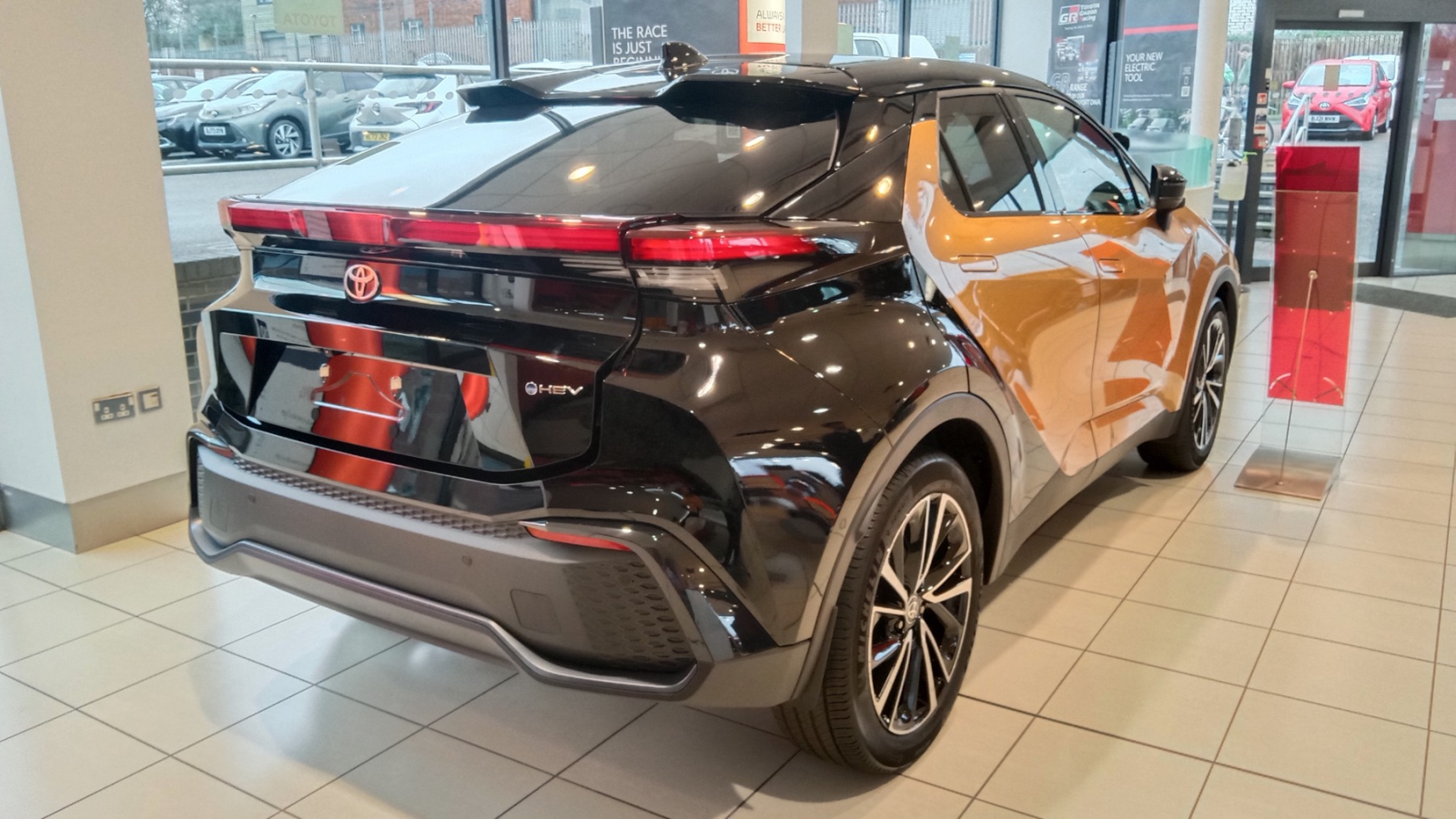
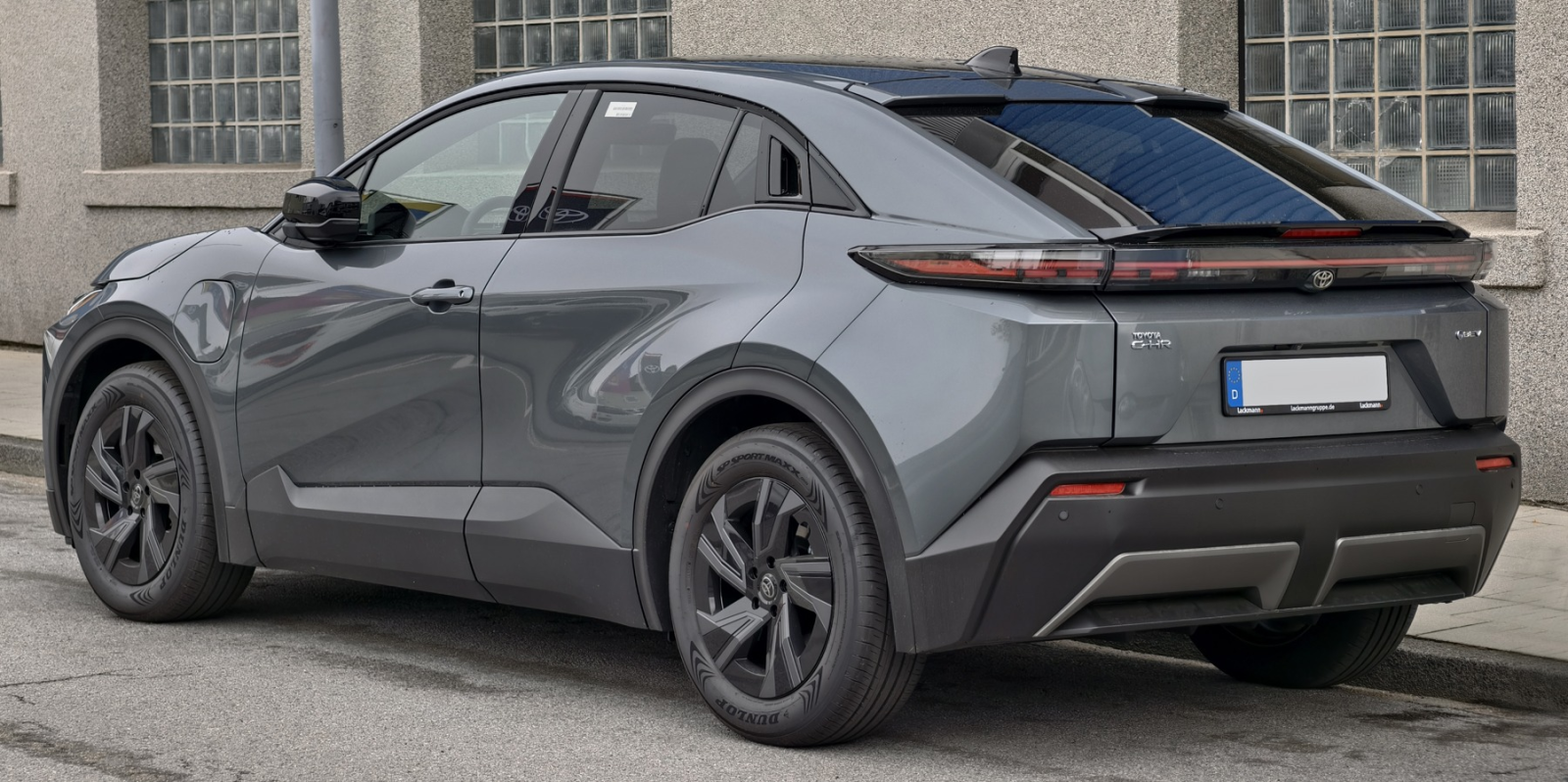
The plus sign denotes more than a hybrid with its engine removed. The C-HR+ uses Toyota’s dedicated e-TNGA electric architecture and is technically related to the bZ4X. It has its own packaging and ownership demands. Removing the combustion engine eliminates its associated systems, while charging electronics, battery thermal management and software become central to daily usability. C-HR+ technical background.
Toyota quotes a length of 4.53 metres, a 2.75-metre wheelbase and 416 litres of VDA luggage capacity. Those are useful family-car dimensions, but a volume figure cannot tell you whether a particular pushchair fits or whether the loading lip suits you. The 77 kWh front-wheel-drive model is rated for a 750 kg braked trailer; do not transfer that rating to the small-battery entry version. Dimensions and 77 kWh FWD specifications.
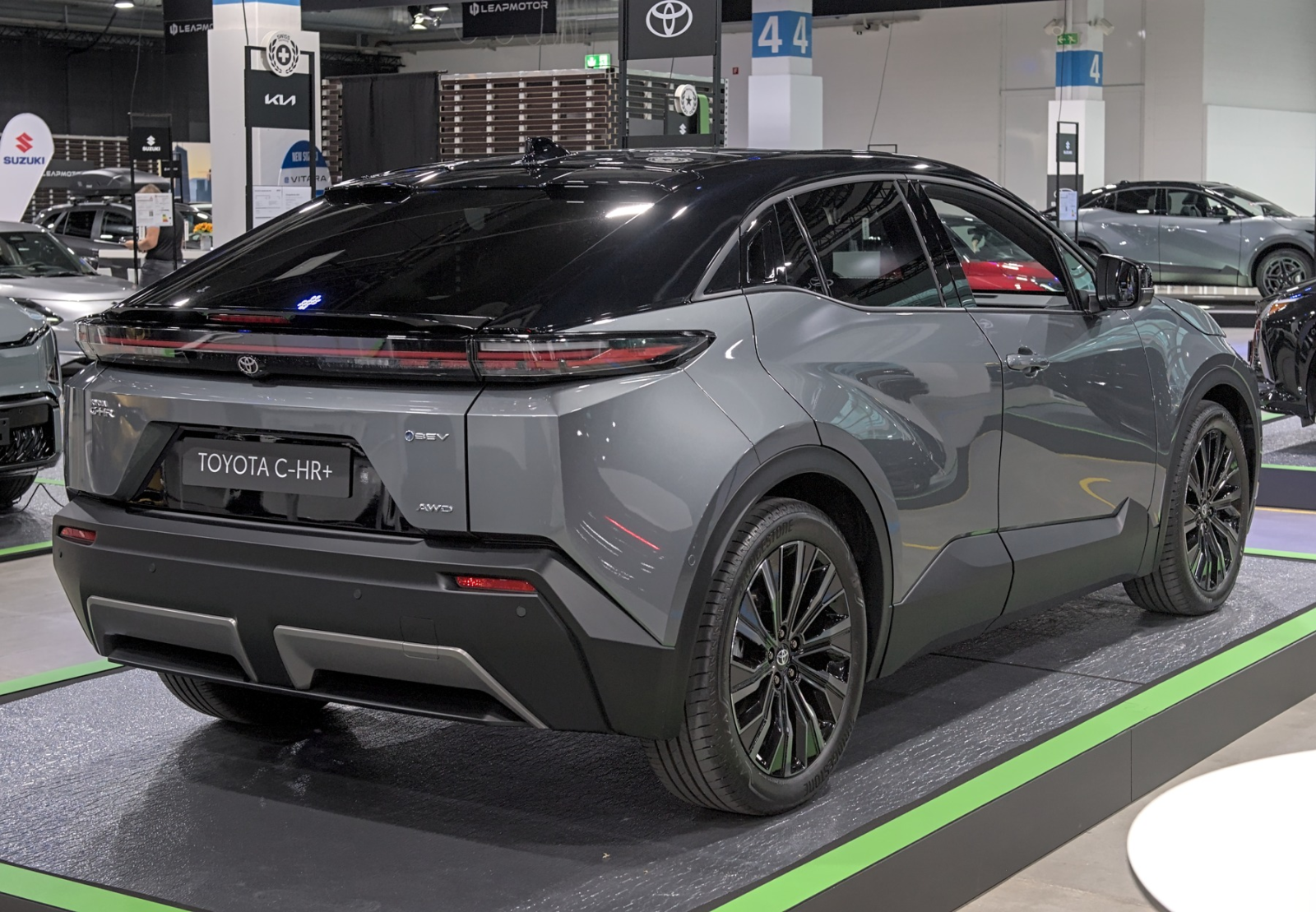
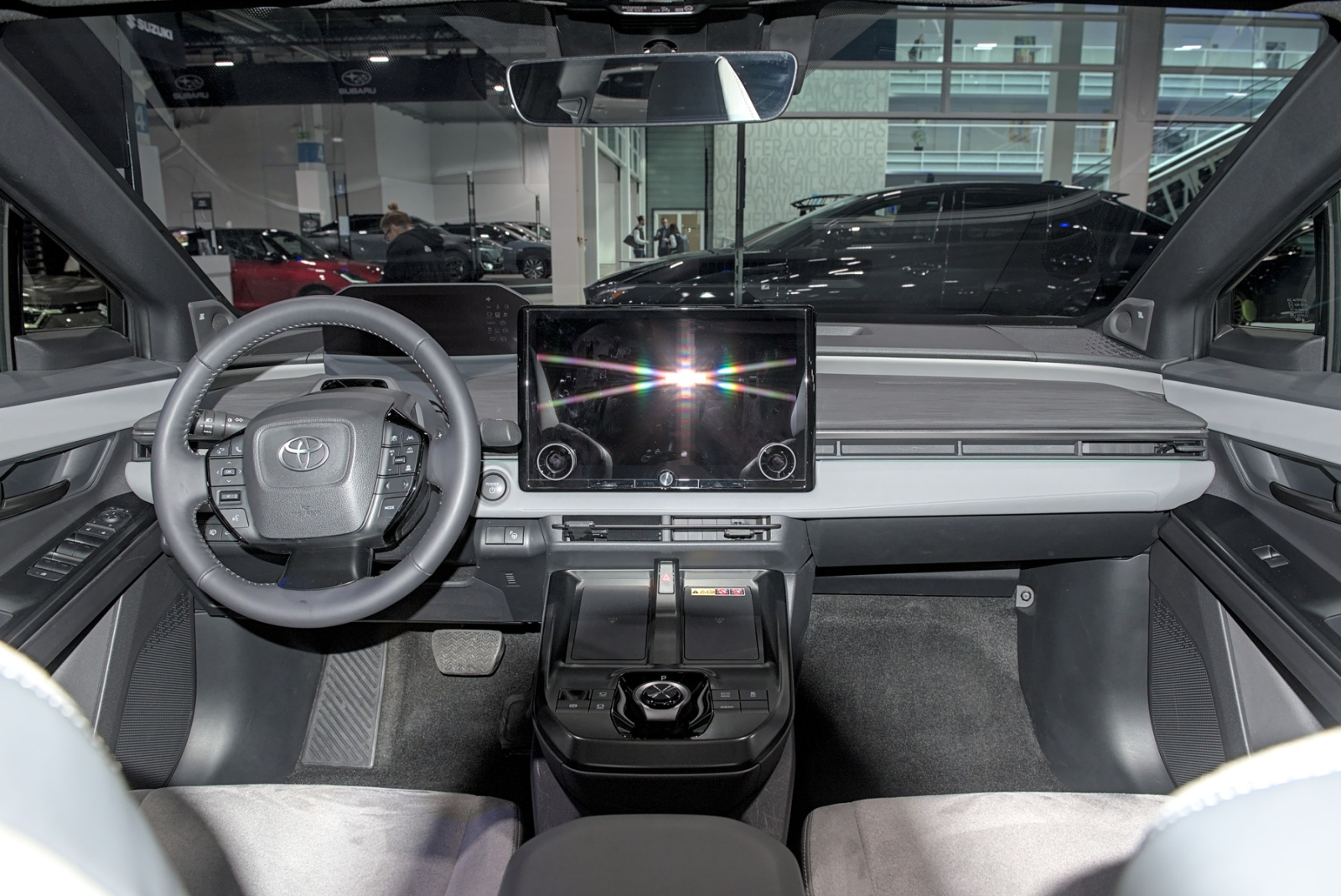
A 14-inch centre screen and a separate driver display create a contemporary cabin. Connectivity is useful when it makes navigation and charging easier without demanding constant attention. A meaningful test drive should include adjusting climate settings, entering a charging stop, operating the driver alerts and sitting in the back. Screen size alone is not a usability score. Cabin and equipment details, Hungarian brochure.
Battery choices and the range behind the headline
The two battery sizes are 57.7 and 77 kWh gross, with usable capacities quoted as 54 and 72 kWh in Toyota’s Hungarian documentation. The smaller pack lowers the entry cost; the larger one provides more journey flexibility. The table uses a consistent set of European specifications released on 19 March 2026. WLTP is a laboratory comparison, not a promise of winter motorway range. Gross and usable capacity; European variant data.
| European version | Gross battery | Output | Combined WLTP |
|---|---|---|---|
| FWD, 18-inch wheels | 57.7 kWh | 123 kW / 167 DIN hp | 458 km |
| FWD, 18 / 20-inch wheels | 77 kWh | 165 kW / 224 DIN hp | 607 / 560 km |
| AWD, depending on wheels and grade | 77 kWh | 252 kW / 343 DIN hp | 507–548 km |
Local documentation is not completely uniform. The Hungarian price list downloaded in October labels output as 124/167/255 kW and gives a different AWD range span. These figures should not silently replace the March European values. Confirm the homologated specification for the exact model year, wheels and vehicle offered in your country. Example of differing local specifications, Hungary.
The 150 kW DC peak matters less than sustained charging performance. Toyota quotes 28 minutes from 10 to 80 per cent under suitable conditions. Preconditioning and a standard heat pump help cold-weather usability, but charger performance, battery temperature and starting charge still matter. AC charging is 11 kW on many versions, with 22 kW available on specified higher grades; confirm local equipment and the supply available where you park. Charging and thermal management.
What has an independent test established?
Auto Bild’s September 2026 test of the 77 kWh FWD returned 17.6 kWh/100 km on its 155 km test route. Charging from 10 to 80 per cent took 28 minutes at 18°C. The publication praised the driving experience but criticised braking distances and menu access to some alerts. These are useful findings for one specification and set of conditions, not evidence of multi-year durability. Auto Bild’s measurements.
The five-star Euro NCAP result is a positive safety reference. Published in May 2026 under the 2025 assessment, it draws on the related bZ4X rating with additional C-HR+ verification. It informs crash protection and safety-system performance, rather than predicting years of fault-free ownership. Euro NCAP’s C-HR+ result.
Prices: check the country and the actual specification
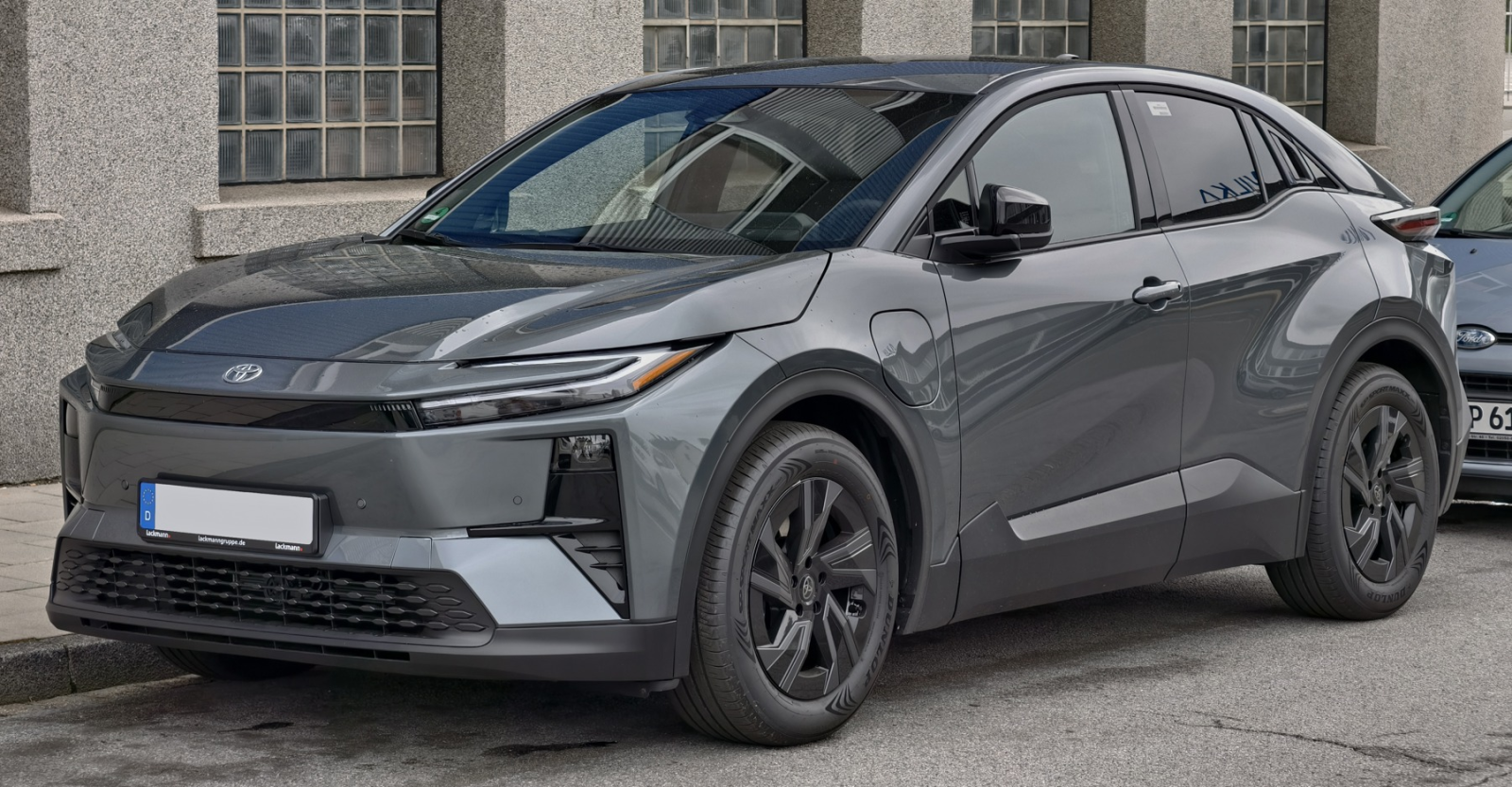
There is no single European C-HR+ price or trim ladder. As a clearly dated example, Toyota’s UK MY2026 list effective 2 March 2026 gave the on-the-road figures below. They show how a larger battery and extra equipment change the bill, rather than promising an October transaction price. UK specifications and prices must not be treated as EU-wide offers. Dated UK manufacturer price list.
| UK MY2026 example | Battery / drive | Listed on-the-road price |
|---|---|---|
| Icon | 57.7 kWh FWD | £34,495 |
| Design | 77 kWh FWD | £36,995 |
| Excel | 77 kWh FWD | £40,995 |
Use a local written quotation to compare equivalent equipment, delivery charges, finance terms and any conditional discounts. The UK example also shows why a top trim does not necessarily mean all-wheel drive: both Design and Excel are listed as FWD. For running costs, combine annual distance with the electricity tariffs you can actually use, insurance, finance and depreciation. A cheap overnight supply and reliance on expensive rapid charging produce very different ownership calculations.
Warranty support is valuable; durability still needs time
Toyota’s European material describes battery-capacity protection of at least 70 per cent for eight years or 160,000 km, with conditional Battery Care extensions up to ten years or one million kilometres through annual health checks. Country terms apply. Treat this as battery-specific protection, not an unconditional ten-year warranty on every component; request the applicable local contract. European battery-care terms.
Warranty cover can limit financial exposure to a major repair. It cannot prove that faults are rare, parts arrive promptly or residual values will be strong. The C-HR+ does not yet have a decade of its own operating history. Repeatable winter charging, owner-reported faults, repair turnaround and battery health over time will determine whether the promise becomes a reputation. Today, those remain questions to monitor.
| Expected strength | Evidence available now | What remains open |
|---|---|---|
| Popularity | A substantial European C-HR customer base | Sustained demand for the C-HR+ itself |
| Dependability | Strong older 1.8 survey evidence, qualified by ADAC breakdown findings | Multi-year fault data for the electric model |
| Everyday usability | Battery choices, practical luggage capacity and measured rapid charging | Fit with your routes, winter conditions and charging routine |
| Predictable ownership | Published prices and conditional battery protection | Actual repair cost, downtime and depreciation |
Verdict: credible successor, unproven long-term heir
The C-HR+ is a credible choice for drivers who like Toyota’s approach and can make electric charging work. The larger-battery FWD is a sensible starting point for regular longer journeys; the smaller pack makes sense when it covers the daily requirement with enough reserve. Choose AWD for a real traction or towing need, rather than assuming extra motors create extra reliability.
For drivers without dependable charging, the current HEV may remain the easier fit. A PHEV occupies the middle ground when it is genuinely plugged in regularly. The C-HR+ can carry the family’s visual appeal and commercial momentum into electric driving. To inherit the most valuable part of the hybrid story—long-term peace of mind—it must build an operating record of its own.
Sources17
- Toyota C-HR: ten years of standing out
- Toyota Motor Europe: 2025 sales results
- Toyota C-HR: first-generation archive
- Toyota C-HR: 2026 European updates
- Toyota C-HR Plug-in Hybrid, Hungary
- OCU: Fiabilidad de los coches, 2026
- ADAC Pannenstatistik 2026
- Toyota C-HR+: European launch technical release
- Toyota C-HR+: UK launch press kit
- Toyota C-HR+ Design: technical specifications
- Toyota C-HR+: magyar prospektus
- Toyota C-HR+: magyar árlista, MY2026
- Toyota C-HR HEV/PHEV: magyar árlista, MY2026
- Toyota C-HR+: UK MY2026 price list
- Toyota Hungary: traction-battery coverage
- Euro NCAP: Toyota C-HR+ five-star result
- AUTO BILD: Toyota C-HR+ independent test