Hans Müller in Munich is packing for a family trip into the mountains. Joe Miller, outside Denver, is working out how much an electric car would leave in the household budget. In Shanghai, Li Wei wants school runs and visits to the grandparents to be equally straightforward. These are fictional families in three real markets, looking for the same thing: an EV that fits their lives.
Our nine-car shortlist follows the vehicles they might investigate, rather than dividing buyers into abstract categories. It combines recent launches and updated versions with an established US benchmark, the Equinox EV. Prices stretch from relatively accessible family cars to the larger Peaq and premium EX60. The Volvo deliberately tests the upper limit of the budget; calling every car here cheap would misrepresent the selection.
Information was checked on 22 October 2026. Germany supplies the European shopping context and China the Asian one; neither stands for an entire continent. Korean-brand Hyundai’s IONIQ 3 makes a clearly labelled cross-market appearance because it was developed for Europe. This is a comparison of documented specifications and equipment with editorial buying analysis, not a nine-car road test or a long-term reliability ranking.
Range figures retain their test labels: WLTP, US EPA or Chinese CLTC. They do not form a single global league table. Converting miles to kilometres changes the unit, not the test procedure. Prices exclude any assumed personal discount or incentive, and advertised availability does not guarantee immediate delivery.
Hans’s first Saturday: Škoda, then Volvo
With two children, Hans does not automatically need a large SUV. He starts with the Elroq, then asks what the Peaq’s extra space and optional third row would cost. The Volvo showroom is the third stop, where stronger performance, charging technology and a premium cabin must justify a substantial increase in price.
| German version | Starting price | Range for this version | Performance |
|---|---|---|---|
| Elroq 60 Essence | €37,890 | 408–453 km WLTP | 140 kW; 0–100 km/h: 8.0 s |
| Peaq Selection 60 | €49,900 | Over 450 km, manufacturer WLTP figure | 150 kW; 0–100 km/h: 8.4 s |
| EX60 P6 | €62,990 | Up to 611 km, estimated WLTP | 275 kW; 0–100 km/h: 5.9 s |
German advertised consumer prices and local specifications; options and delivery charges depend on the quotation. The Peaq offering over 640 km is a different, more expensive version. Sources: Elroq, Peaq pricing, Peaq powertrains, EX60.
Škoda Elroq: establish whether smaller is enough
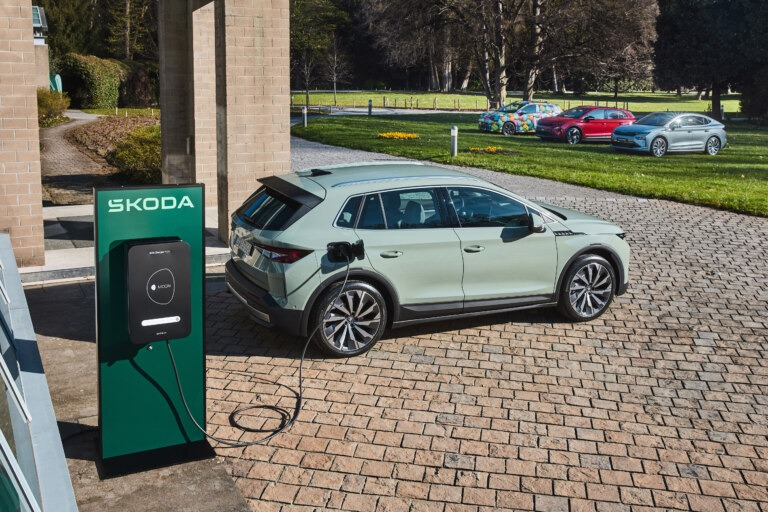
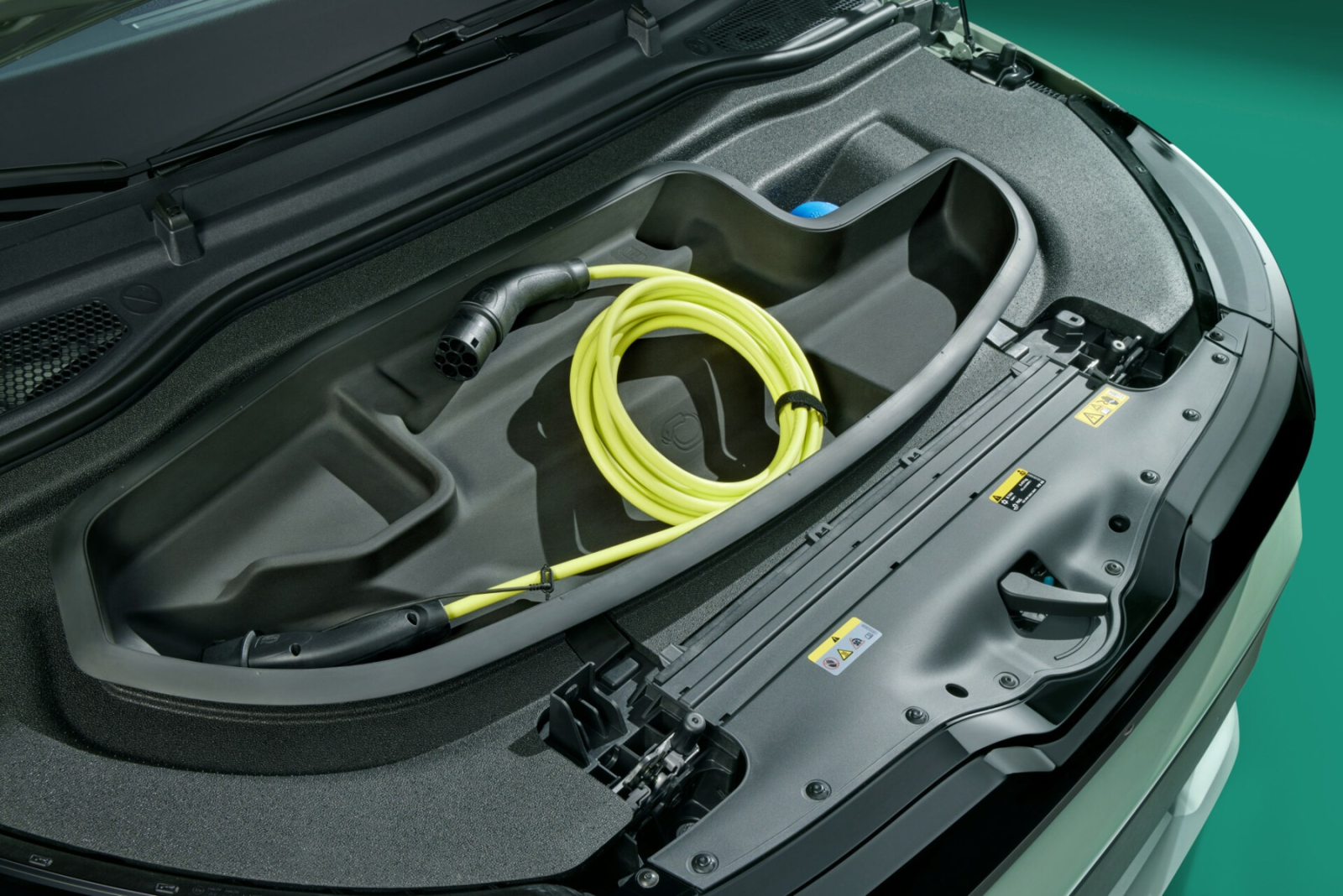
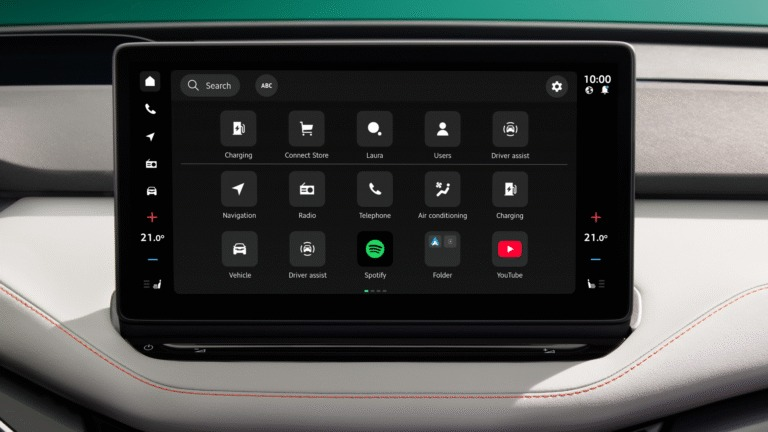
The Elroq does not require a jump to its largest battery or RS version to make sense. The current German 60 offers 140 kW and an eight-second 0–100 km/h time, a useful starting point for ordinary family duties. Configuration affects its 408–453 km WLTP rating. Hans’s first showroom question is therefore whether the family’s child seats fit comfortably behind the normal front-seat positions. Current German versions.
The 2026 production update adds practical features including front storage, V2L external power and new infotainment. Optional Travel Assist 3 includes a driver-monitoring camera; an earlier-production stock car may not have these features. A manageable footprint and a separate place for charging cables can matter more to a family than fresh screen graphics. The photographed cabin looks orderly, but material feel, seat support and ride comfort require a check in the actual specification being purchased. For Hans, this is the first value-and-usability candidate. Production-update details.
Škoda Peaq: what two extra seats really cost
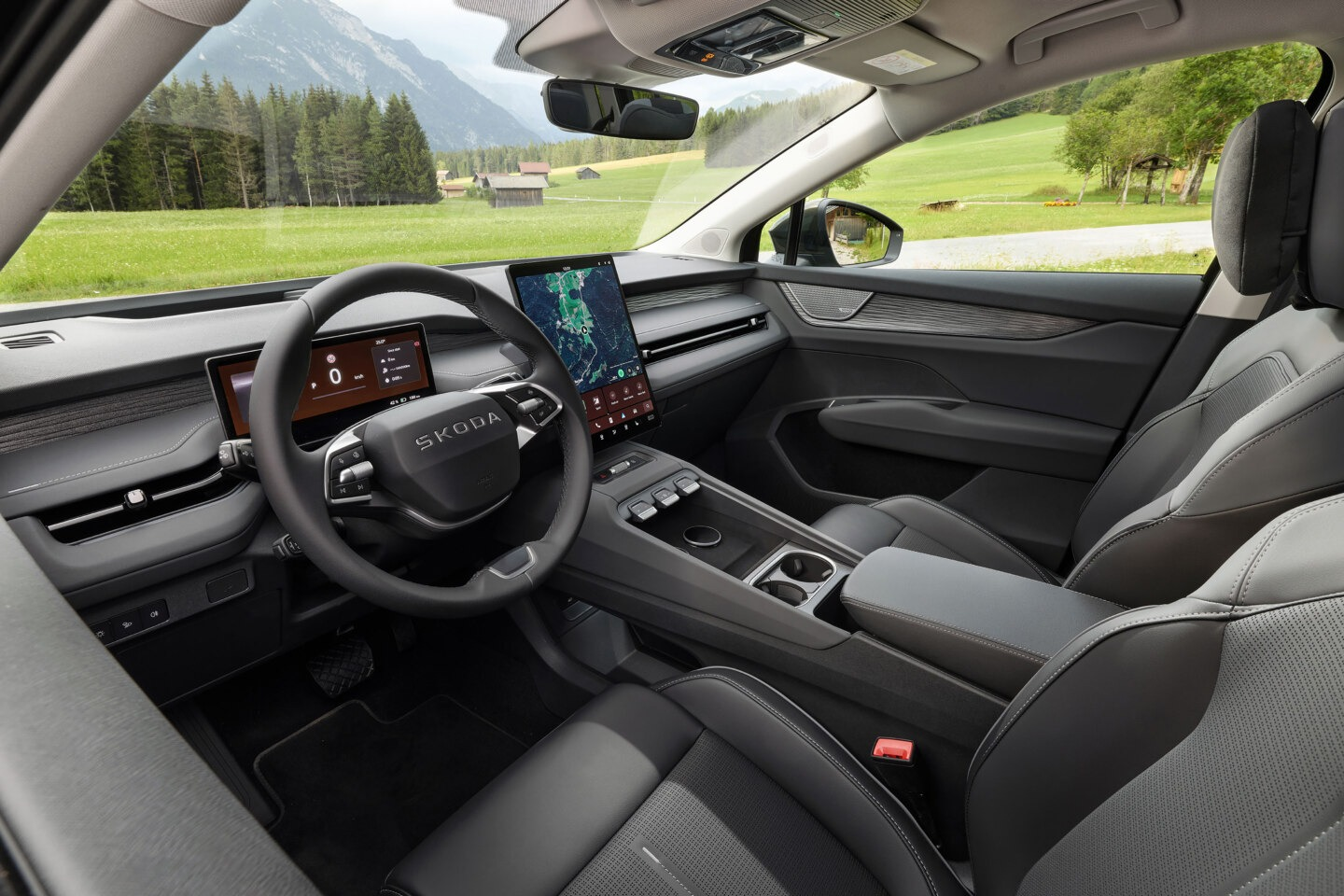
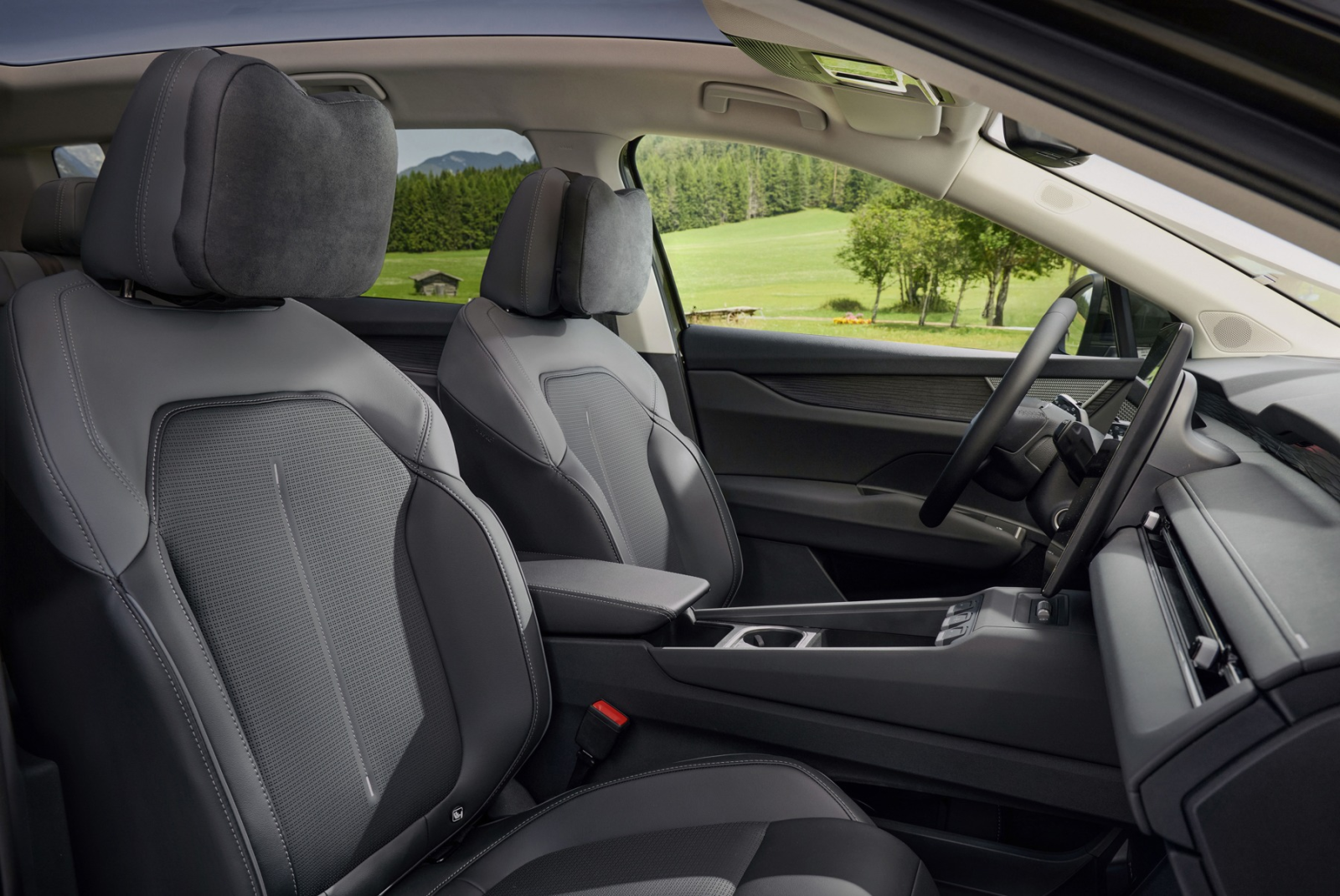
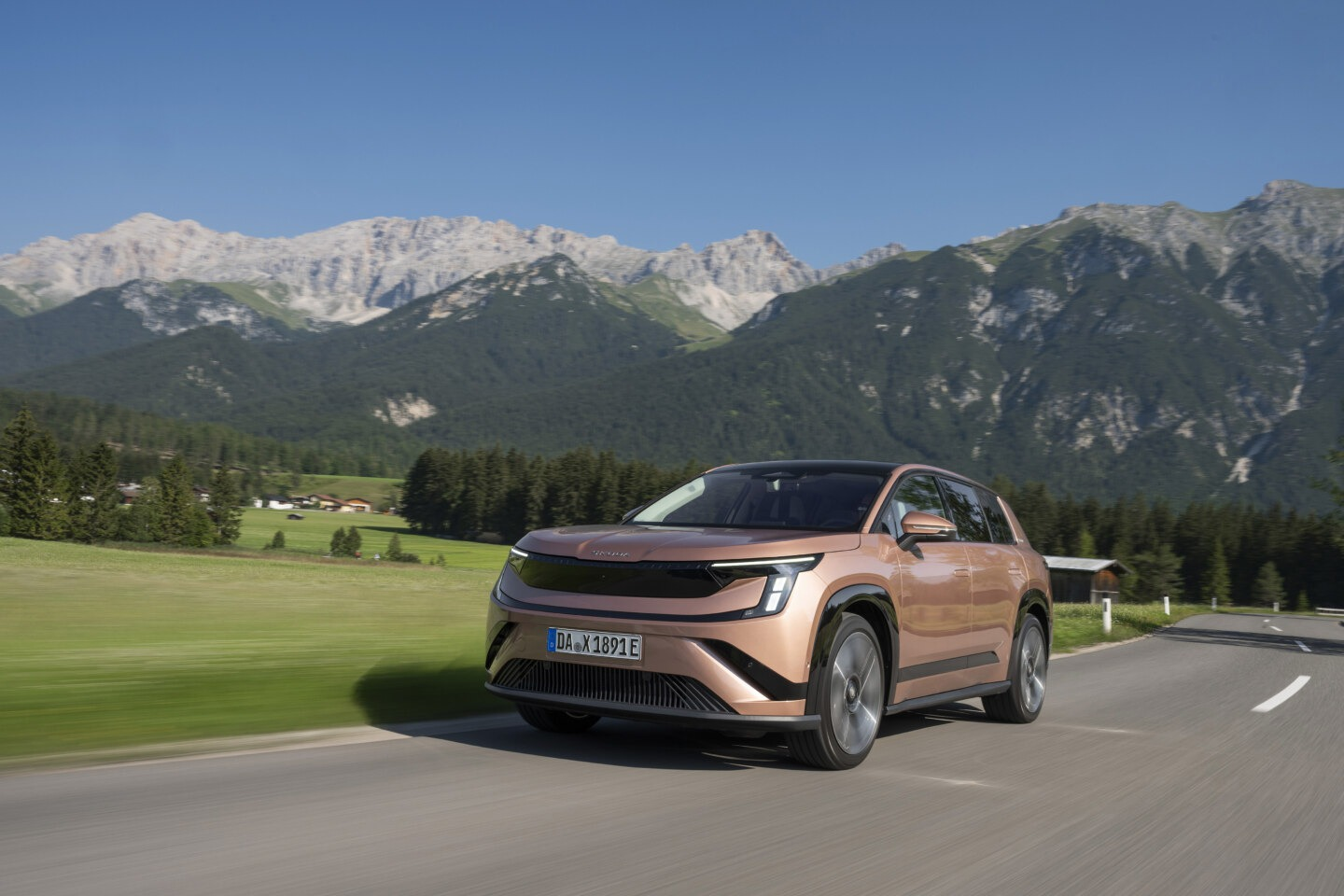
Hans moves over to the Peaq when he imagines taking the grandparents along. The 4.87-metre SUV can have seven seats, but the third row and comfort options must be included in the actual quote. Moving from the €49,900 Selection 60 to the €57,900 Selection 90 costs €8,000. The latter brings 210 kW and a manufacturer WLTP claim exceeding 640 km. Buying more range is a significant budget decision. Škoda quotes 27 and 28 minutes respectively for 10–80% DC charging under suitable conditions. Prices; Range and charging.
Two luggage figures reveal the practical trade-off: 935 litres in the five-seat version, 299 litres with all seven seats in use. These are Škoda’s liquid-volume measurements, so they cannot be treated as directly equivalent to every rival’s published litres. The headline capacity will not carry seven people’s holiday luggage. A sliding second row helps allocate space; the optional Relax package adds massage-seat comfort. Travel Assist 3 also depends on configuration. Check the seat mechanisms, upholstery and storage compartments that will endure daily family use. Hans would choose the Peaq for genuinely needed seating flexibility, rather than size alone. Cabin and luggage measurements; Model presentation.
Volvo EX60: the premium needs a reason
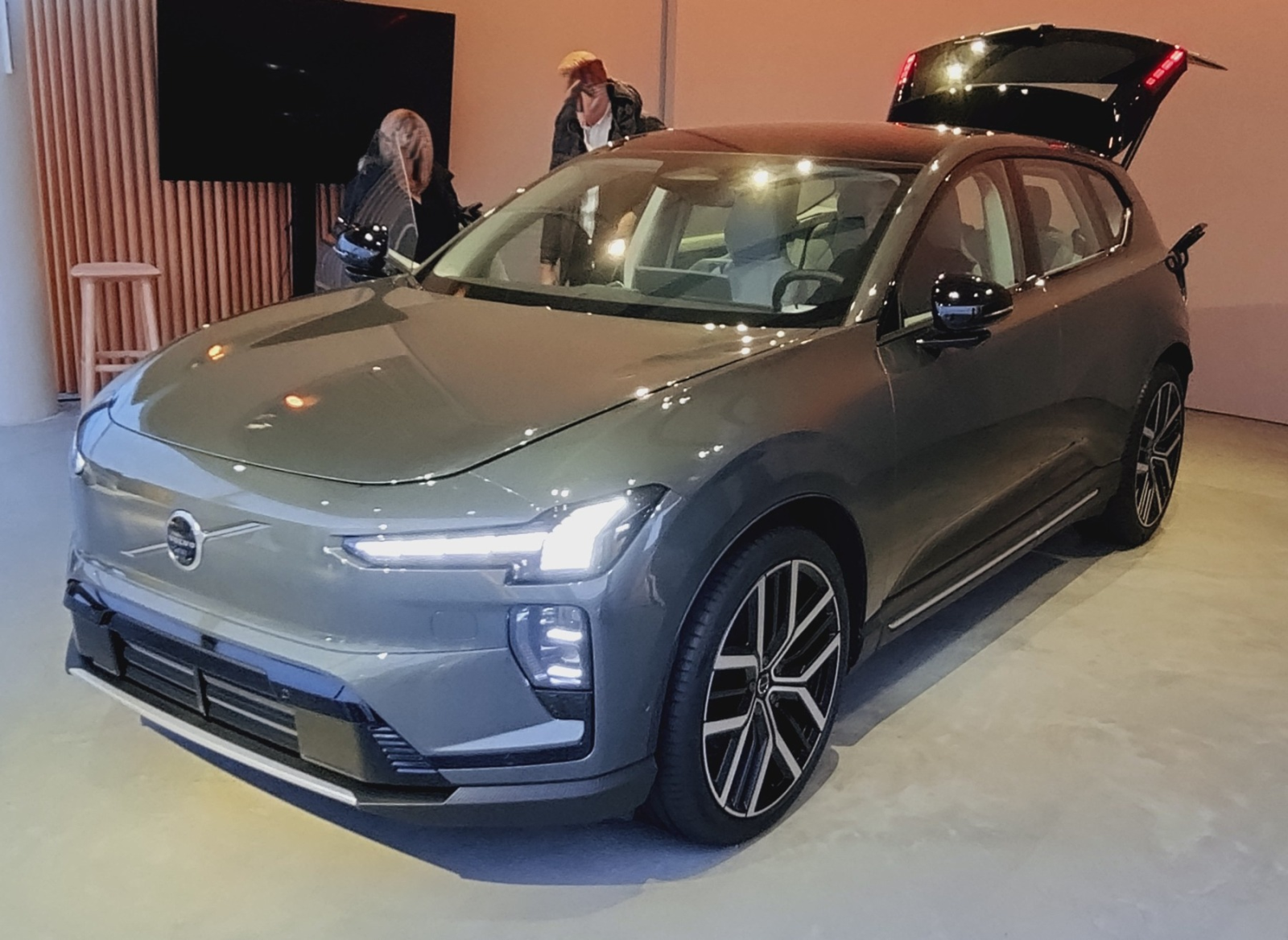
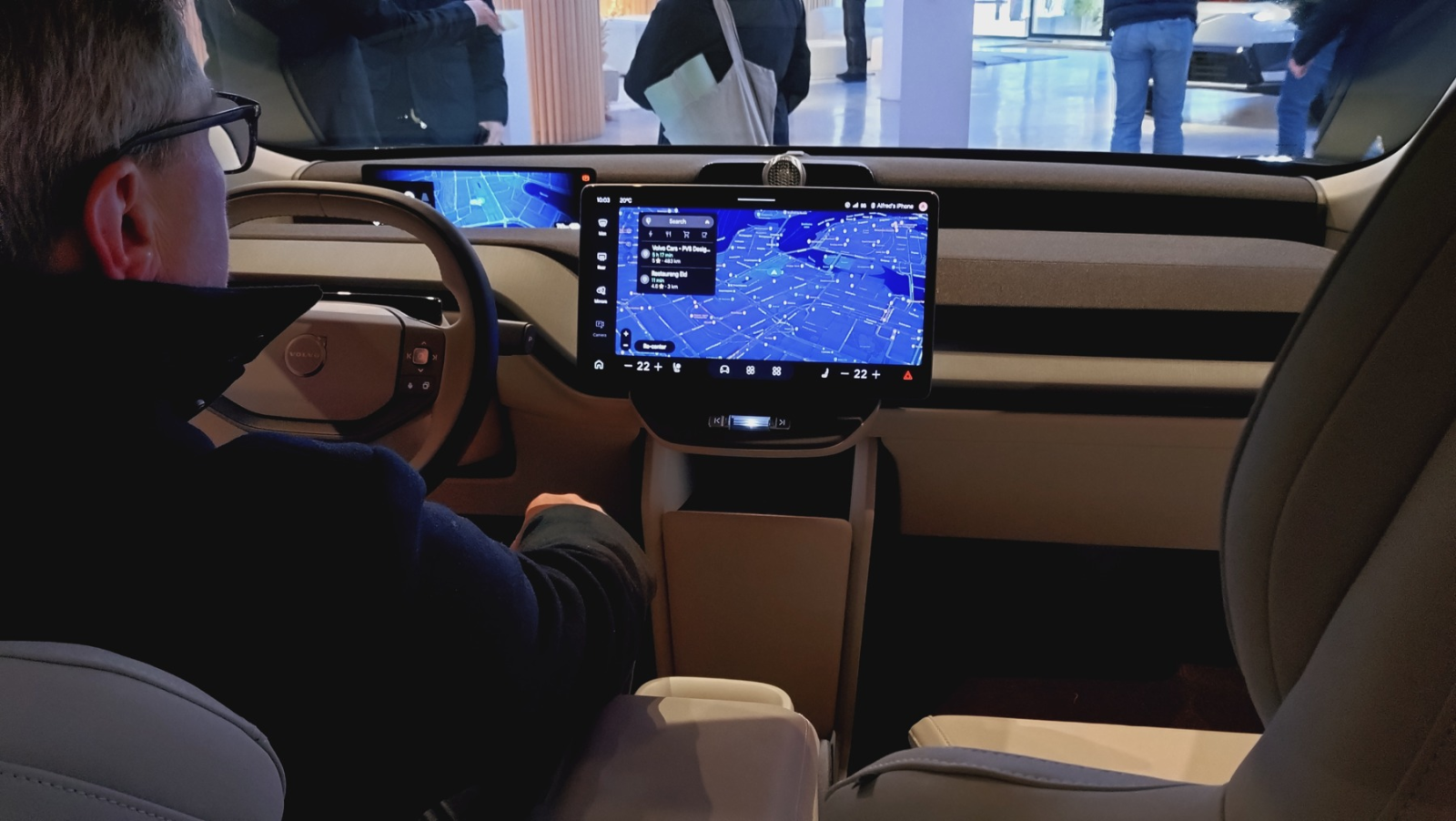
At Volvo, the German starting price is €62,990. The EX60 P6’s 275 kW and 5.9-second 0–100 km/h acceleration put it in a different performance bracket from the entry Škodas. Volvo’s current page gives the P6 up to 611 km of estimated WLTP range. The estimate label matters, and the headline 810 km belongs to the more expensive P12. Its 800-volt architecture targets short charging stops, subject to suitable infrastructure and battery conditions. Current EX60 figures.
This is a five-seat premium alternative: Hans would be paying for the cabin and technology instead of the Peaq’s extra seating positions. Pilot Assist and the driver-understanding system are more relevant family considerations than a sprint contest, but they do not transfer responsibility from the driver. A dedicated instrument display may appeal to someone who dislikes looking sideways for driving information; the large centre screen still deserves a hands-on trial. Attractive trim and a high price do not establish long-term durability. The EX60 may justify its premium for some buyers, but it is not an affordable entry point in this company. Displays and driver assistance.
Outside Germany, rebuild the comparison using local configurations. A familiar model name does not guarantee the same entry battery, standard equipment, warranty terms or delivery schedule. Ask for a complete quotation including the child-seat requirements, charging equipment and assistance package you actually want. A currency conversion of Hans’s prices is not a reliable local buying budget. This matters particularly for newly introduced cars whose national launches and model-year changes do not happen together.
Joe’s three stops: Nissan, Chevrolet and Tesla
Joe is comparing cars sold in the United States, not limiting himself to American brands. That puts Nissan’s new LEAF beside the Chevrolet Equinox EV and the cheaper RWD version of the redesigned Tesla Model Y. The Equinox is the established reference point: not a newly unveiled generation, but a current offer against which the newcomers must compete.
| US version | Advertised base price | EPA range | Performance |
|---|---|---|---|
| 2026 LEAF S+ | $29,990 + destination | 303 miles ≈ 488 km | 160 kW / 214 hp |
| 2026 Equinox EV LT1 FWD | $34,995 | 319 miles ≈ 513 km | 220 hp ≈ 164 kW |
| Model Y RWD | $39,990 + destination and order fee | 321 miles ≈ 517 km | 0–60 mph: 6.8 s; configurator does not publish kW |
US advertised prices are not directly comparable with tax-inclusive European retail figures. Taxes, registration and other charges can be additional. Nissan lists a destination charge of up to $1,495. Tesla adds $1,390 destination and a $250 order fee, producing $41,630 before tax. Confirm exactly which charges are covered by the Chevrolet offer in the final quotation. Sources: Nissan pricing, Nissan brochure, Chevrolet, Chevrolet dealer specifications, Tesla configurator.
Nissan LEAF: a familiar name takes a new family role
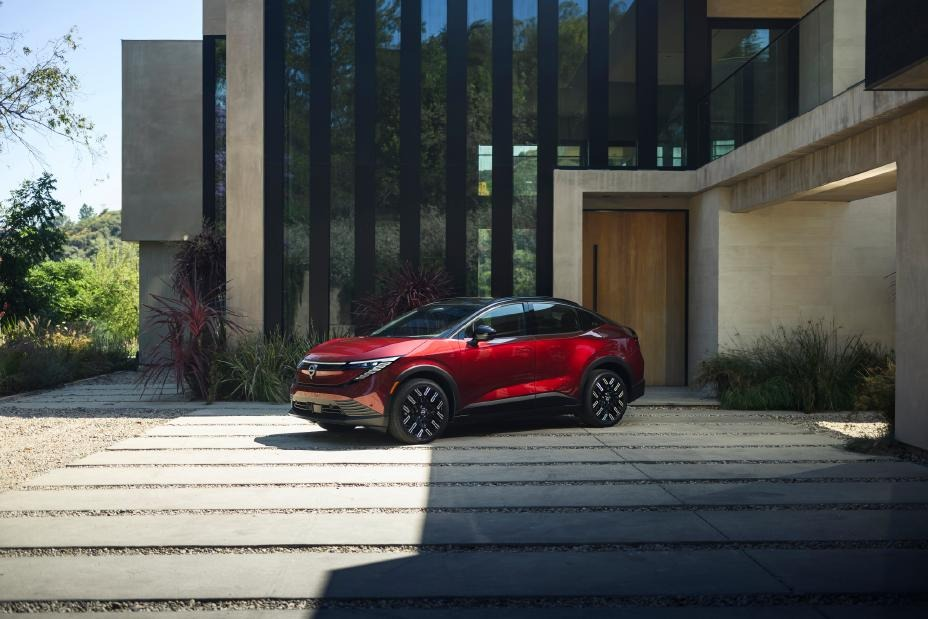
The LEAF gives Joe a clear proposition: a sub-$30,000 base price and 303 miles of EPA range on the same S+ version. This is not the cheapest price paired with the longest-range premium trim. In fact, the pricier SV+ is rated at 288 miles and the Platinum+ at 259. More equipment can cost range as well as money. The new crossover body also gives the familiar name a different family role. US prices and versions.
Alongside the 160 kW motor and 75 kWh battery, the NACS fast-charge connector is a practical consideration. Safety Shield 360 and the range’s ProPILOT offering need to be checked against the chosen specification; the cheapest car does not automatically include every display and parking feature in the publicity. Nissan highlights Zero Gravity seating, but Joe needs to check rear-seat comfort with his children and luggage space with their own stroller. A simpler entry cabin is not automatically a quality weakness: the controls, upholstery and loading opening deserve closer attention than the trim name. 2026 US brochure.
Chevrolet Equinox EV: the quiet benchmark
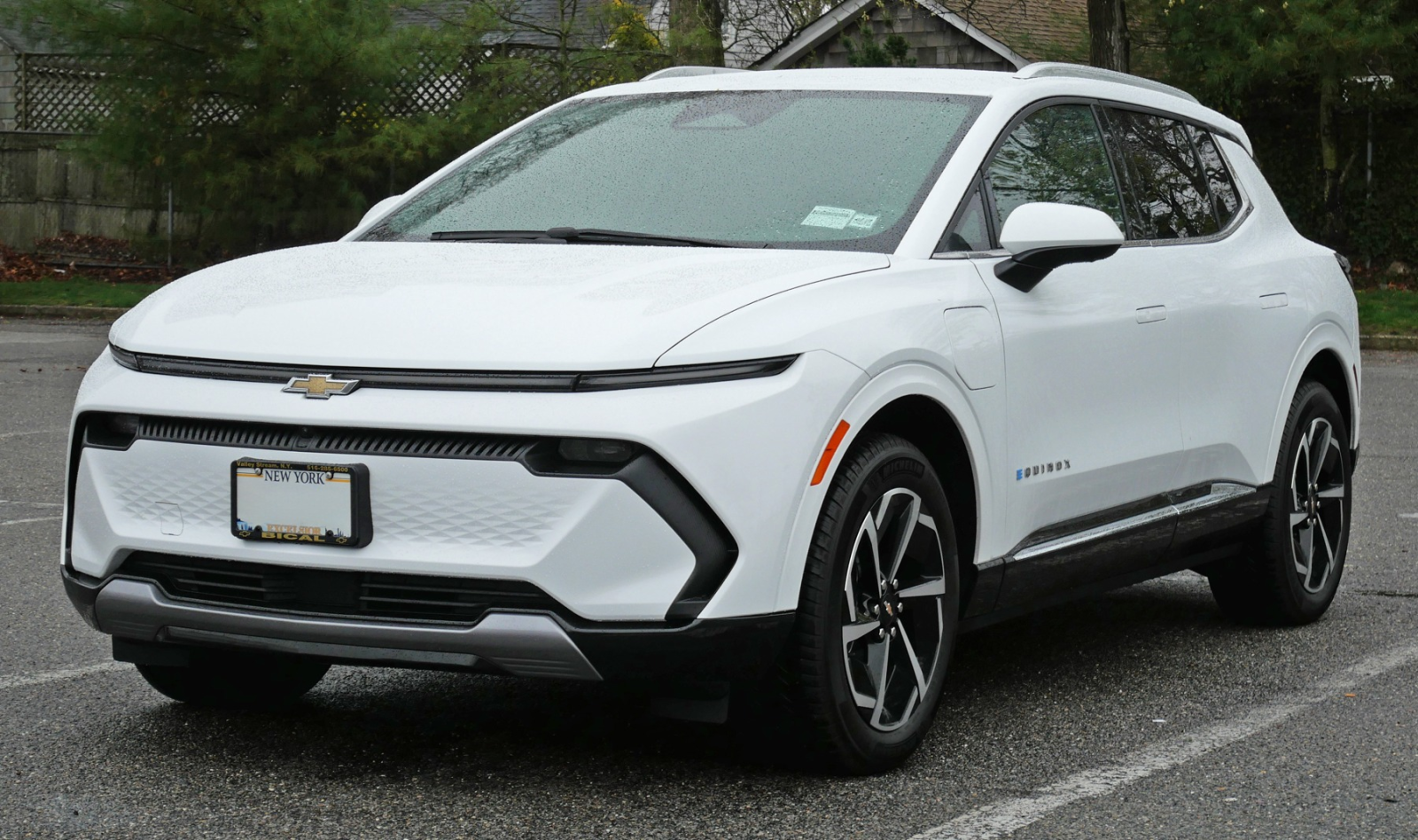
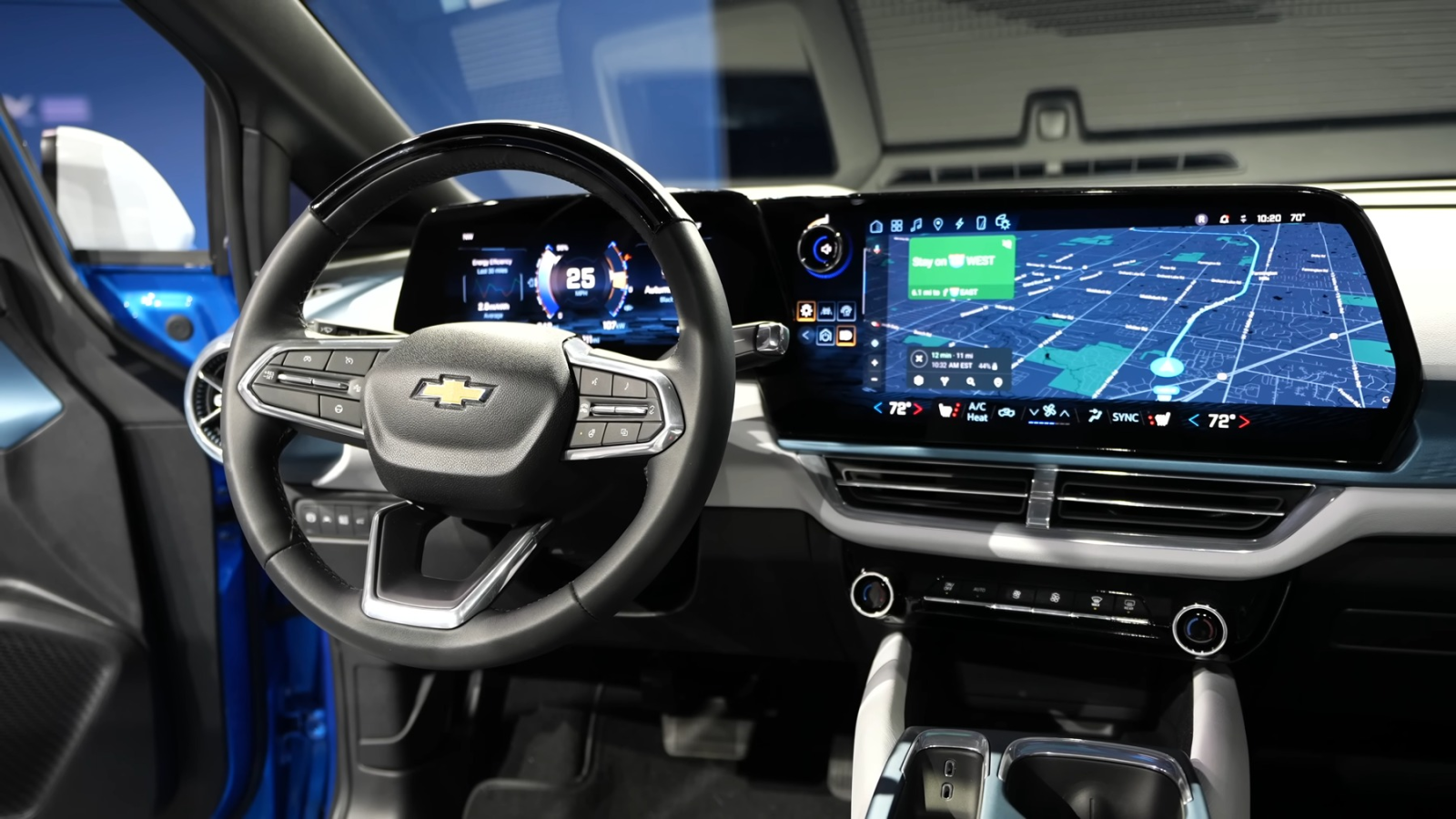
The Equinox EV costs Joe more than the LEAF S+, while its front-wheel-drive version offers a 319-mile EPA rating. Its 220 hp is roughly 164 kW, so this price step is not principally about stronger acceleration. The five-seat body and 17.7-inch centre display offer a more conventional family-SUV setting. Consider its 150 kW DC peak alongside the chargers on regular journeys; neither peak power nor rated range alone determines travel time. Chevrolet model page; Power specification.
Separate the standard safety systems from optional Super Cruise. The latter permits hands-off driving on supported roads, while still requiring an attentive driver and an active service plan. A heat pump is useful winter equipment; heated or ventilated seats and other comfort features depend on specification. Joe should examine rear seating, ride comfort and everyday screen operation on the test drive. Being an established model creates more opportunities to investigate ownership experience, but it does not automatically earn a higher quality score. The value case holds only if the options he needs keep the final price sensible.
Tesla Model Y: compare the version the price actually buys
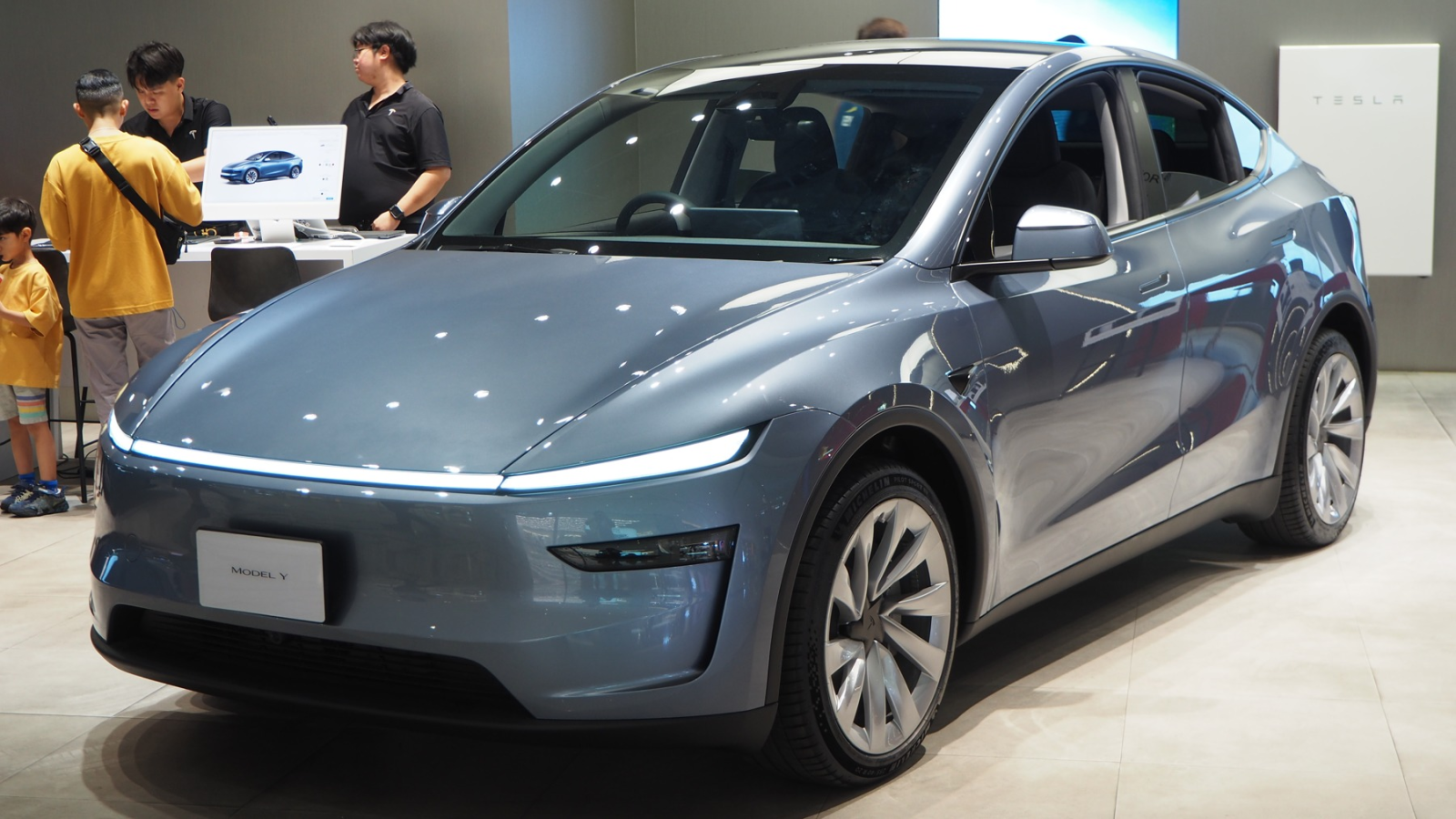
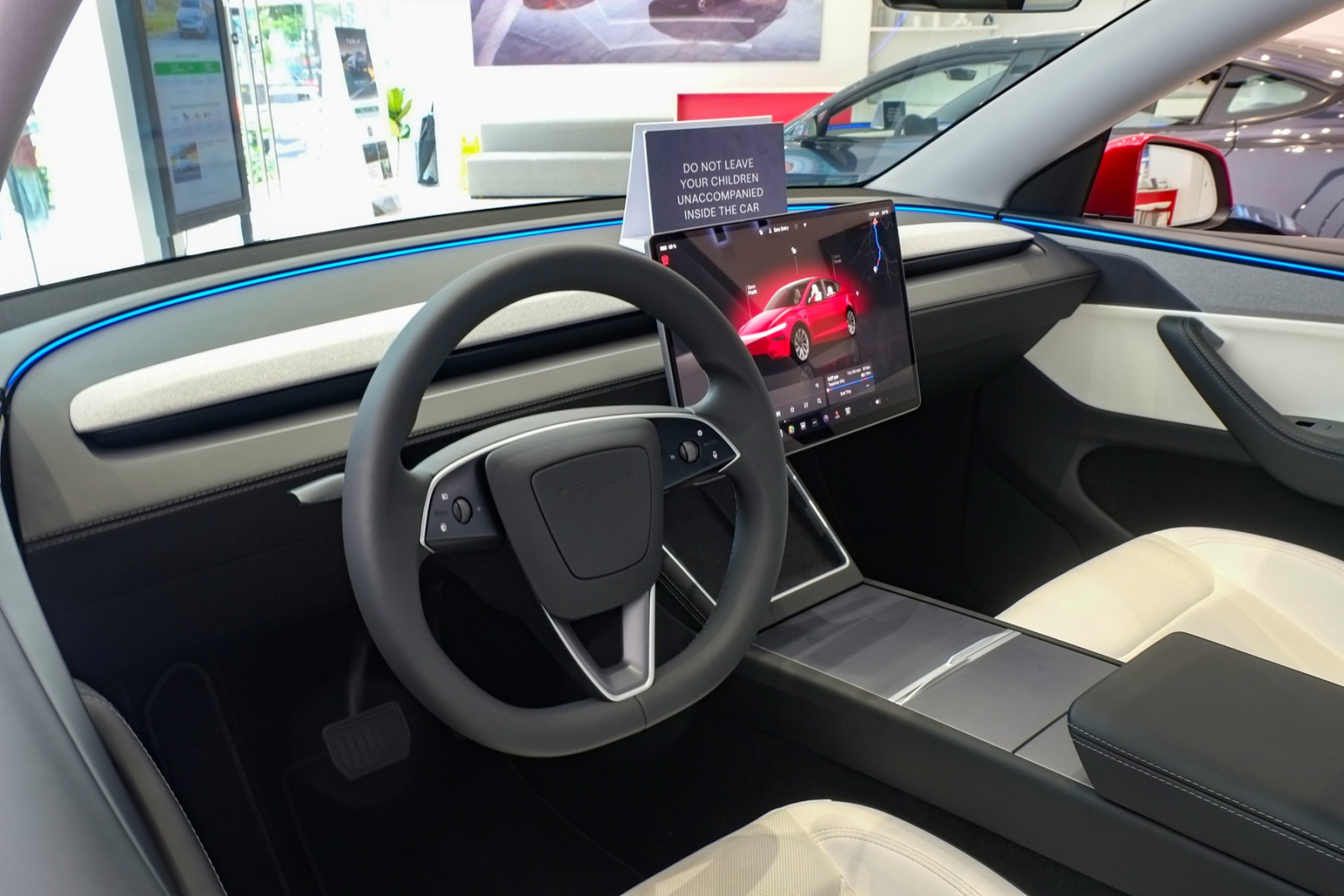
The Model Y remains a natural stop on Joe’s search. The current US base RWD pairs a $39,990 vehicle price with 321 miles of EPA range and a 6.8-second 0–60 mph time. Its two-mile advantage over the Equinox is immaterial to a family decision; charging integration, Supercharger use and luggage practicality are more meaningful. Tesla does not provide motor kilowatts in this configurator, so we do not substitute an uncertain estimate. US configurator.
Equipment is the trap: the cheaper RWD must not be judged from photographs of a more expensive Premium version. The configurator lists Traffic-Aware Cruise Control in the base price; this does not establish that Autosteer is included. Full Self-Driving (Supervised) requires active supervision, and the subscription after any trial is an extra expense. The minimalist cabin is a matter of taste, while the attention required by its screen-based controls can be assessed on a drive. Comfort claims surrounding the 2025 redesign should also be checked on the exact version. Joe would choose it if the charging and digital experience justified the extra cost over his Nissan and Chevrolet alternatives. Model Y redesign background.
Li Wei’s two Chinese showrooms—and a message to Hans
In Shanghai, Li Wei sees different names and a different price structure. The local BYD Sealion 06 EV and XPeng G6 go on his list. The third Asian-brand car, the IONIQ 3, does not prompt another Shanghai showroom visit: it prompts a message to Hans. Hyundai developed this car for Europe and manufactures it in Türkiye; our sources do not establish Chinese availability. This chapter therefore covers three Asian-brand alternatives, with a clear distinction between two local candidates and one cross-market exception.
| Model and market | Local starting price | Entry-version range | Power |
|---|---|---|---|
| 2026 Sealion 06 EV 605 – China | CNY 159,900 | 605 km CLTC | 240 kW |
| G6 625 Max Technology BEV – China | CNY 176,800 | 625 km CLTC | 218 kW |
| IONIQ 3 Select – Germany | €28,950 | 344 km WLTP | 108 kW |
Yuan prices apply to China’s domestic market, not to an imported car elsewhere. Hyundai’s euro price deliberately belongs to a different market. CLTC and WLTP numbers are not equivalent. Detailed BYD pricing and specifications come from a Chinese selling dealership’s announcement; XPeng’s come from its own configuration table. BYD dealer announcement; XPeng configurations; Hyundai German order launch.
BYD Sealion 06 EV: a lot of car at a domestic price
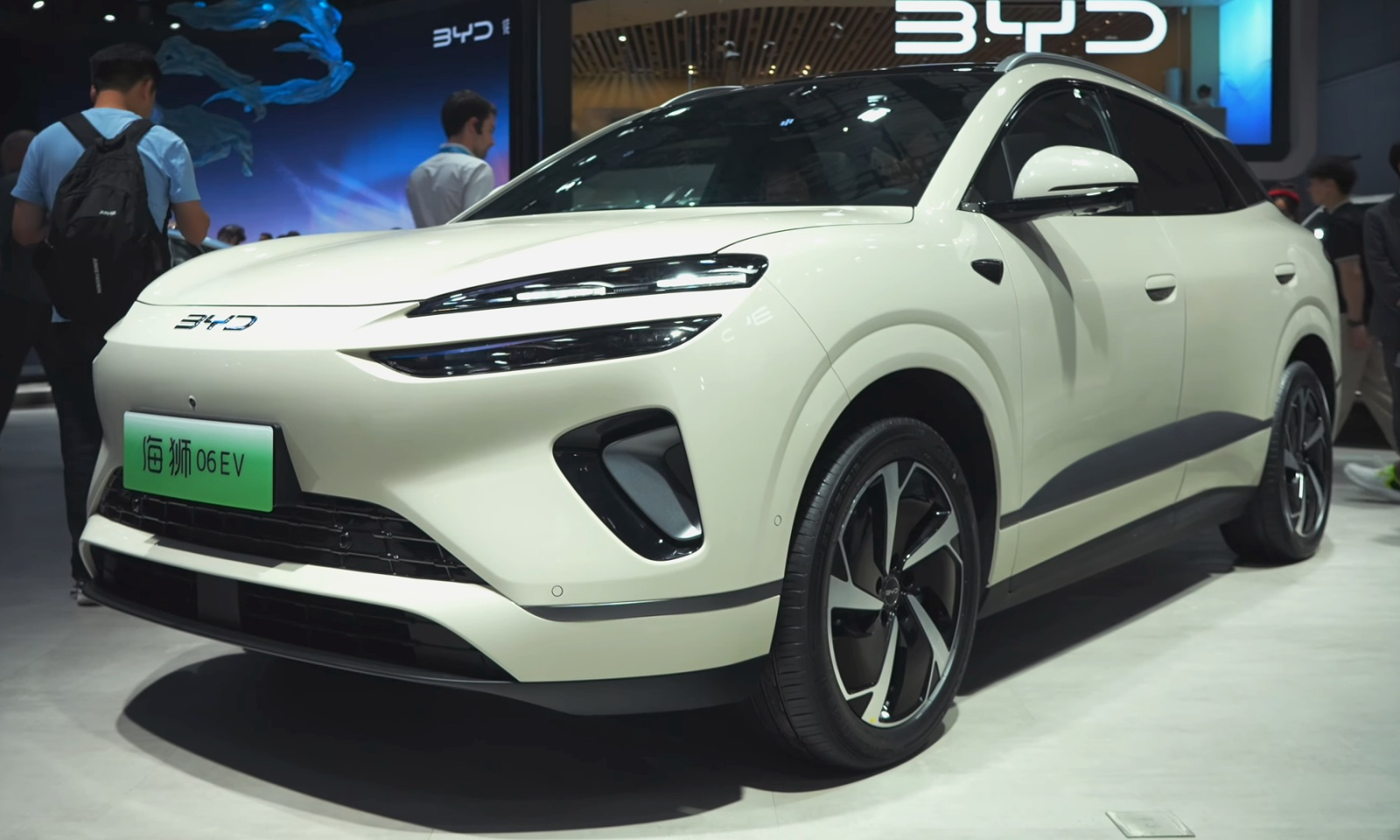
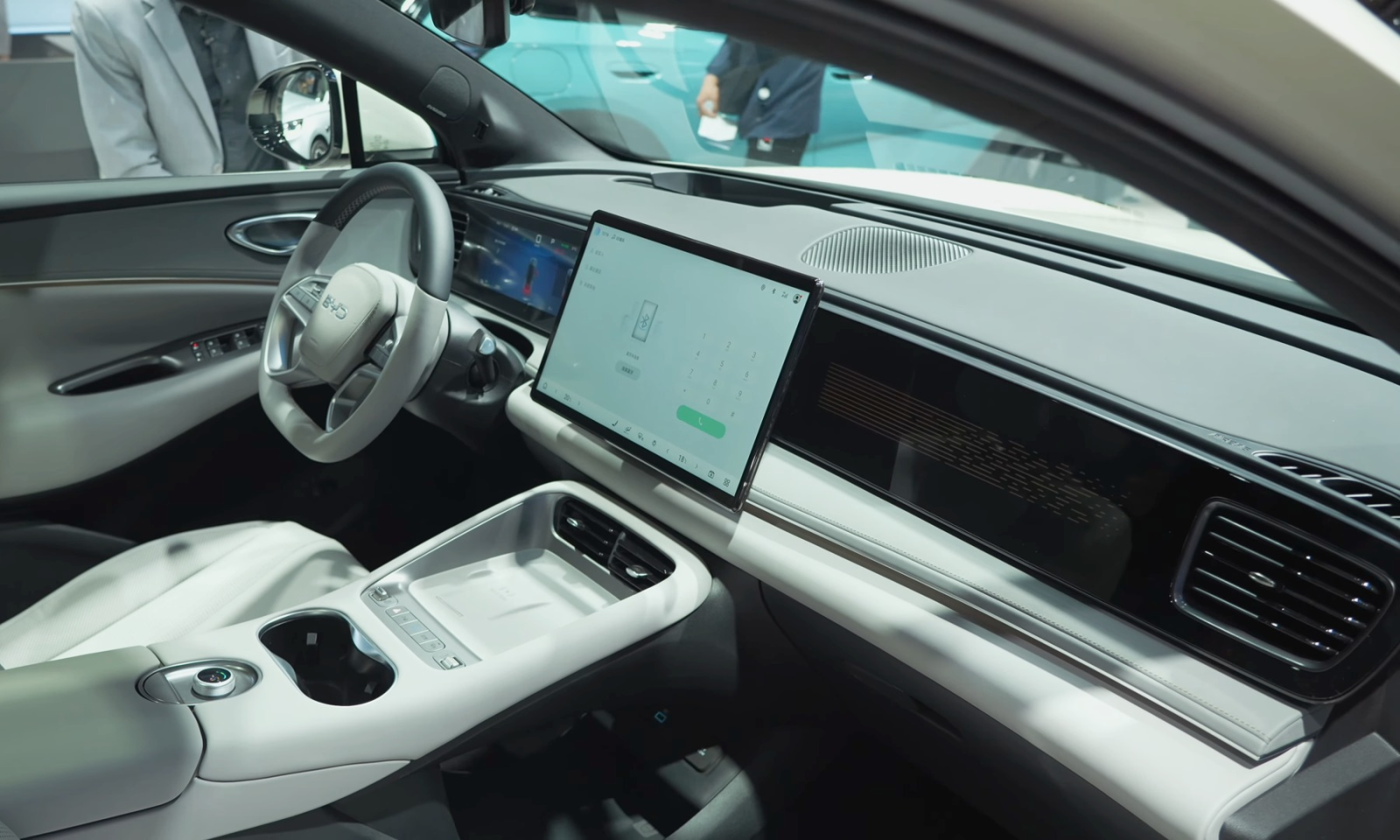
Li Wei is looking at the battery-electric 2026 Sealion 06, not the DM-i hybrid or a different export vehicle named Sealion 6. The CNY 159,900 entry version has a 605 km CLTC rating; a 710 km version starts at CNY 168,900. Its 240 kW rear motor provides substantial performance on paper, while the 4.81-metre body offers a sizeable family SUV for the money. These are Chinese domestic conditions, not a price that can simply be converted into an overseas purchase. Chinese model page; 2026 update details.
The selling dealership describes optional God’s Eye 5.0 assistance and additional front-seat comfort features. For navigation-assisted city driving, the exact package and supported operating area matter more than an “intelligent vehicle” label. Li Wei would try seat comfort and rear space before counting screens. Updated battery and rapid-charging technology is attractive, but its practical value depends on accessible local chargers. As a new technical version, it cannot yet demonstrate long-term durability: extensive equipment makes a strong offer, not a reliability result.
XPeng G6: time at the charger is part of the decision
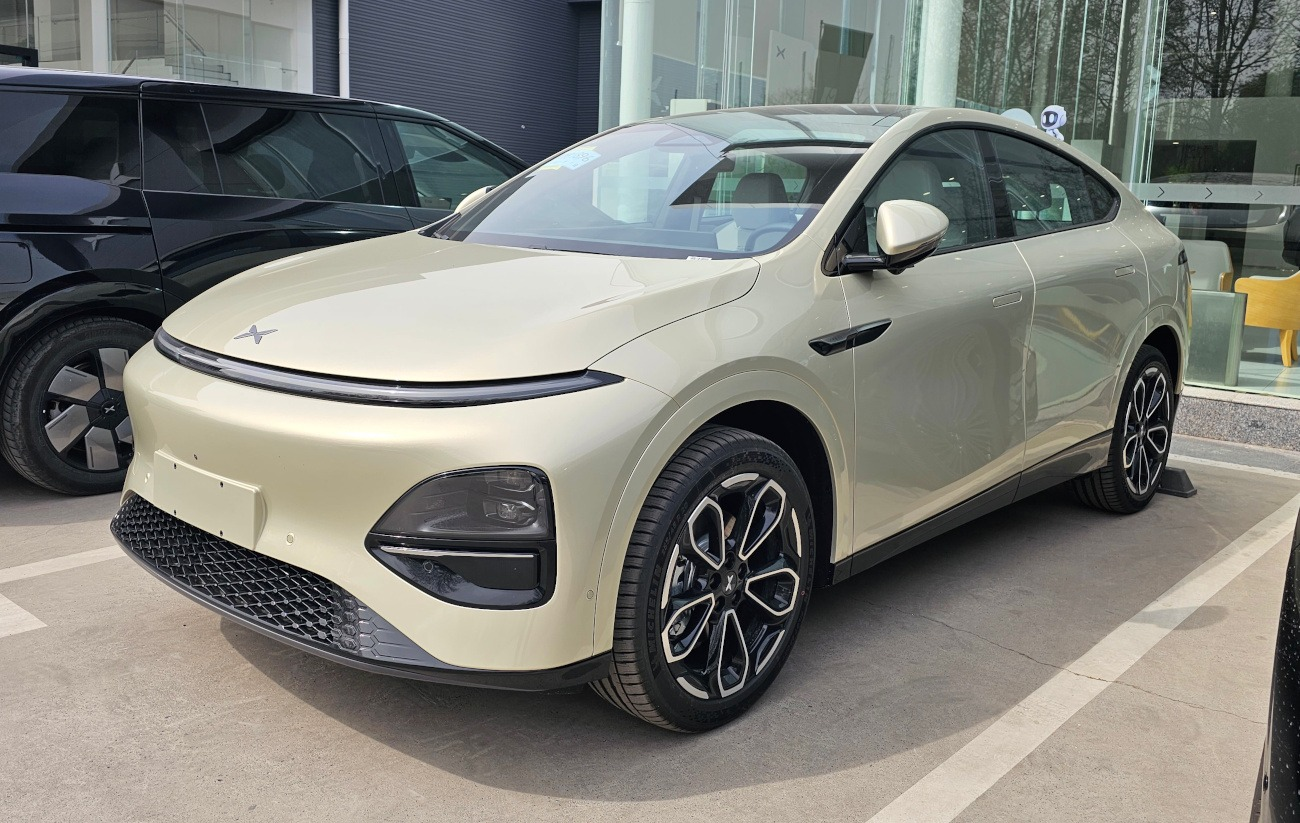
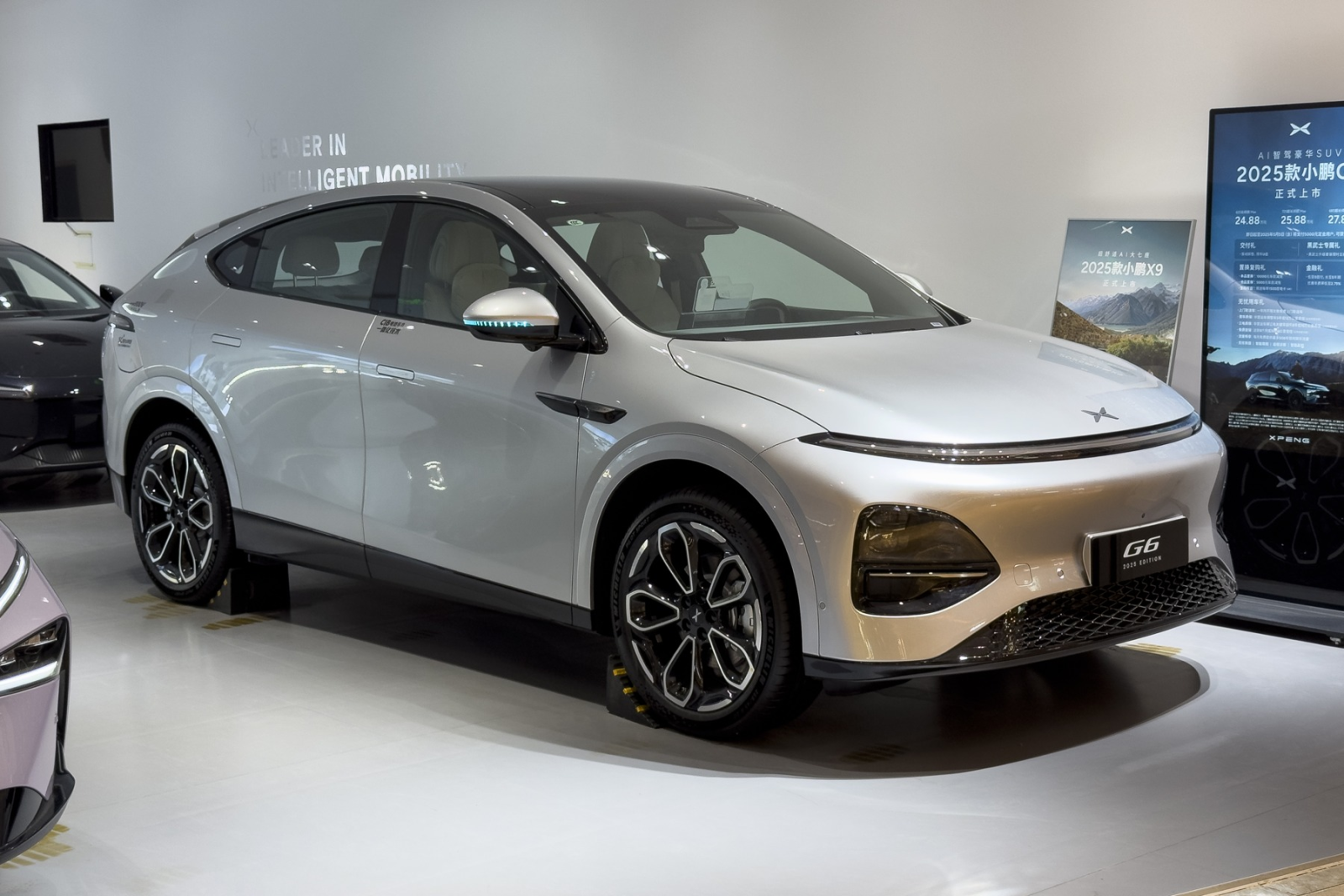
The G6’s battery-electric 625 Max Technology starts at CNY 176,800, with 218 kW, a 625 km CLTC rating and a 6.4-second 0–100 km/h time. The 725 km version costs CNY 198,800. Its most interesting claim is 12 minutes from 10% to 80%, supported by an 800-volt, 5C charging system. That is a manufacturer claim under suitable battery and charger conditions, not a guarantee at every public charging point. Official configuration table; Current G6 technology.
The buying decision may turn on charging and digital functionality more than the power difference from the BYD. Chinese assistance functions cannot simply be assumed available on a European-market car, and the driver must remain responsible. Availability of ventilated and massaging seats depends on specification; taller passengers should test the rear headroom beneath the sloping roof. Consistent software operation is as much a quality consideration as upholstery feel. XPeng’s model page also includes a range-extender version, but its combined range is excluded from this battery-electric comparison.
Hyundai IONIQ 3: the Asian-brand answer intended for Hans
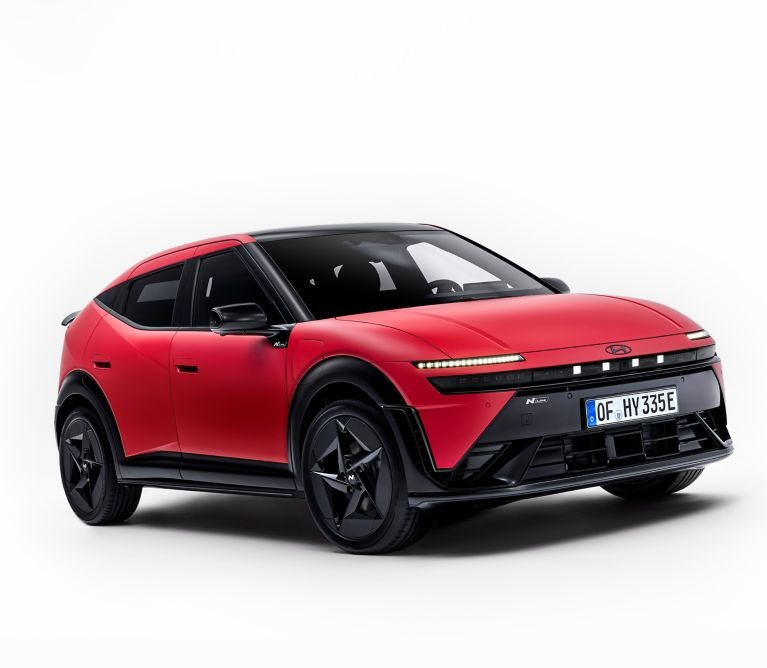
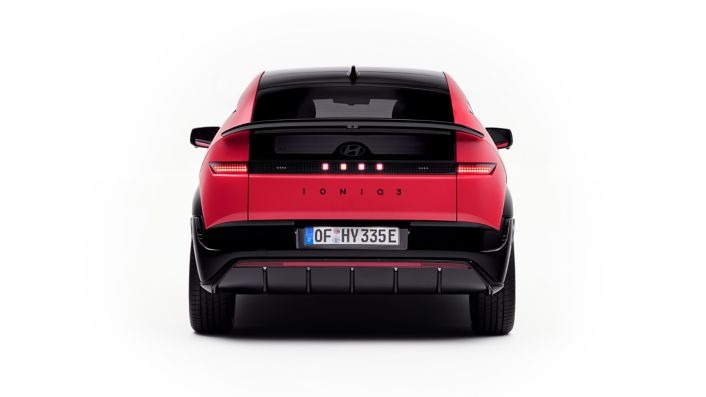
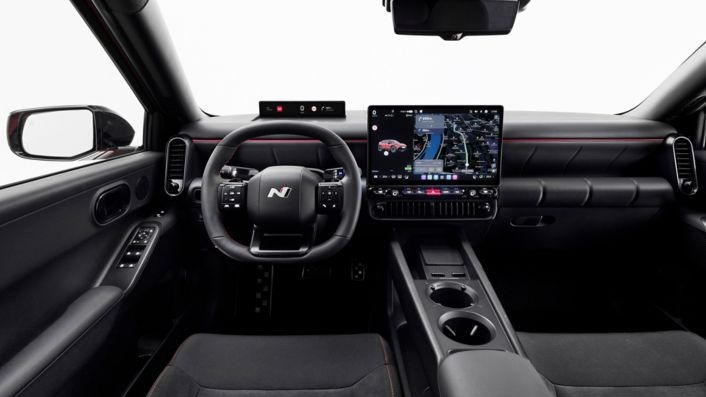
Li Wei’s message might say: “Before ordering the big SUV, have a look at this.” The 4.155-metre IONIQ 3 is a compact developed for Europe, with German Select orders starting at €28,950. Its entry 108 kW motor and 344 km WLTP figure target a different brief from maximum-distance touring. The larger-battery Long Range offers up to 497 km, but is a different, more expensive configuration with a different motor. Its 400-volt system takes roughly half an hour for a suitable 10–80% charge, rather than the G6’s twelve-minute claim. German pricing and equipment; Range and charging.
For family use, the argument is compact external dimensions and thoughtful storage. The 441-litre total comprises a 322-litre main luggage area and a 119-litre underfloor Megabox; that split matters when fitting a stroller. Select includes dual-zone climate control, a reversing camera and parking sensors, while HDA2 motorway assistance requires the appropriate higher trim and package. Heated or ventilated seats are not universal base equipment either. The photographed N Line is not the entry version. This could be Hans’s most useful unexpected detour: after checking build quality and space in person, he may find that the family does not need a large SUV. German ordering information does not establish availability or prices in every other country. European model introduction.
Which showroom would they return to on Monday?
Hans would revisit the Elroq first, provided five people and their belongings fit comfortably. The Peaq moves ahead when a third row is a regular need; the Volvo when its cabin and technology justify the premium. Li Wei’s Hyundai link could still change the order: a smaller IONIQ 3 may leave more of the budget available for other priorities.
Joe’s closest decision would be between the LEAF and Equinox. Nissan’s lower starting price is compelling, while Chevrolet’s higher EPA range and family layout deserve a direct comparison. The Tesla moves ahead if Joe values its charging and digital experience enough to pay the real, fee-inclusive difference. A 319-versus-321-mile rating will not make that decision for him.
Li Wei would take BYD and XPeng quotations home. The BYD’s lower domestic starting price and substantial body compete with XPeng’s charging technology and digital environment. The IONIQ 3 remains an alternative forwarded to Hans unless local availability is established.
The stories end with practical next steps: fit the family’s own child seats and luggage, obtain quotes for equivalent requirements, and drive the exact version on a familiar route. Range and power matter, but the right family EV emerges when those specifications meet everyday use.
Sources26
- Škoda Germany: Elroq, current versions and prices
- Škoda: new enhancements for Elroq and Enyaq, 23 March 2026
- Škoda Peaq: September 2026 press kit
- Škoda Germany: Peaq order launch and prices
- Škoda Peaq: battery and powertrain variants
- Škoda Peaq: interior and luggage space
- Volvo Germany: EX60
- Volvo EX60: technology and assistance
- Škoda Hungary: model selector
- Volvo Hungary: EX60
- Nissan: 2026 LEAF US pricing
- Nissan: 2026 LEAF US brochure
- Chevrolet: 2026 Equinox EV
- Van Chevrolet: 2026 Equinox EV model specifications
- Tesla US: Model Y configurator
- Tesla: introducing the new Model Y
- BYD China: Sealion 06 EV
- BYD Ocean Tangshan Jinlihai: 2026 Sealion 06 EV launch information
- XPeng China: 2026 G6
- XPeng China: G6 configuration table
- Hyundai: IONIQ 3 reveal, April 2026
- Hyundai Germany: IONIQ 3 orders open, September 2026
- Hyundai Europe: IONIQ 3 range and charging
- Škoda Media Room: editorial image use
- Hyundai News: terms of use
- Nissan News: legal notices and terms