Can a premium car earn its place by demanding less energy, less parking space and less attention from its owner? The Audi A2 e-tron makes that an unusually concrete question. Its compact five-door format puts efficiency and useful space alongside the familiar performance numbers. The interesting part is whether those qualities can make a smaller electric Audi feel worth its premium.
This is a presentation based on published factory specifications and official imagery, not a road test. Technical tables follow Audi’s 1 October 2026 sheets; market information was checked on 20 October. The headline numbers describe different configurations: 12.8 kWh/100 km belongs to the 140 kW Efficiency version, while 646 km WLTP belongs to the 170 kW car. Audi launch information.
A familiar name, a contemporary shape
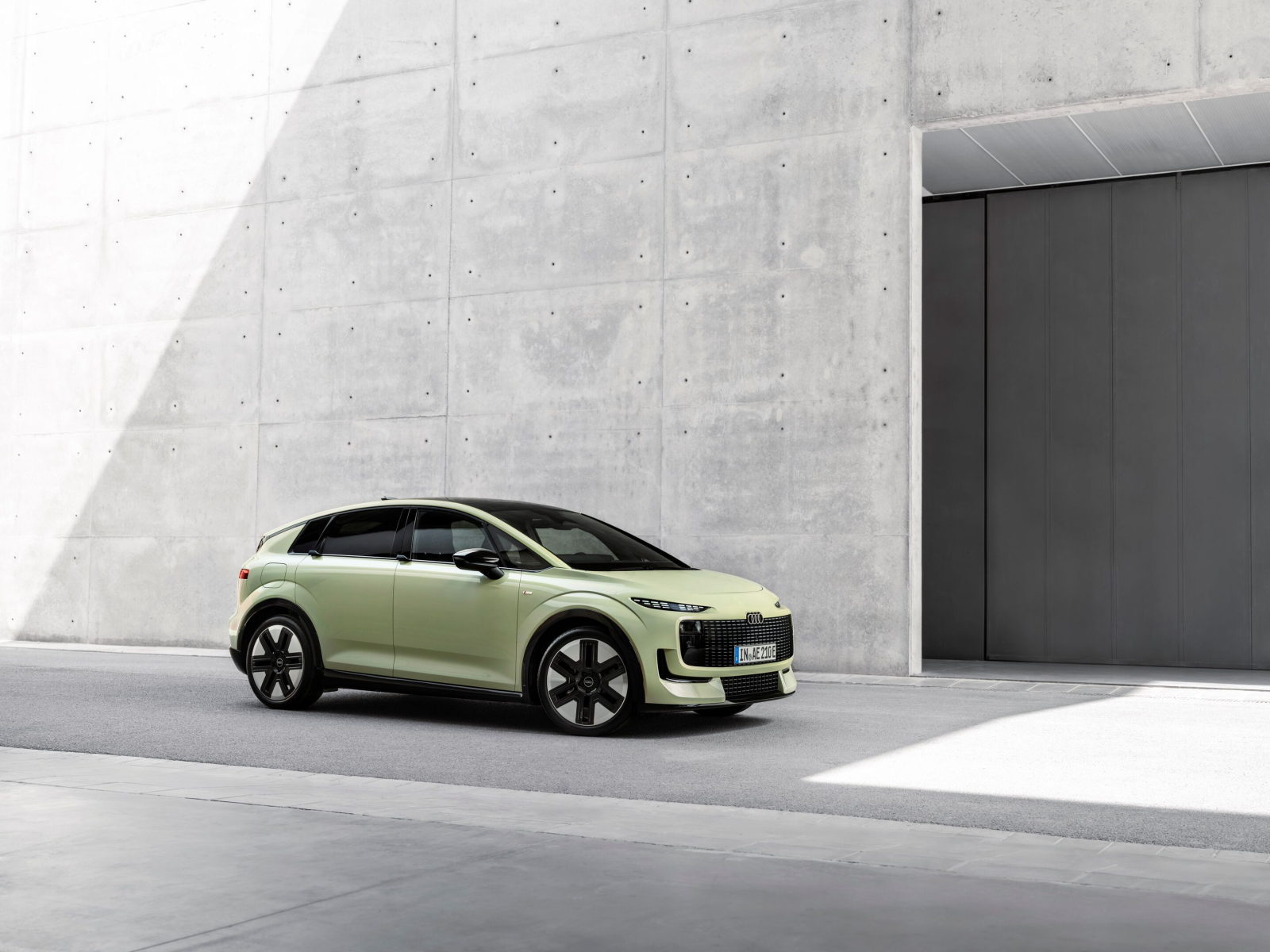
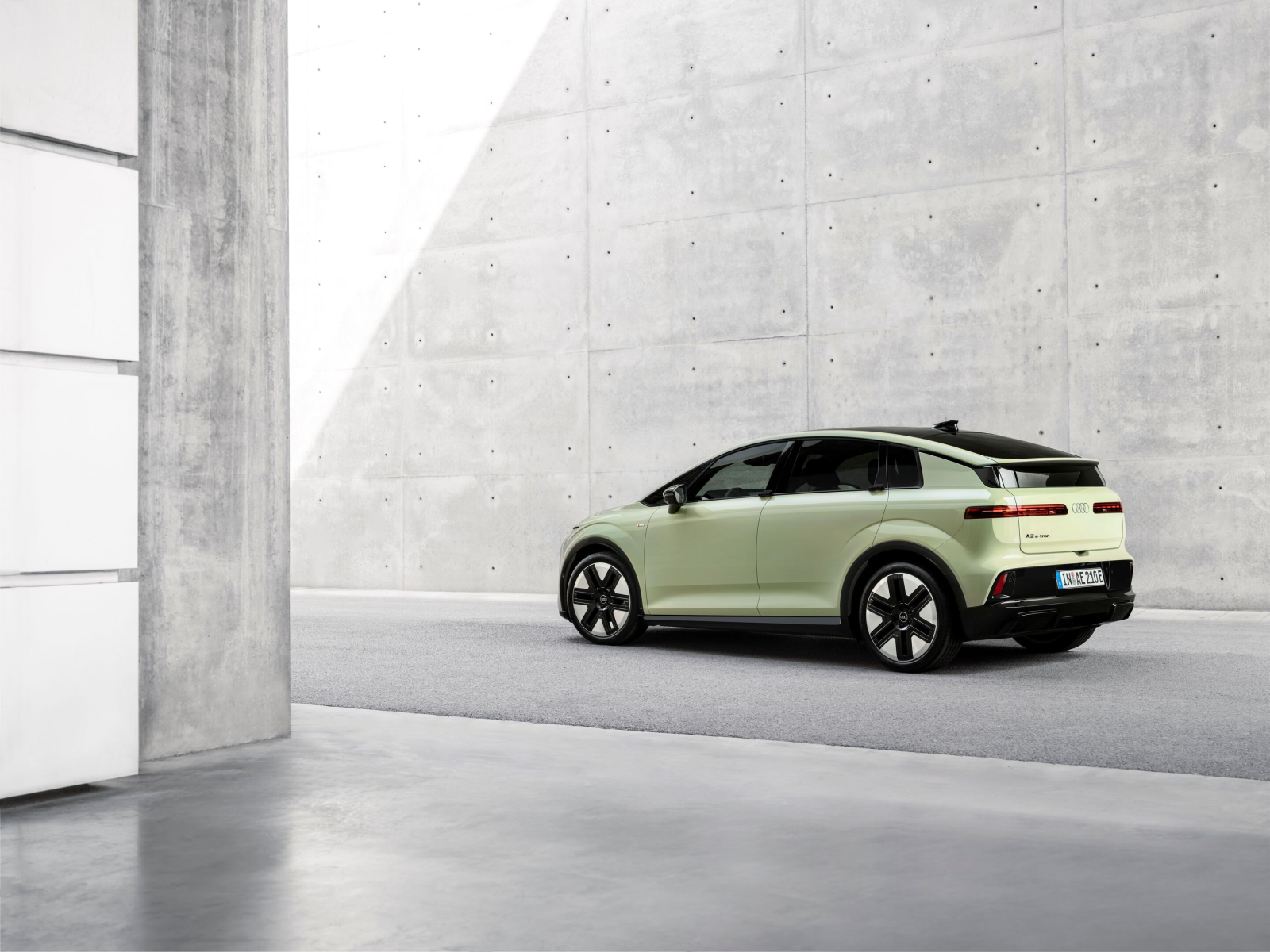
The photographs show a tall cabin, a short nose and a roof arch that does much of the visual work. The proportions are more unusual than those of a conventional premium hatchback. Slim daytime-running lights, a dark front panel and horizontal rear lamps keep it recognisably Audi. The design will divide opinions, but its shape has a legible purpose: allocating space to people while managing airflow.
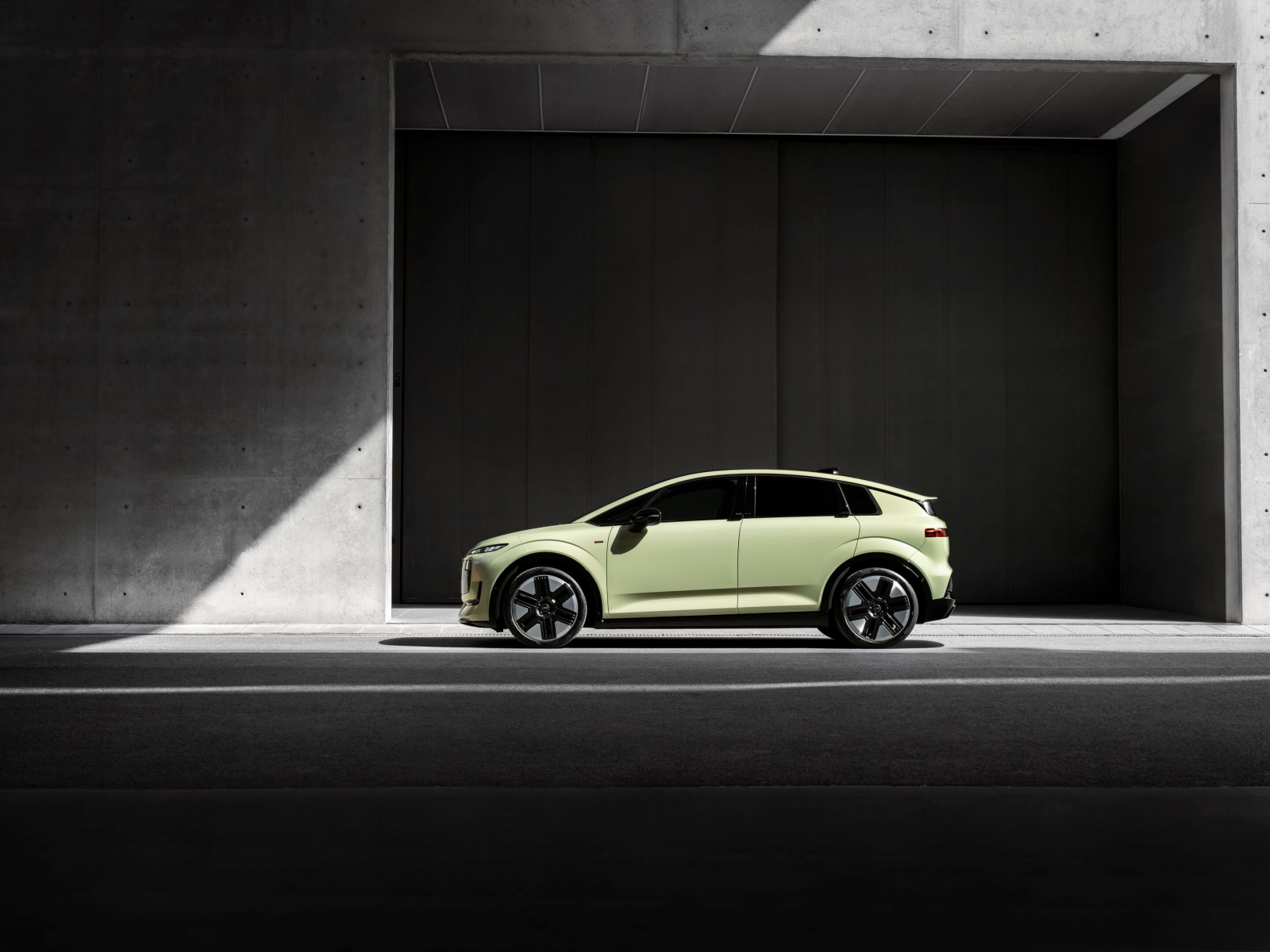
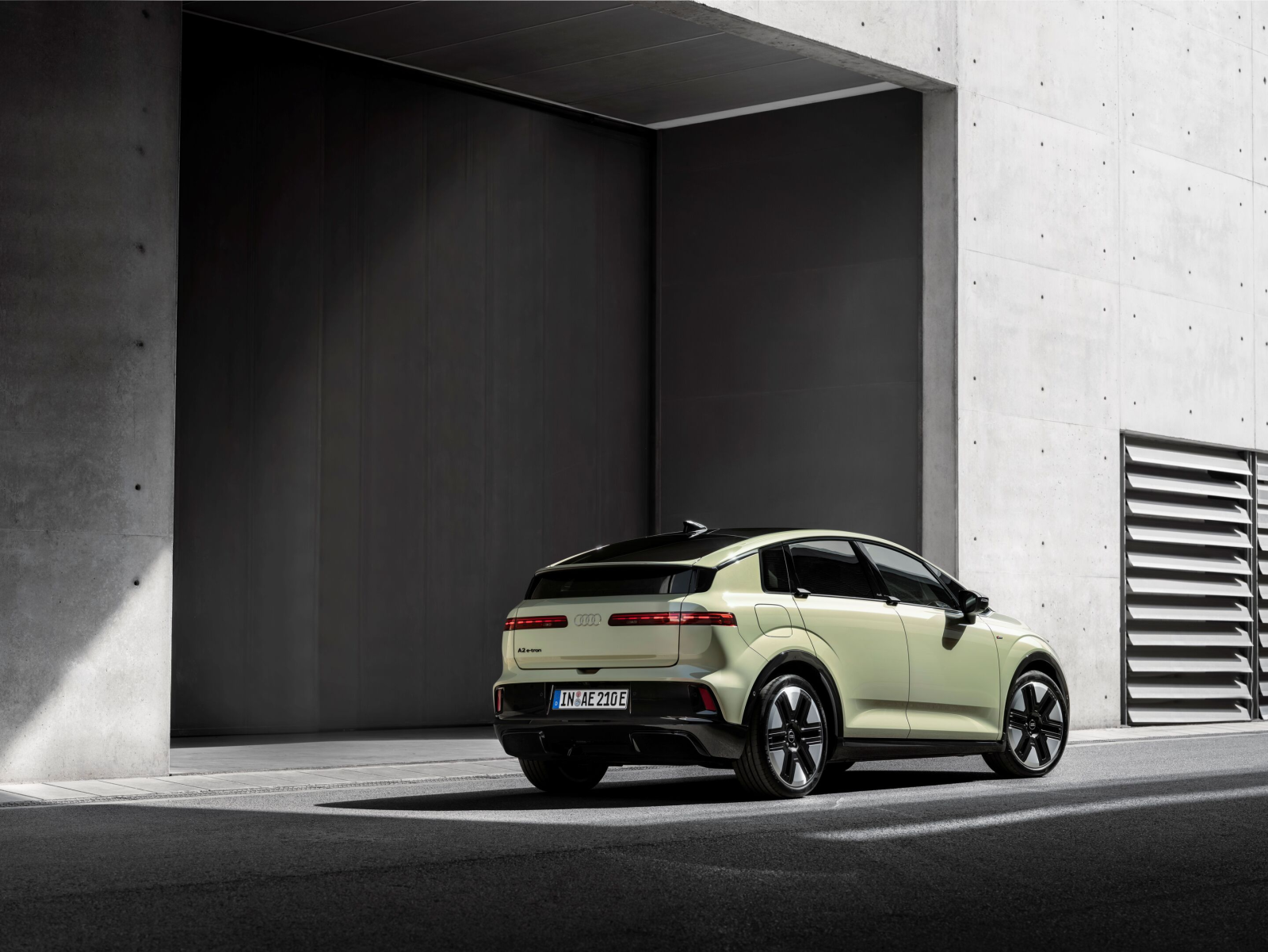
| Dimension or capacity | Audi A2 e-tron |
|---|---|
| Length | 4324 mm |
| Width, excluding / including mirrors | 1789 / 2039 mm |
| Height, depending on version | 1548–1583 mm |
| Wheelbase | 2768–2770 mm |
| Turning circle | 10.9 m |
| Luggage space / rear seats folded | 396 / 1336 litres |
| Front storage on 170 and 240 kW versions | 13 litres |
At a little over 4.3 metres long, the A2 offers a manageable urban footprint. Its width with mirrors exceeds two metres, which is the more relevant number for a narrow garage. The unitary body is steel, and the four variants weigh 1840–1930 kg without a driver: compact does not mean light. Dimensions and mass come from the 125 kW and 240 kW technical sheets; the front-storage specification is also described in Audi’s product presentation.
Where does the efficiency come from?
A drag coefficient of 0.24 is part of the explanation. Controlled cooling airflow, underbody coverage, aerodynamic wheels and wheel-area gap management work together. Silicon-carbide power electronics and refinements to the motor and transmission address drivetrain losses. Audi attributes up to 0.9 kWh/100 km to the aerodynamic measures in its own comparison with a configuration lacking them; this is not a measured advantage over a competitor. Audi’s efficiency engineering explanation.
This is a useful interpretation of premium: less energy for the same journey can mean fewer stops with a given battery, or sufficient range from a smaller pack. But 12.8 is a configuration-specific WLTP result. Speed, temperature, wind, rain, cabin heating and wheels all affect actual consumption. Treat it as a standardised comparison point, rather than the energy use you will necessarily see on a cold motorway trip.
Four outputs, three battery sizes
| Version | Battery gross / usable | 0–100 km/h | WLTP range | WLTP consumption |
|---|---|---|---|---|
| 125 kW / 170 PS | 52 / 50 kWh; LFP | 8.8 s | 376–423 km | 13.7–15.7 kWh/100 km |
| 140 kW / 190 PS | 61 / 58 kWh; LFP | 7.9 s | 445–515 km | 12.8–15.6 kWh/100 km |
| 170 kW / 231 PS | 84 / 79 kWh; NMC | 7.0 s | 580–646 km | 13.9–15.7 kWh/100 km |
| 240 kW / 326 PS | 84 / 79 kWh; NMC | 5.7 s | 593–630 km | 14.2–15.1 kWh/100 km |
Sources: Audi’s October technical sheets for 125 kW, 140 kW, 170 kW, 240 kW. The intervals cover different configurations; every wheel and equipment combination does not achieve the maximum range. The 140 kW consumption minimum requires the optional Efficiency package. Usable capacity is the energy available for operation, while gross capacity describes the entire pack.
Every version is rear-wheel drive, including the 240 kW model. The first three deliver 350 Nm; the flagship produces 545 Nm. On paper, the 125 kW car is already suitable for ordinary daily use. The 140 kW version combines the middle-sized pack with the efficiency-led configuration, while the 170 kW car is the long-distance choice. The flagship buys extra performance, not a larger battery than the 170 kW version. Top speed is 160 km/h for the first three and 200 km/h for the 240 kW car.
Charging: compare the stop, not just peak power
| Version | Maximum AC | Maximum DC | DC 10–80% |
|---|---|---|---|
| 125 kW | 11 kW | 100 kW | 24 minutes |
| 140 kW | 11 kW | 105 kW | 26 minutes |
| 170 kW | 11 kW | 183 kW | 29 minutes |
| 240 kW | 11 kW | 183 kW | 29 minutes |
All versions use a 400-volt system. The table follows the October factory sheets and assumes appropriate charging equipment and battery temperature. A smaller pack can reach 80% sooner despite a lower peak because it accepts less energy during the stop. The nominal 10–80% window of the 79 kWh usable pack is 55.3 kWh. Over 29 minutes, that implies roughly 114 kW average power into the battery. This is an illustrative calculation, not a measured charging curve.
At home, both the 11 kW onboard charger and the available electrical supply set the limit. Connecting to a 22 kW AC post does not turn the car into a 22 kW AC charger. The route planner accounts for charging stops and supports battery conditioning before arrival. These details matter on a long journey: a high advertised peak cannot compensate for arriving at a charger with a battery outside its preferred temperature range. Audi charging information.
The cabin has to earn the premium
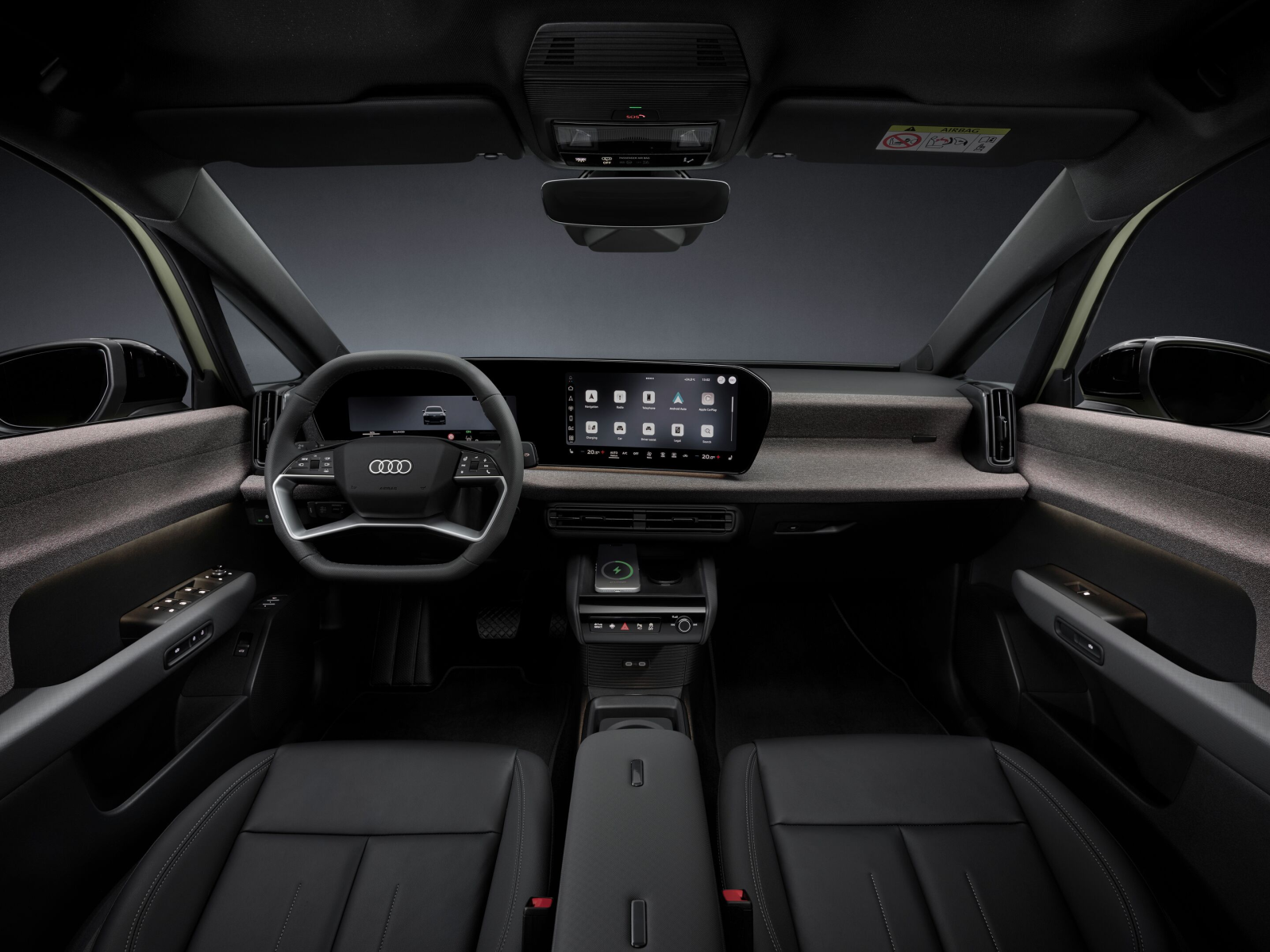
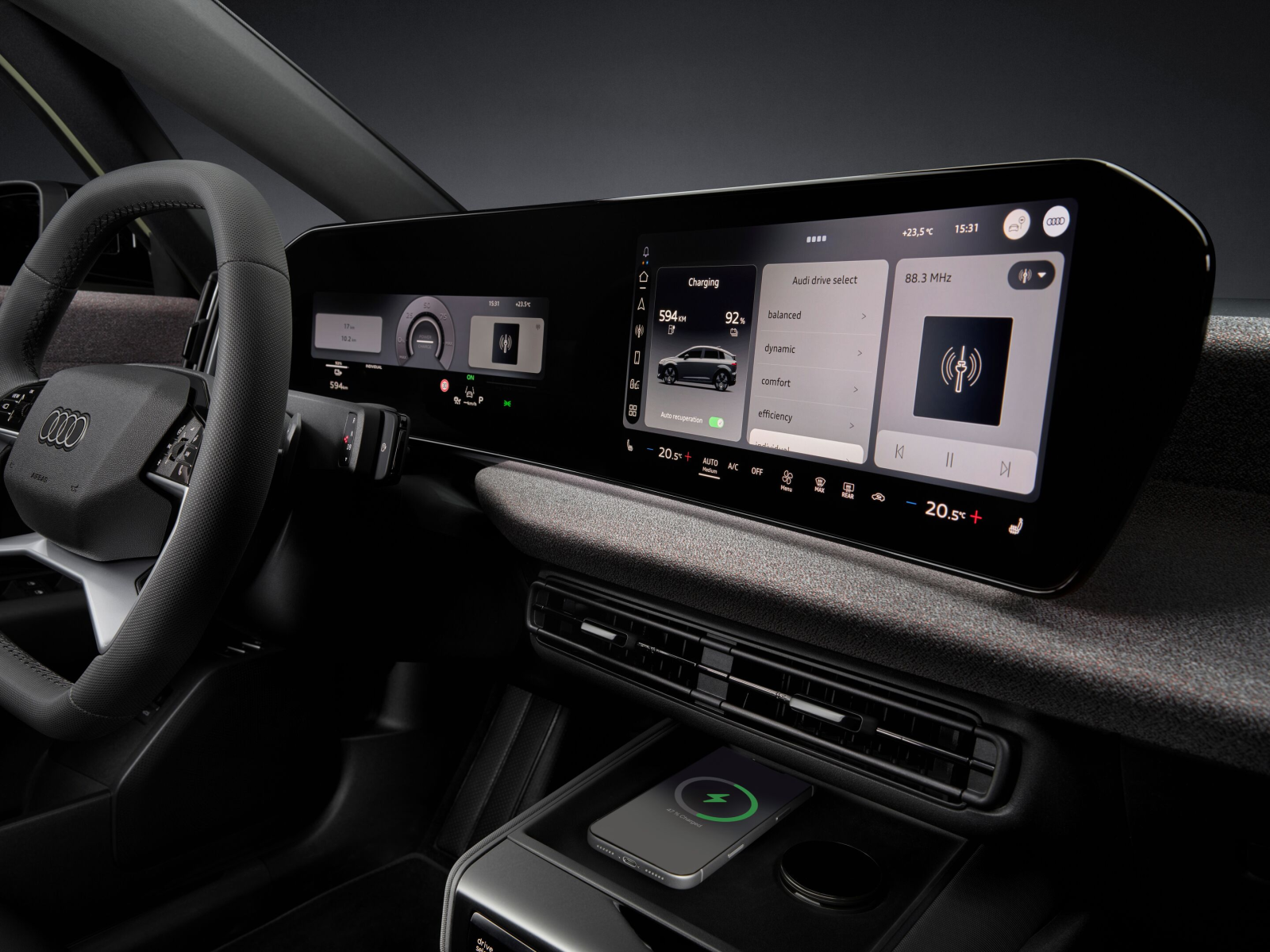
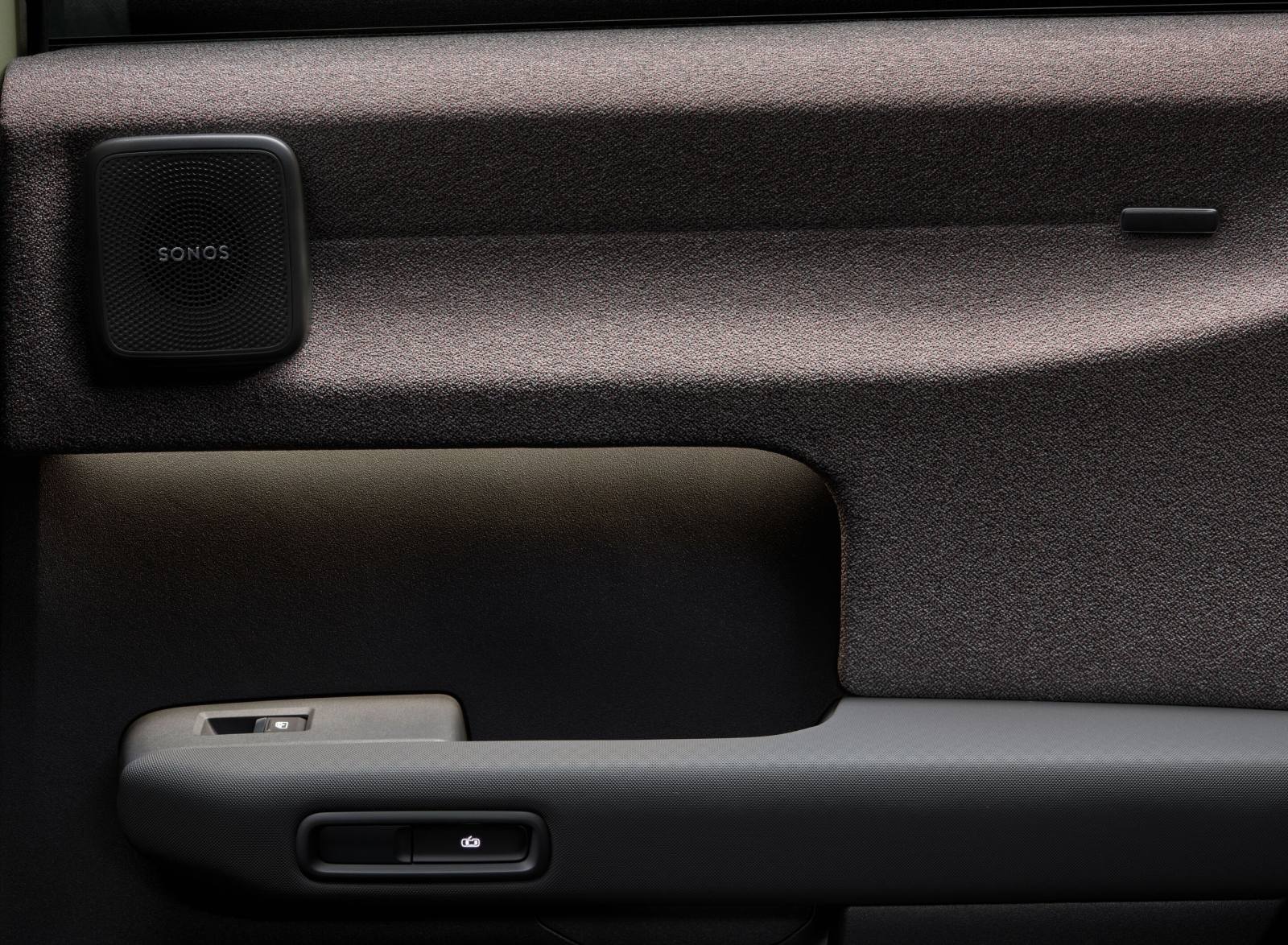
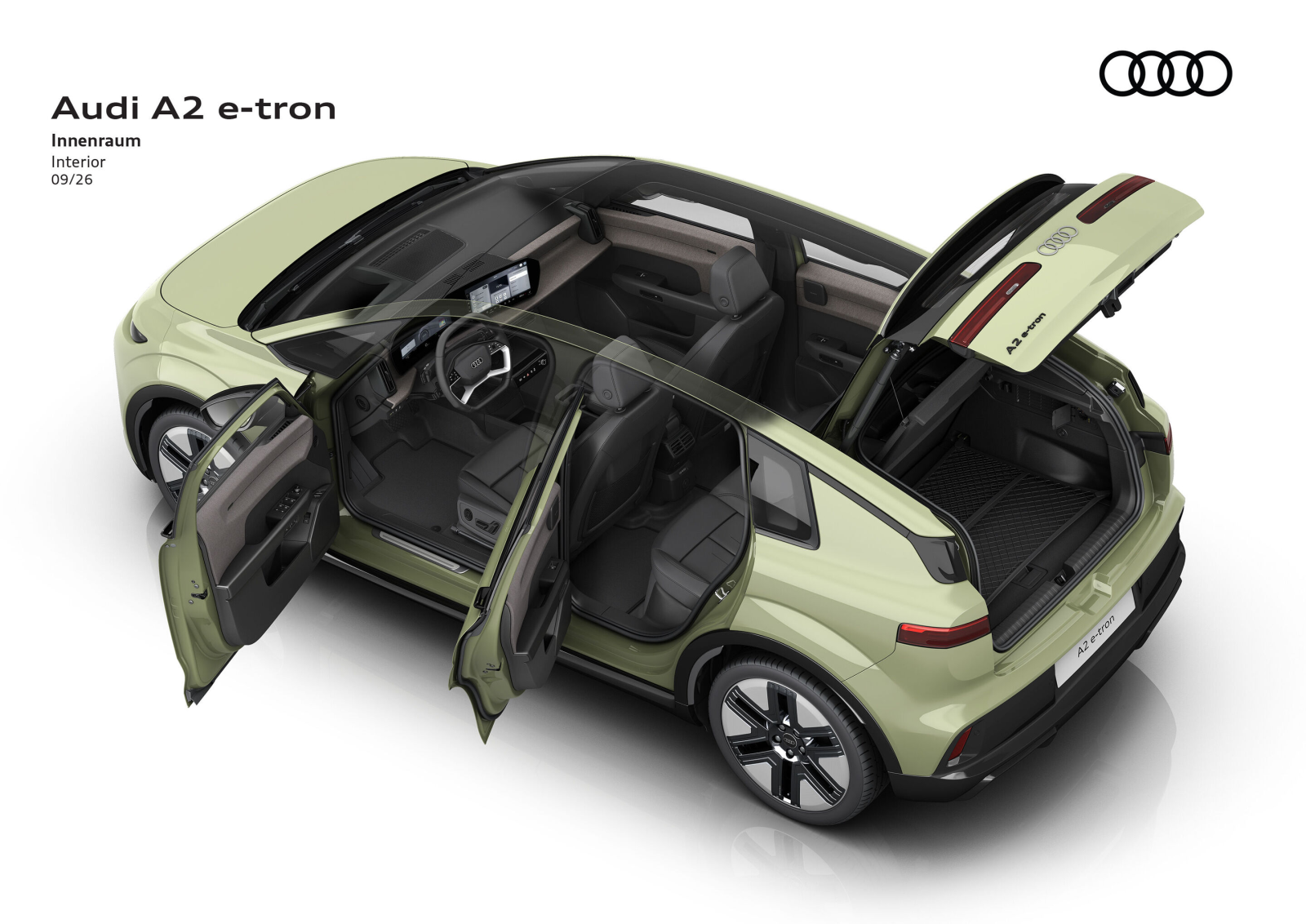
An 11.9-inch driver display sits alongside a 12.8-inch central touchscreen. In the photographs, fabric surfaces across the dashboard and doors give the cabin much of its character. The optional glass roof covers 1.6 square metres. A Fidlock magnetic-mechanical mounting system organises small storage modules and accessories. Their value is practical: a cup, phone or cable should be easy to reach, securely held and quiet on the move. Audi’s cabin and practicality presentation.
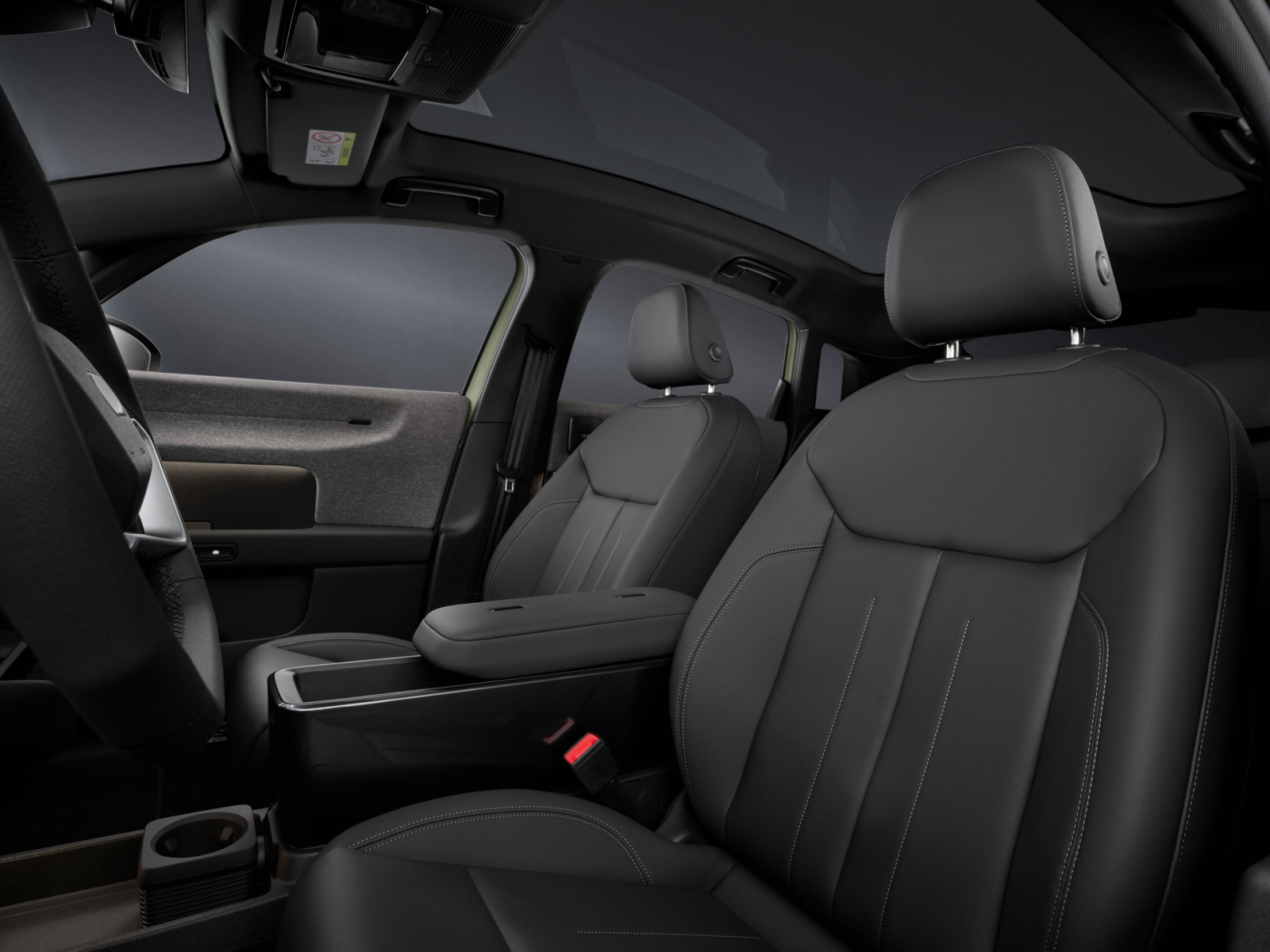
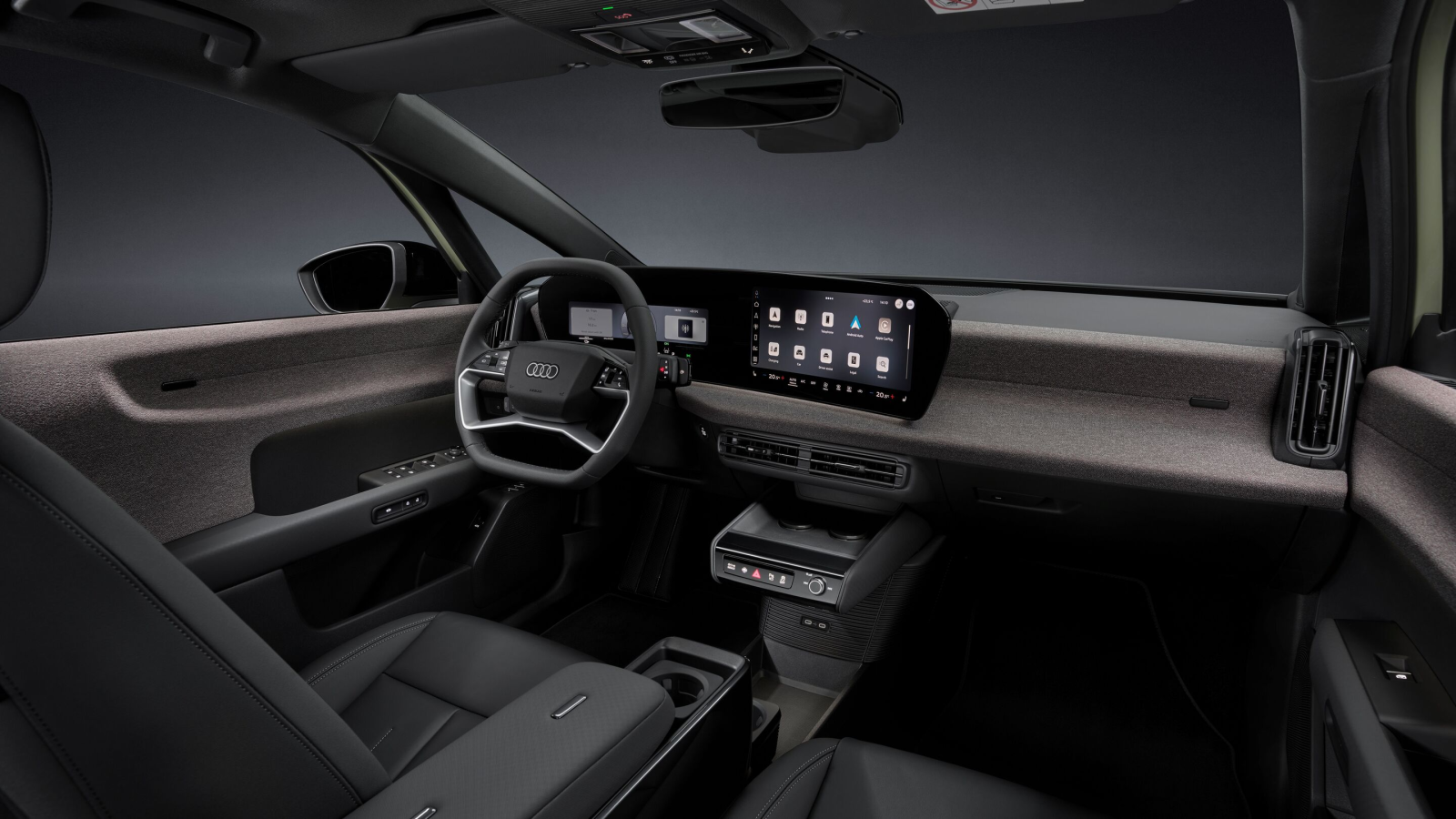
A separate instrument display will appeal to drivers who want speed information directly ahead. A large central screen is not proof of good usability, however. Adjusting the temperature, changing a route, connecting a phone and accessing frequent assistance settings will reveal more than the display dimensions. The same applies to upgraded audio and material quality: a photograph can show their layout, but cannot establish their sound, feel or durability.
Family use: shape matters as much as volume
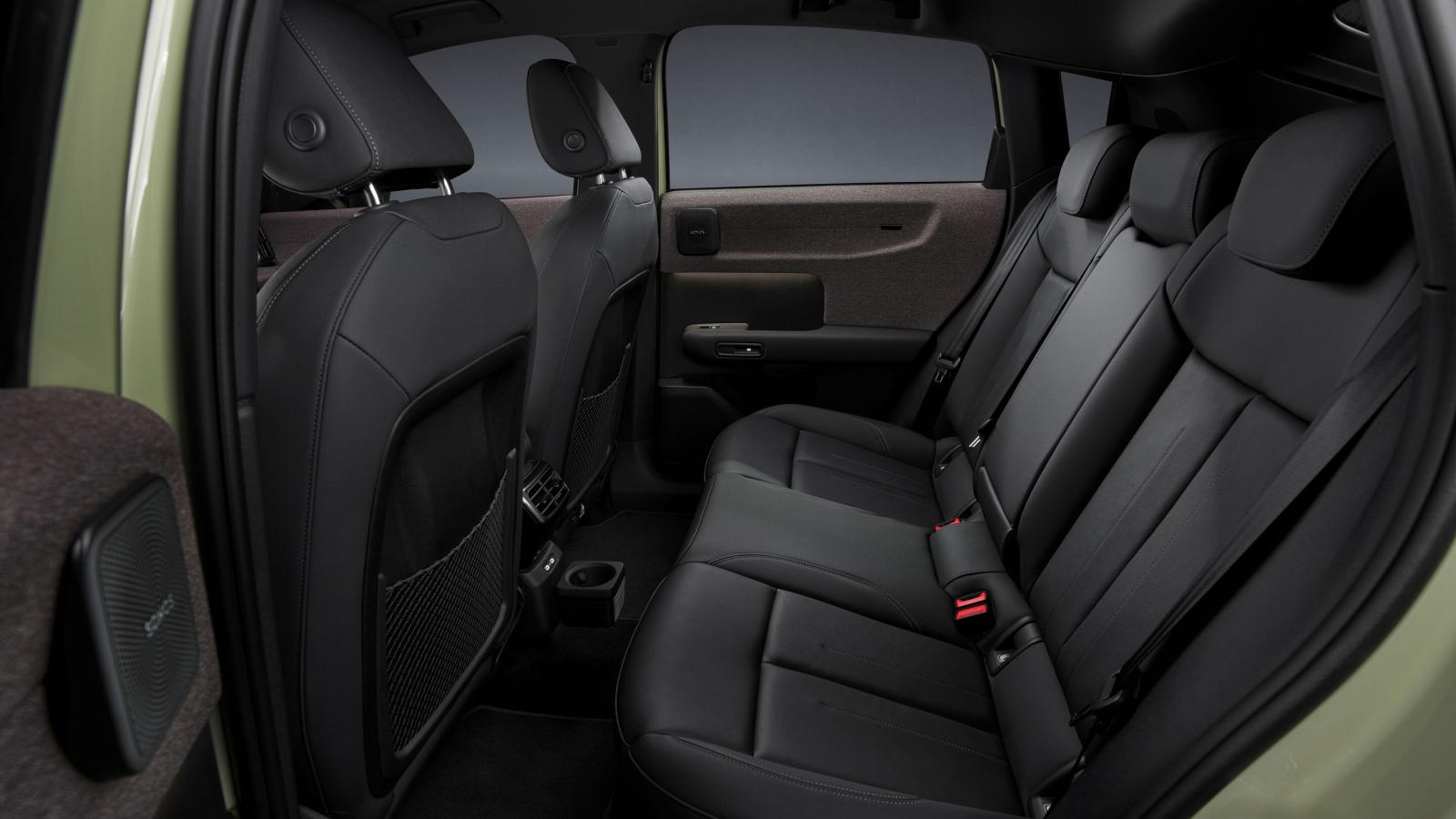
The 396-litre luggage compartment looks promising for everyday shopping and shorter trips; the factory figure rises to 1336 litres with the rear seats folded. The 170 and 240 kW versions include a 13-litre front compartment, useful for a cable rather than bulky luggage. Aperture size, loading lip, floor layout and the fit of your pushchair matter alongside volume. Five seats also do not automatically mean that three child seats will fit across the rear bench.
Ride, handling and assistance: what is established?
The technical sheets specify MacPherson front suspension and a four-link rear axle. Controlled damping is standard on the 240 kW car and optional on the 170 kW version; the 140 kW Efficiency package includes sport suspension. Selecting B enables one-pedal driving. Adaptive cruise control, a rear camera and parking assistance feature in the launch specification. These ingredients suggest an everyday focus, but ride comfort and steering feel still require a drive. Audi’s suspension and assistance description.
Wheel and tyre choice deserves a back-to-back assessment on the roads you actually use. Consider purchase cost, replacement tyres, range and comfort together. Assistance packages should likewise be checked against the local order specification. They support the driver; the presence of an advanced package is not permission to stop supervising the vehicle.
Powering equipment, and the limits of home integration
V2L supplies external appliances. Audi’s European product information describes an optional charging-port adapter, a minimum 20% battery state of charge and stationary operation; the adapter is not used while the car is charging. This can be useful for compatible equipment on an outing, but the necessary accessories and activation should be checked for the destination market. Audi’s V2L operating conditions.
Home integration is a separate proposition. Audi explicitly describes V2H with a compatible DC wallbox for Germany, Austria and Switzerland. That is a market-specific offer, not a worldwide capability guarantee. A normal AC home charger is not sufficient evidence that the household can use energy from the car. Compatible hardware, local availability and the installation arrangement all need to be established. Audi’s stated V2H markets.
Prices and launch: keep the market in view
| Version | Announced German starting price |
|---|---|
| 125 kW | €38,200 |
| 140 kW | €41,900 |
| 170 kW | €48,900 |
| 240 kW | €51,200 |
These are German launch prices, not a pan-European price list or a conversion from another market. Tax treatment, equipment and dealer offers vary by country. In particular, the 140 kW base price should not be mistaken for a quotation including the optional Efficiency package. A useful comparison matches the equipment you want before judging whether the larger battery or the Audi interior is worth the additional cost. Audi’s German launch pricing.
Audi announced ordering from 10 September 2026 and first deliveries from December. That is the stated European rollout, not proof of simultaneous availability in every country. A local configurator, confirmed order and delivery allocation are the relevant milestones for an individual buyer. WLTP figures in this article should not be treated as US EPA ratings.
Four rivals, four different reasons to cross-shop
The A2’s competition extends beyond premium badges. A well-equipped electric hatchback or small SUV can fulfil much the same household role. These are use-case alternatives, rather than a claim that their base prices or standard equipment match. A purchase decision needs comparable local quotations.
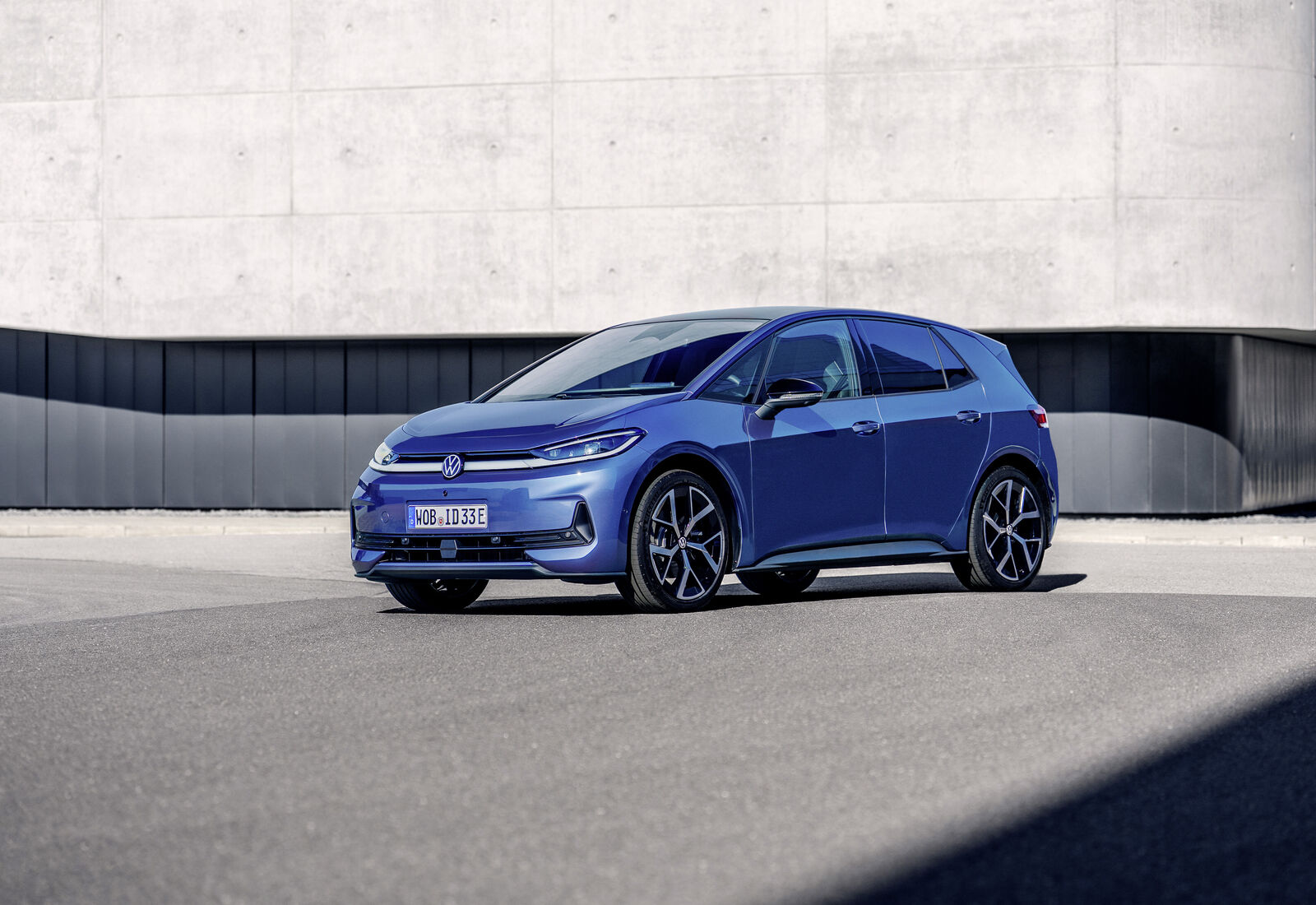
Volkswagen ID.3 Neo — the closest practical alternative. Its 50, 58 and 79 kWh usable packs and 125, 140 and 170 kW outputs offer familiar steps. The large-battery version promises up to 630 km WLTP and 183 kW DC charging. Together with the redesigned interior, that makes it a useful benchmark for how much extra value the Audi’s cabin and details provide. Compare the two in person. Official ID.3 Neo introduction.
CUPRA Born — for a stronger sporting identity. The updated 2026 car brings a new front-end design and a revised cabin. The VZ produces 240 kW, reaches 100 km/h in 5.6 seconds and has an advertised WLTP range of up to 631 km. It directly challenges the fastest A2: visual drama and a performance-led identity may matter more to some buyers than a restrained premium atmosphere. The figures alone cannot establish which is better to drive. Updated CUPRA Born introduction.
Volvo EX30 — the compact premium SUV alternative. At 4233 mm long with a 2650 mm wheelbase, it is shorter than the Audi in both measures. The P5 Long Range in the cited European specification produces 200 kW, offers 475 km WLTP and accelerates to 100 km/h in 5.3 seconds. It is worth considering for its format and brand appeal, while checking rear accommodation carefully. The A2 170 offers considerably more rated range. Version names differ by market. Volvo EX30 specifications.
Kia EV3 Long Range — the family-utility challenger. Its 81.4 kWh battery is associated with up to 605 km WLTP and approximately 31-minute charging from 10 to 80%. Kia quotes a 460-litre rear compartment and 25 litres of front storage, making it relevant to buyers who carry bulky luggage. Volume definitions can differ, so checking actual bags remains useful. The EV3 tests how much you value the premium badge against practical accommodation. Kia EV3 factory information.
| Compared version | Quoted maximum WLTP | Main reason to consider it |
|---|---|---|
| Audi A2 e-tron 170 kW | 646 km | Compact premium format and range |
| Volkswagen ID.3 Neo 79 kWh | 630 km | Close technical and practical alternative |
| CUPRA Born VZ, 2026 | 631 km | Sporting identity and 240 kW |
| Volvo EX30 P5 Long Range | 475 km | Shorter premium SUV |
| Kia EV3 Long Range | 605 km | Luggage capacity and family utility |
The table uses the named configurations and primary sources above. It does not compare base models or vehicles at an identical price. Each maximum requires the relevant configuration. A real motorway ranking would require testing under common conditions, so use range alongside performance, space, equipment and cost rather than as a complete verdict.
What is efficiency actually worth?
For illustration, a 3 kWh/100 km difference in your own use amounts to 450 kWh over 15,000 km a year. At an assumed blended charging cost of €0.30/kWh, that is €135 annually. This is neither a current tariff quote nor a measured A2 saving. It shows why efficiency alone may not repay a substantial purchase premium. Its value can also be fewer stops, lower energy demand and a car that fits everyday life more easily.
Can efficiency be the new luxury?
The most compelling part of the A2 proposition is its attempt to deliver a complete premium car in a compact footprint. The 140 kW Efficiency configuration most closely follows the efficiency theme; the 170 kW version makes the stronger case for frequent long journeys. The flagship serves a separate appetite for performance. The central reservation is price: against the ID.3 Neo and other alternatives, the Audi must also prove its value in usability, materials and the quality of the journey.
Efficiency becomes a luxury when it makes ownership easier without demanding constant attention. The A2 e-tron’s published specifications offer a promising basis. Winter motorway use, rough-road comfort and everyday interaction remain the decisive questions. If it delivers there too, the appeal of this compact Audi could extend well beyond a low consumption figure.
Sources16
- Audi: A2 e-tron – Rethinking efficiency (2026-09-07)
- Audi: A2 e-tron sets new efficiency benchmark (2026-08-04)
- Audi A2 e-tron 125 kW – technical data, 2026-10-01
- Audi A2 e-tron 140 kW – technical data, 2026-10-01
- Audi A2 e-tron 170 kW – technical data, 2026-10-01
- Audi A2 e-tron 240 kW – technical data, 2026-10-01
- Audi Magyarország: A2 e-tron árlista, 2026. szeptember 10-től
- Audi Magyarország: A2 e-tron áttekintés
- Audi Magyarország: A2 e-tron hatótávolság és töltés
- Audi Magyarország: A2 e-tron megjelenés és felszereltség
- Volkswagen: World premiere of the ID.3 Neo (2026-04-15)
- CUPRA: The new Born hits the roads (2026-04-20)
- Volvo EX30 – current Hungarian specifications
- Kia EV3 – Hungarian product and technical information
- Audi A2 e-tron: official photo album
- Volkswagen ID.3 Neo: official photo DB2026AU00230