The new BMW iX5 is easy to reduce to big numbers: almost five metres long, 425 kW of power and an updated European WLTP range of up to 850 km. But the most revealing detail in the official photographs is much smaller. Real stone appears on the centre console while driving information migrates to the base of the windscreen. The combination of something ancient and something digital says more about BMW’s idea of electric luxury than another acceleration claim.
This is a source-based feature checked on 27 October 2026, using BMW’s October press photographs, rather than a road test. Its subject is the battery-electric iX5 60 xDrive. The iX5 Hydrogen is a separate fuel-cell programme with series production planned for 2028. The pictured M Sport media car includes optional equipment, so its appearance is not a promise of entry-level specification in every country. Official photography; the hydrogen programme.
Outside: familiar X5 proportions, a different face
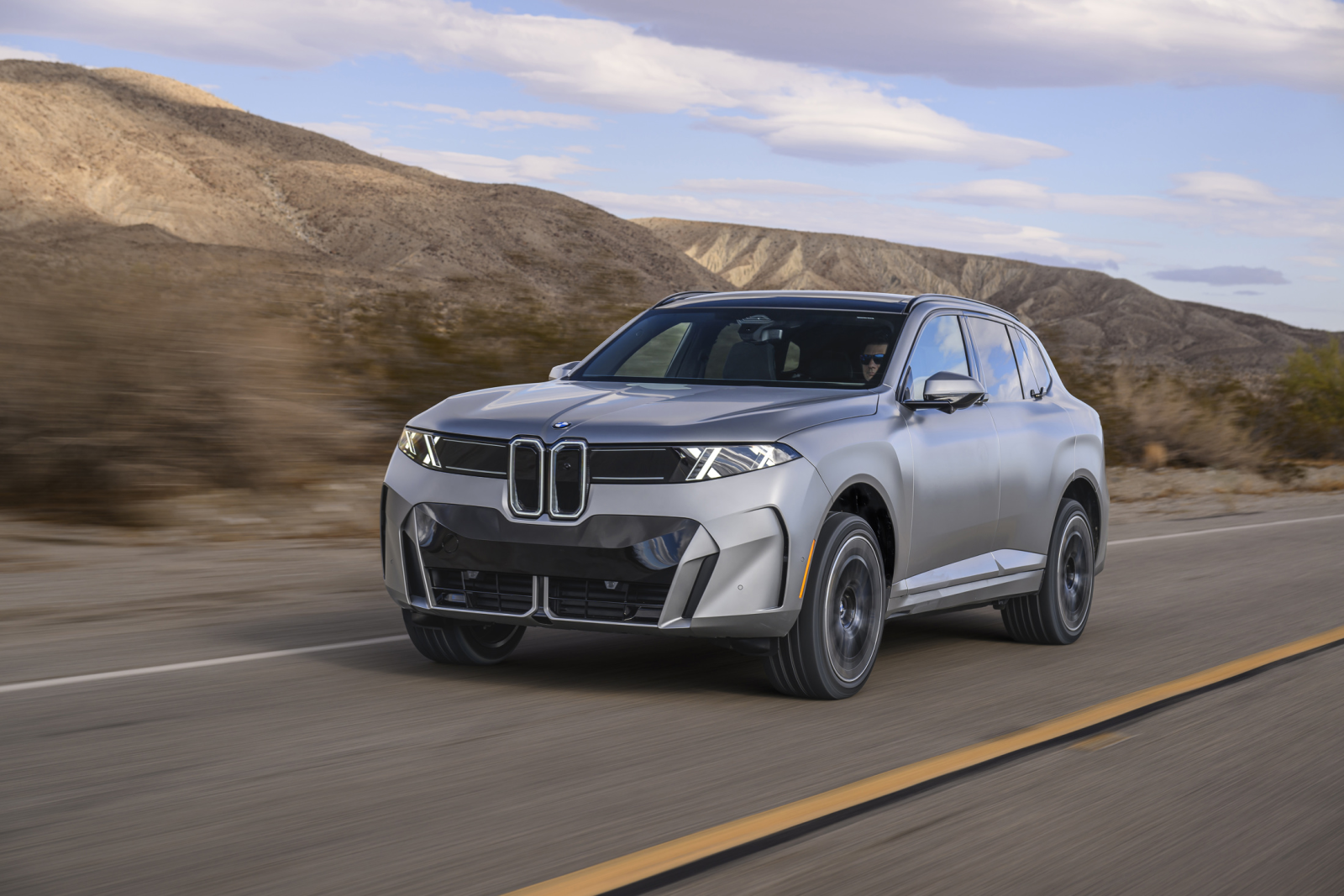
The photographs show a remarkably upright nose. Two narrow kidneys and the dark headlight surround create a strong graphic band, while the lower bumper is much more sculpted. This is specifically the M Sport interpretation; the package makes a substantial contribution to its character. The side view is calmer. Broad door panels carry few interruptions, and the long roof and rear shoulders preserve the substantial stance that attracts buyers to an X5 in the first place.
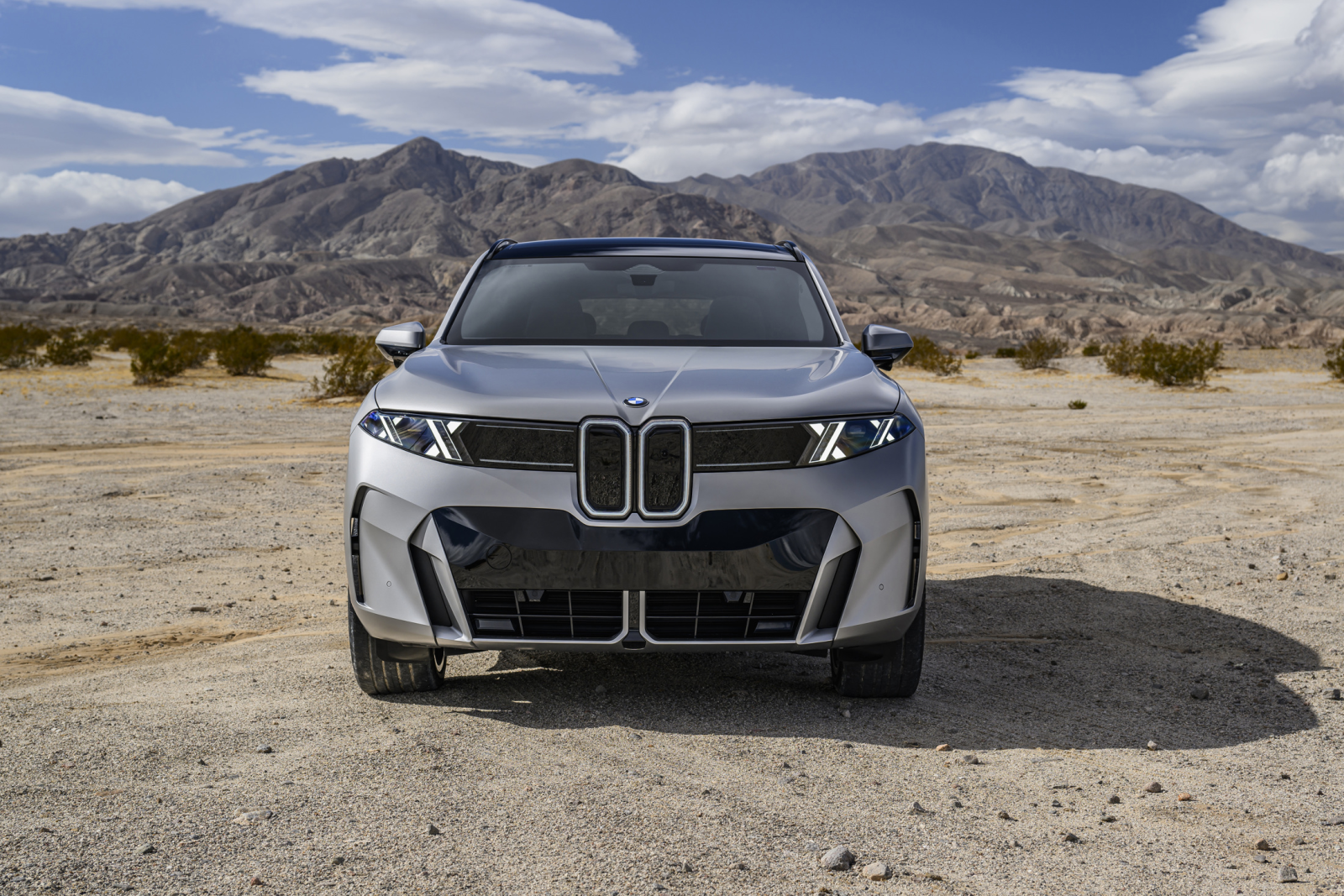
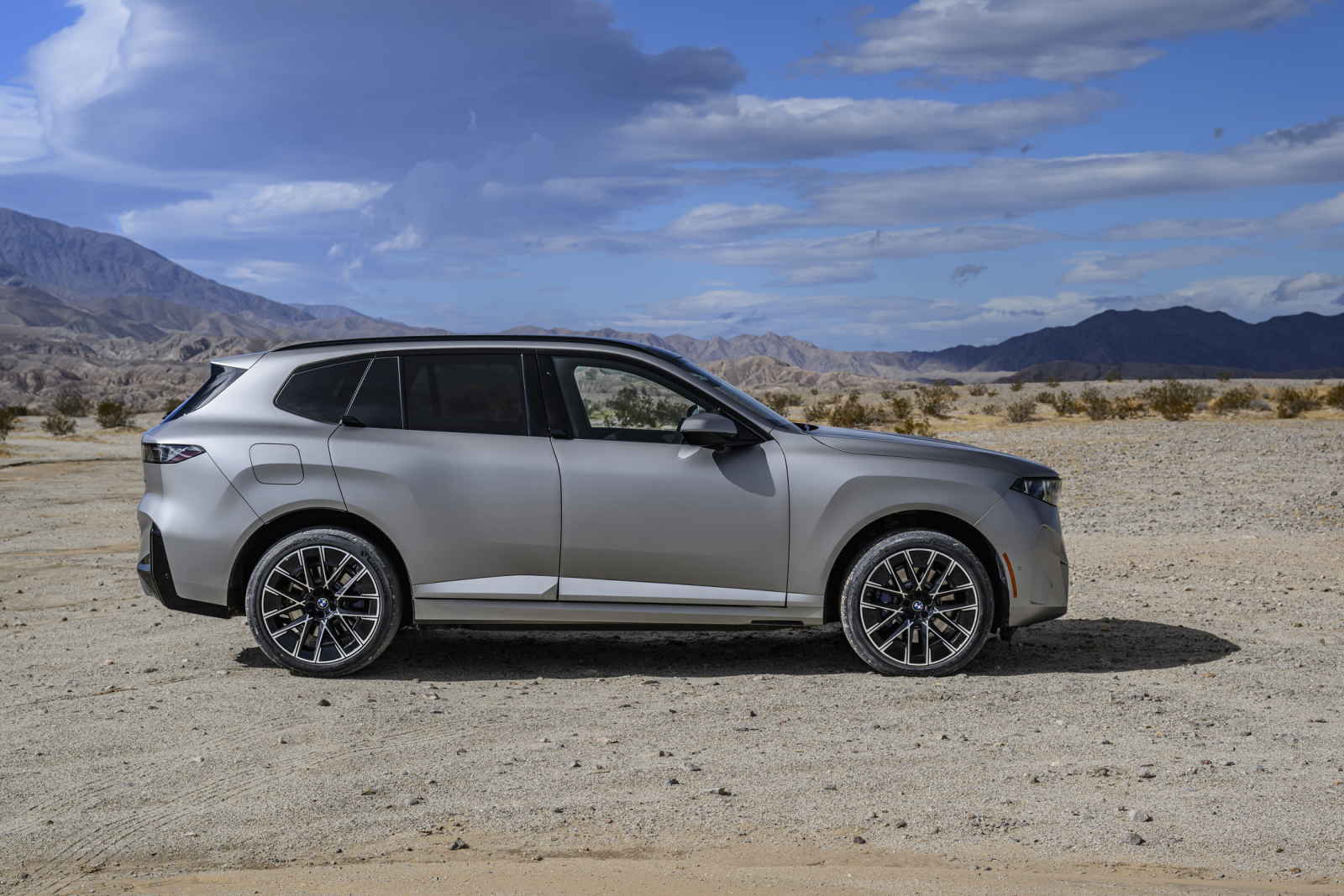
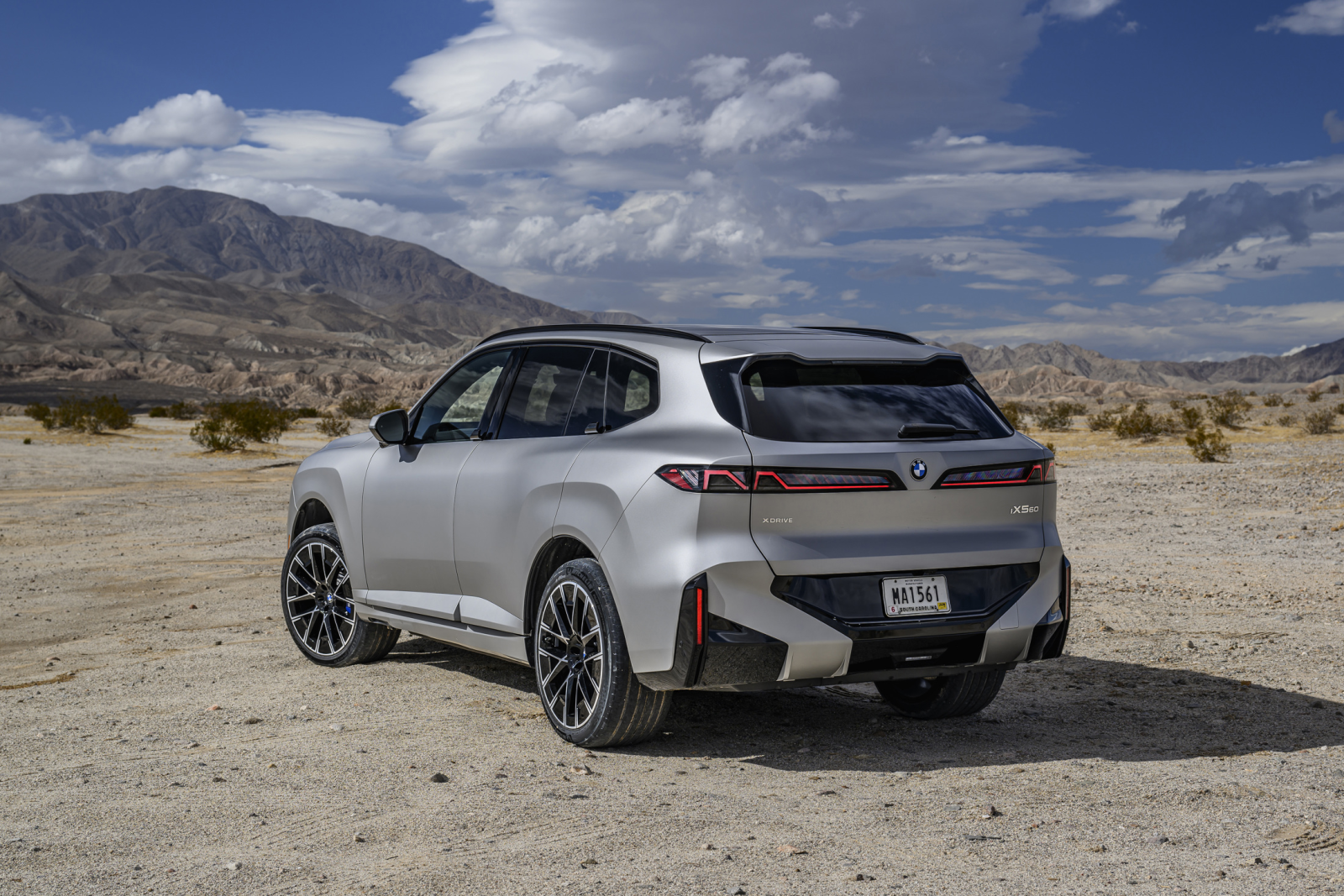
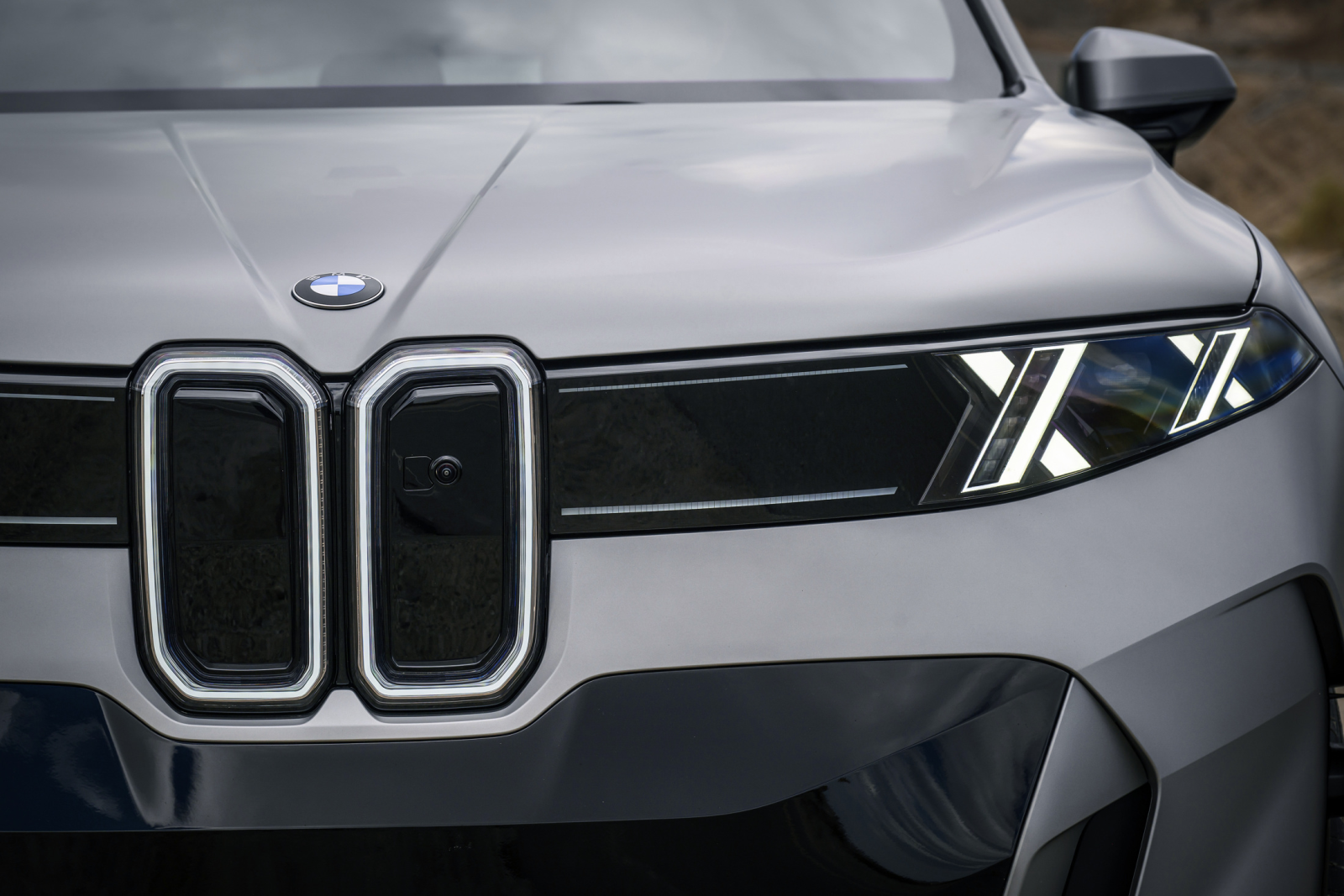
The double-X lighting motif appears at both ends. BMW’s Winglet handles move the point of interaction towards the pillars, leaving the main door surfaces visually cleaner. A close-up makes the idea easier to understand than a distant profile: look for the small projecting grip. Fully powered door movement is an equipment choice, separate from the handle’s shape. BMW’s exterior and door-operation description.
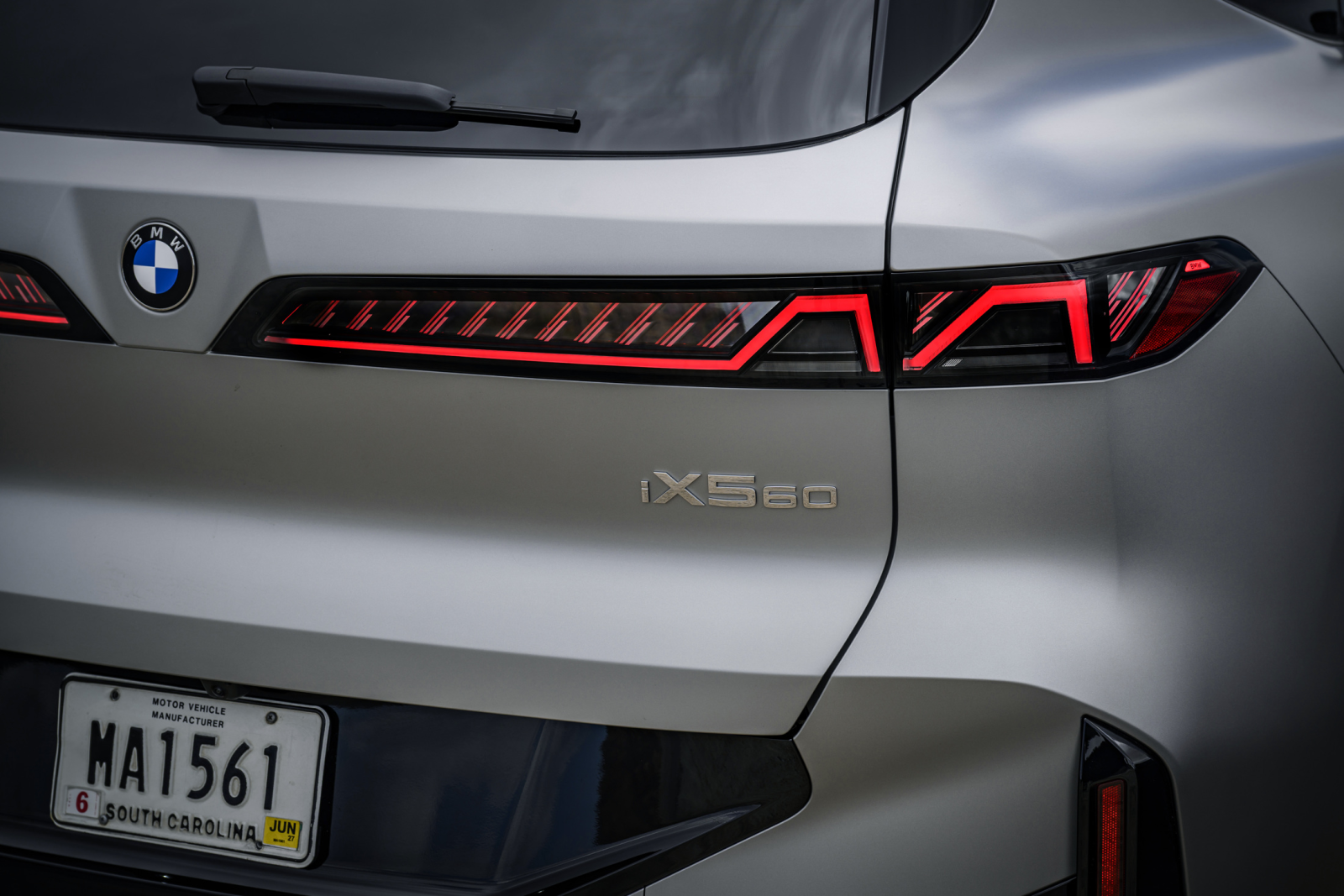
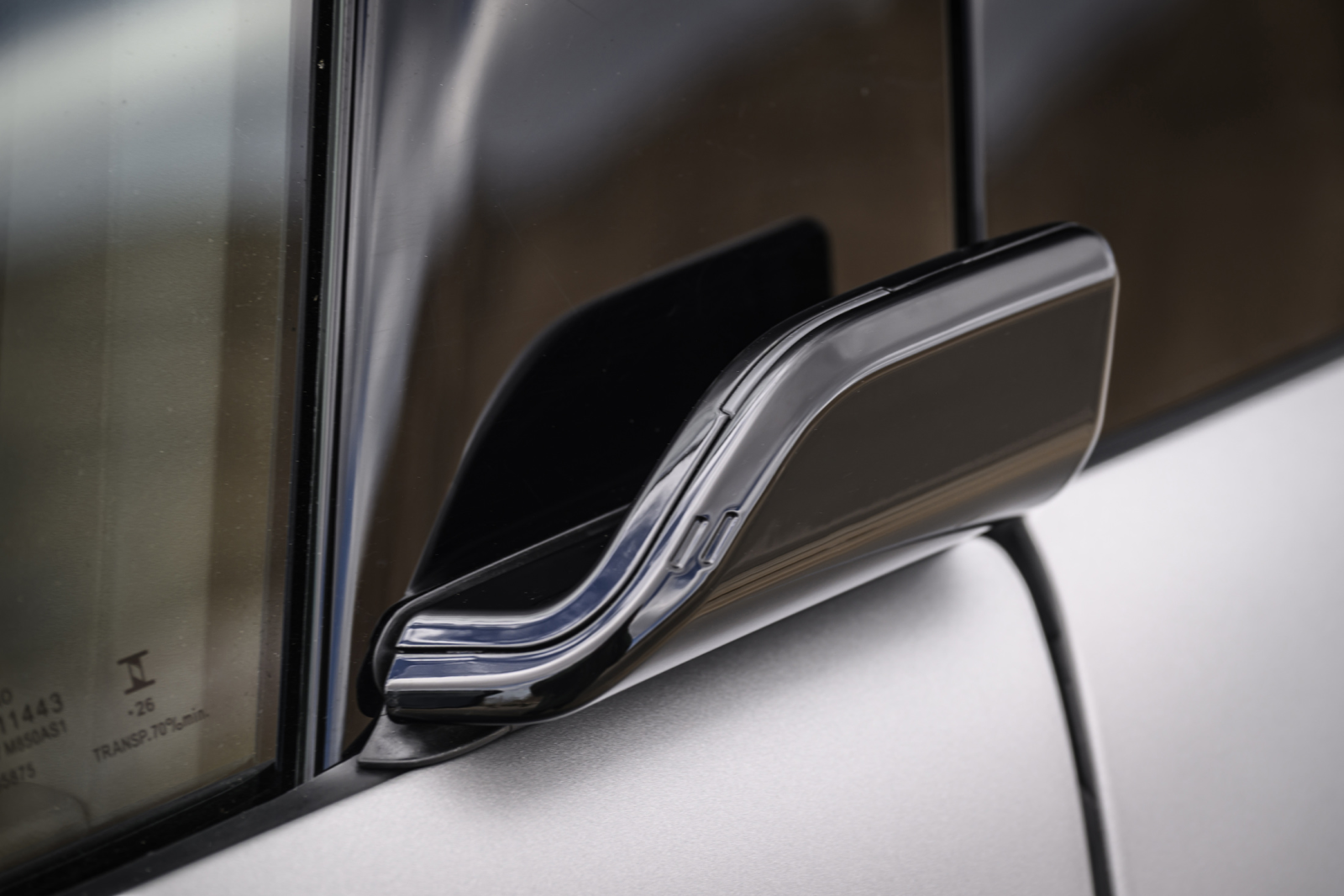
Cleaner surfaces do not reduce the space it occupies. The body is 4,994 mm long and the overall width reaches 2,216 mm with mirrors. In a narrow parking structure, that number can matter more than the acceleration figure. Measuring a garage entrance is a useful part of assessing a luxury SUV: visual simplicity cannot create physical clearance. Current manufacturer dimensions.
Inside: where did the instrument cluster go?
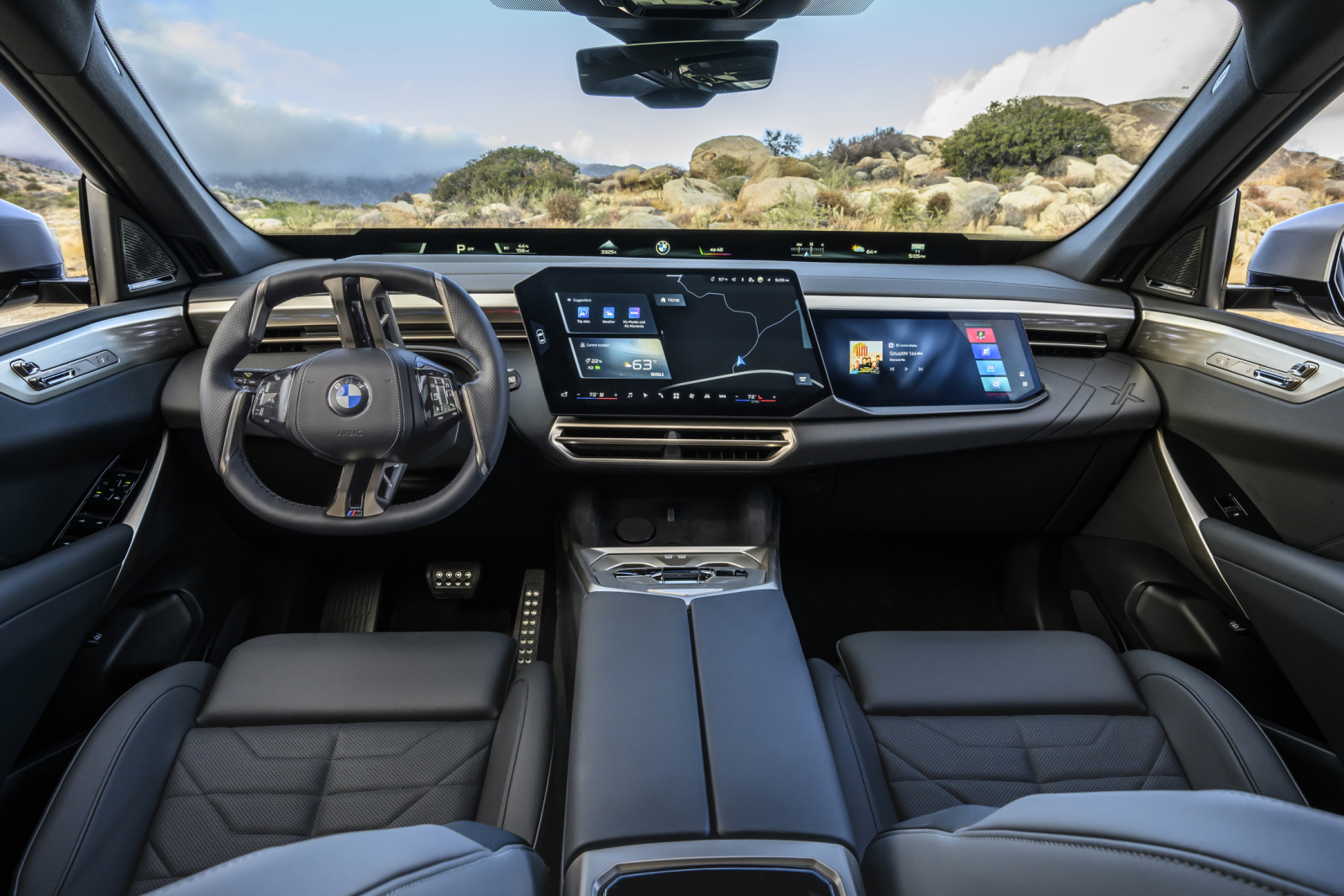
Panoramic Vision projects information onto the dark strip at the bottom of the windscreen. Driving information occupies the area ahead of the driver; configurable content extends across the middle and passenger side. A separate 3D head-up display places additional information in the driver’s line of sight. Below sits the 17.9-inch central touchscreen. The consequential change is therefore the arrangement of attention across different surfaces, rather than screen size alone. BMW’s display-system description.
In photographs, this makes the dashboard appear broader and less crowded. Whether it also feels more natural on the road cannot be established from a press image. The useful questions concern finding familiar functions, the need to glance down and readability in strong sunlight. A successful interface eventually becomes unremarkable: after a few weeks, the driver should be using it without having to think about its novelty.
An optional 14.6-inch passenger display adds entertainment alongside the central screen. BMW describes a camera-based system that darkens it when the driver becomes distracted while moving. That is an appealing long-journey proposition, but its value depends on actual use and locally available apps and data services. Buyers should distinguish the standard cockpit concept from the additional passenger screen. Passenger-screen operation.
A piece of stone in the digital lounge
The optional BMW Individual Clear & Bold treatment combines a thin layer of genuine slate with glass elements. Its visual appeal comes from the contrast: irregular mineral texture makes the surrounding screen graphics look particularly artificial and the glass especially precise. In these photographs, it is more interesting than another glossy black panel. Texture under the fingertips and long-term wear, however, remain things to assess in person rather than infer from the styling.
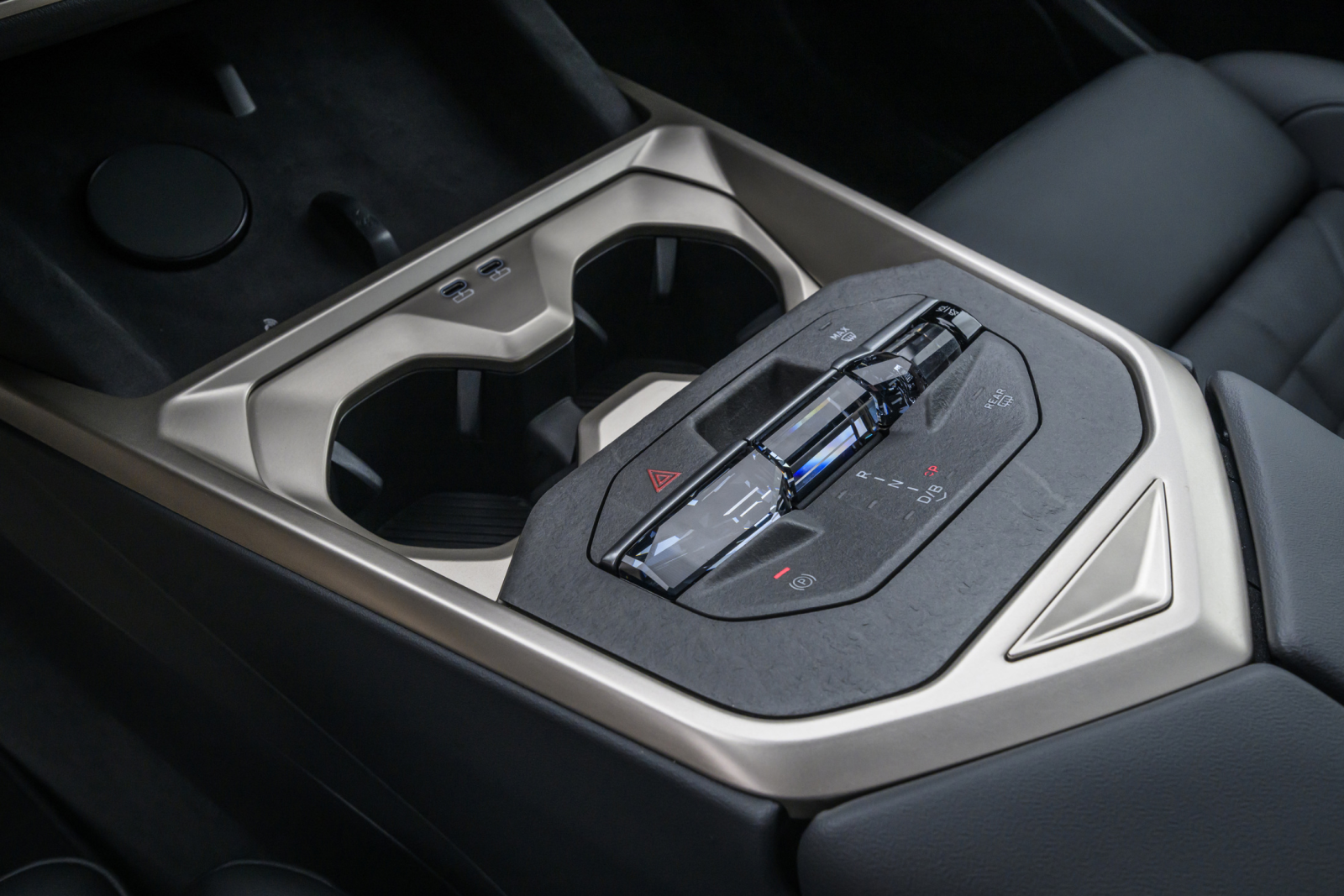
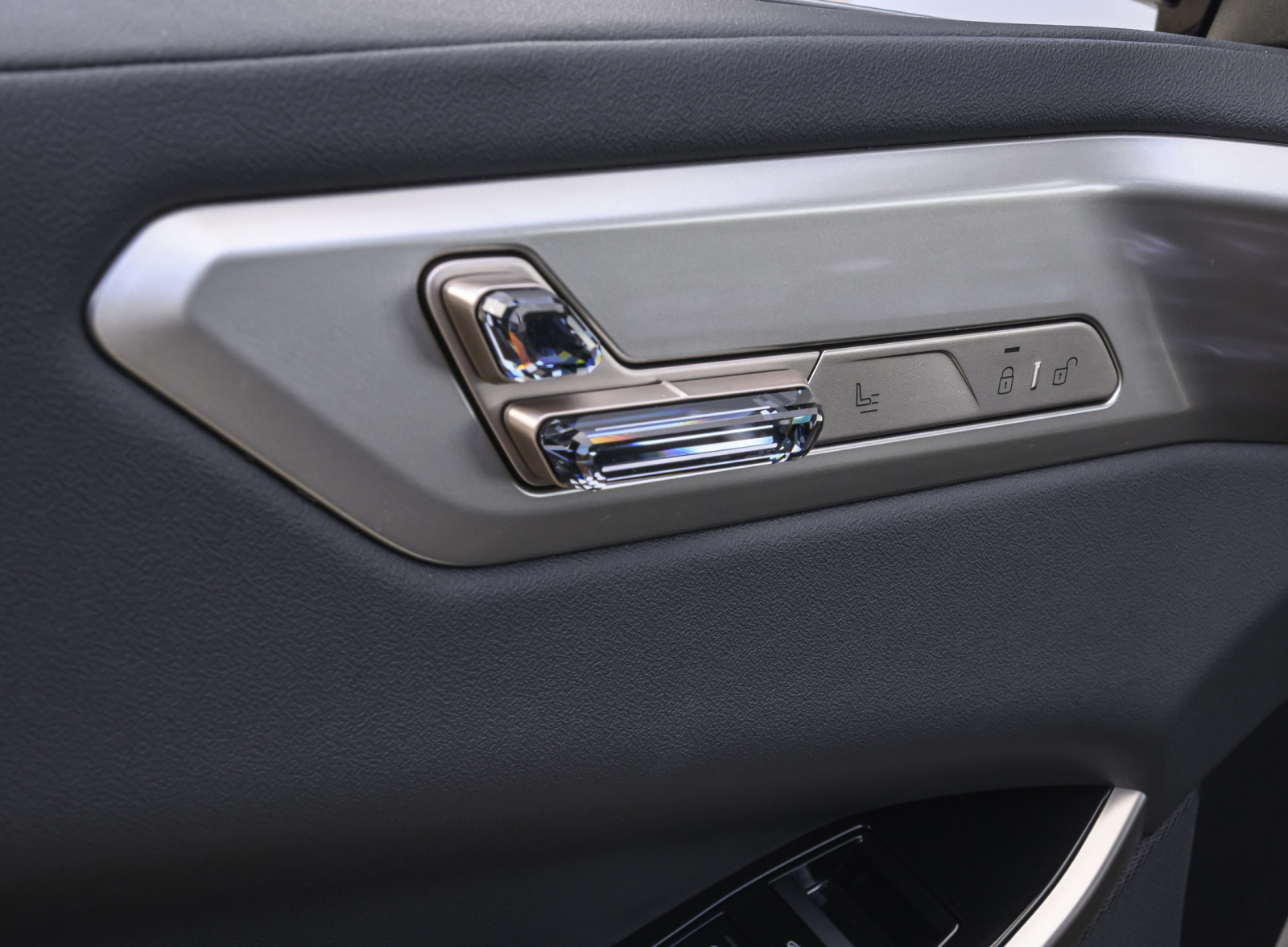
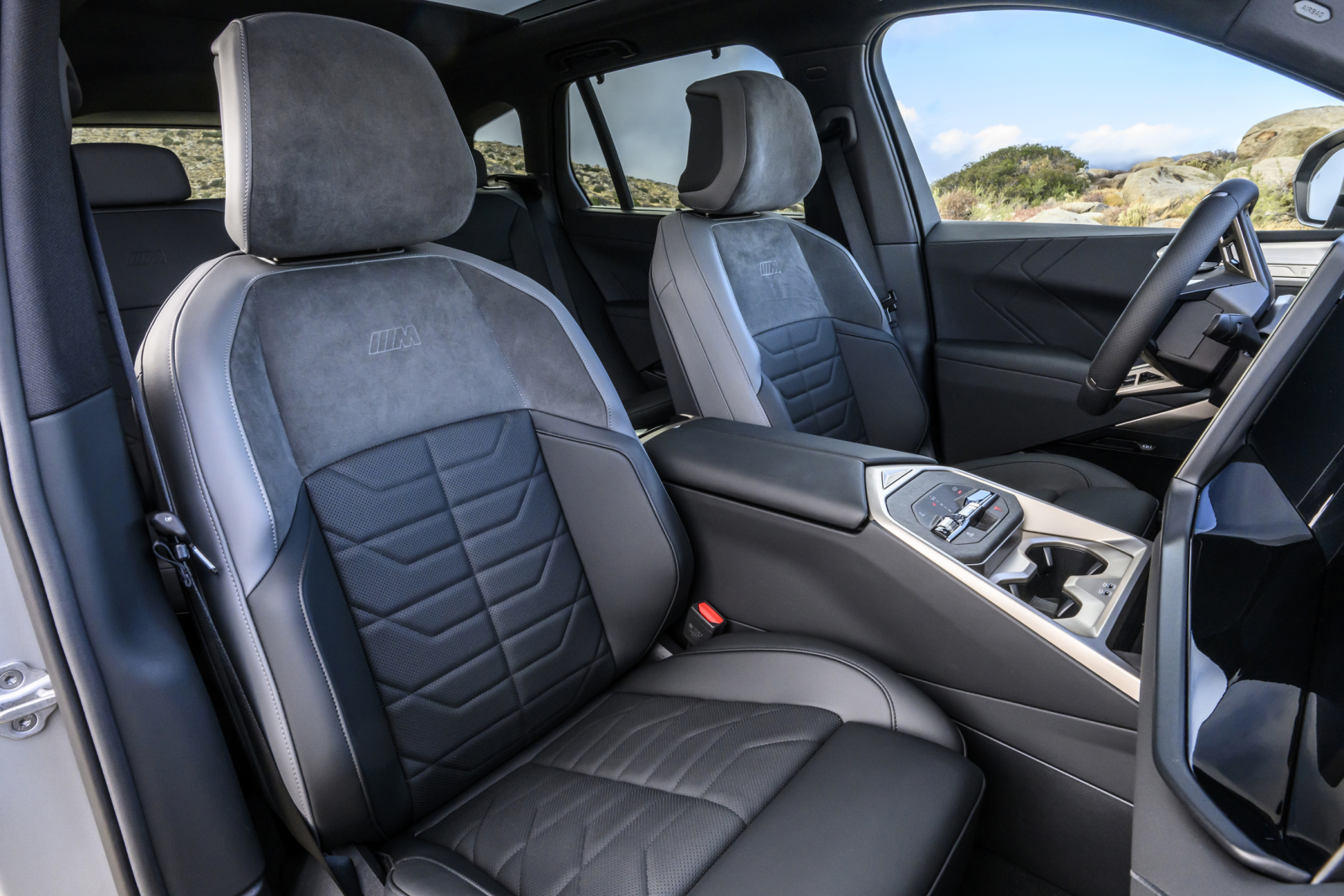
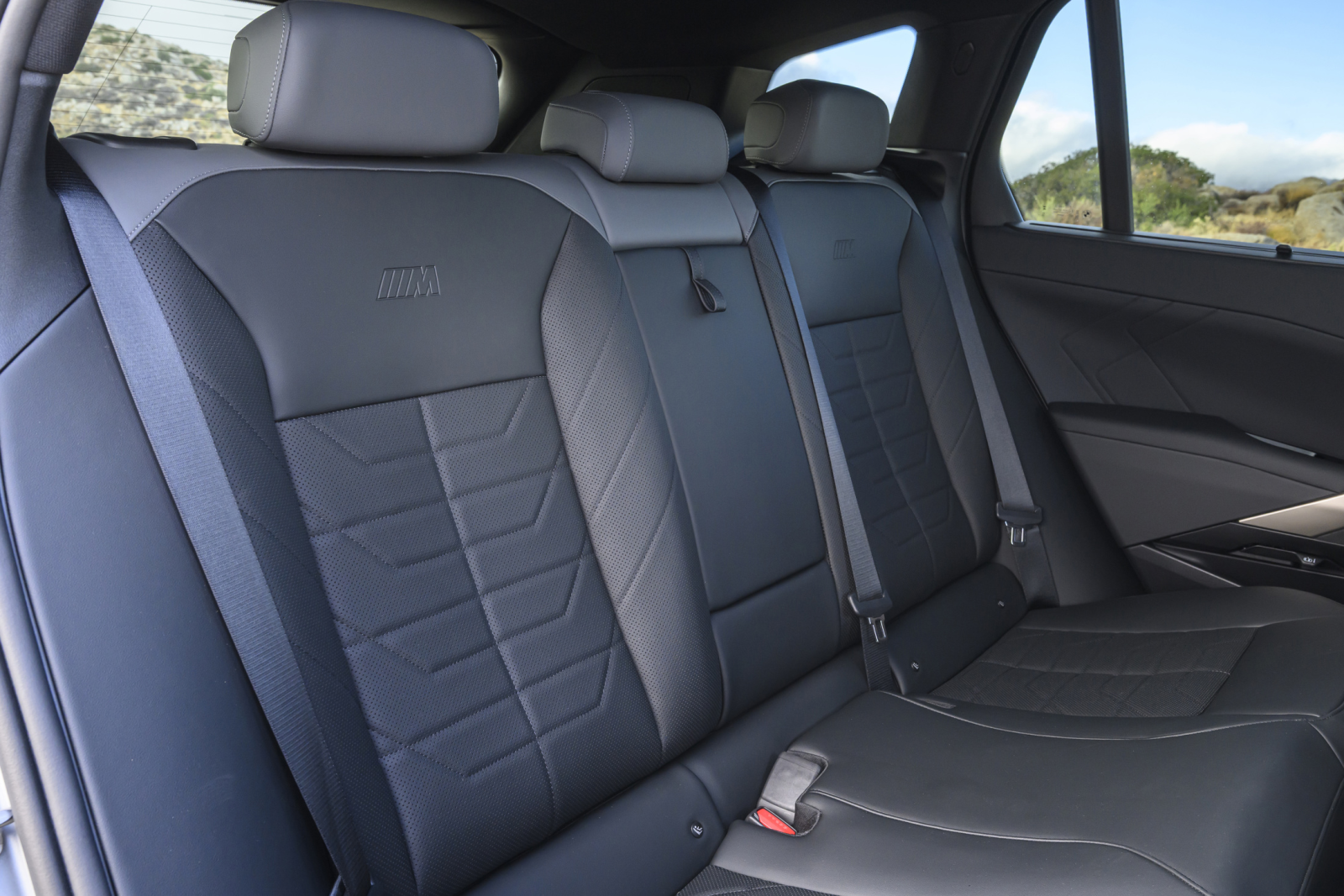
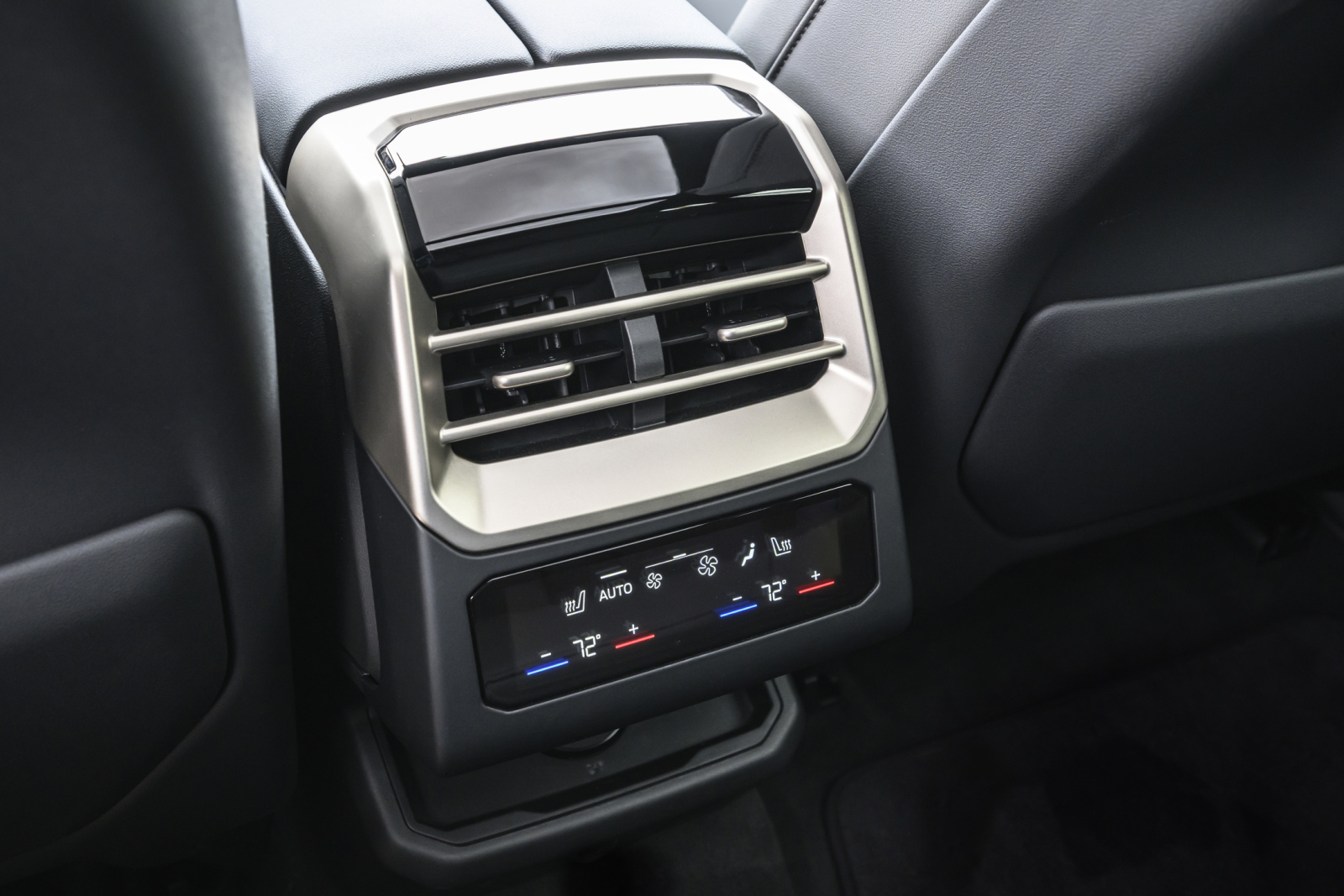
Door-mounted seat switches, a long horizontal light line and alternating dark and lighter upholstery give the cabin a coherent composition. The rear photographs are useful, too: they show the bench, head restraints and separate climate controls rather than merely suggesting atmosphere. They cannot tell us whether thigh support suits a tall passenger or how comfortably a large child seat fits behind the driver. A family seating check will answer those questions more quickly than an options catalogue.
Sometimes the best luxury feature is another compartment
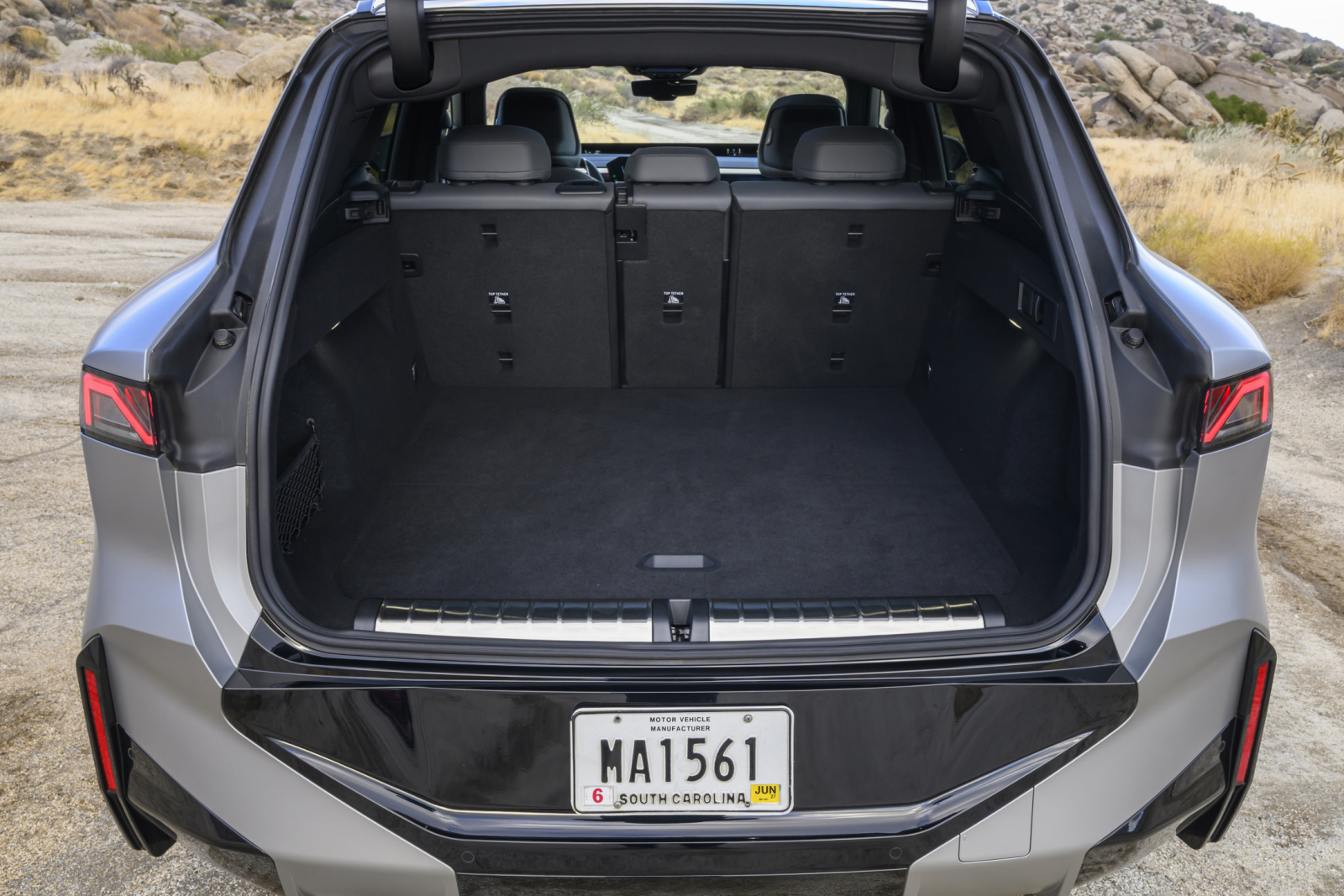
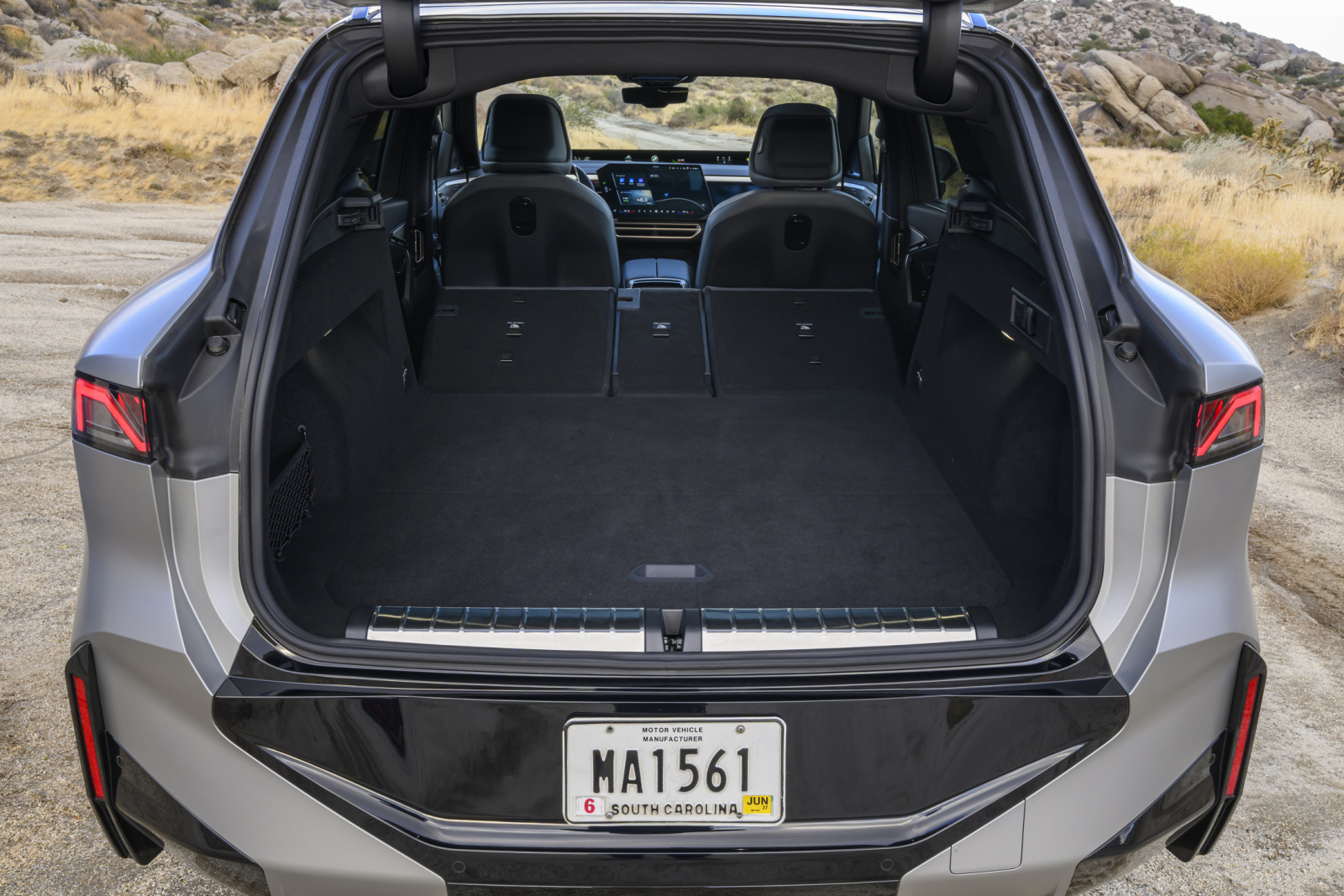
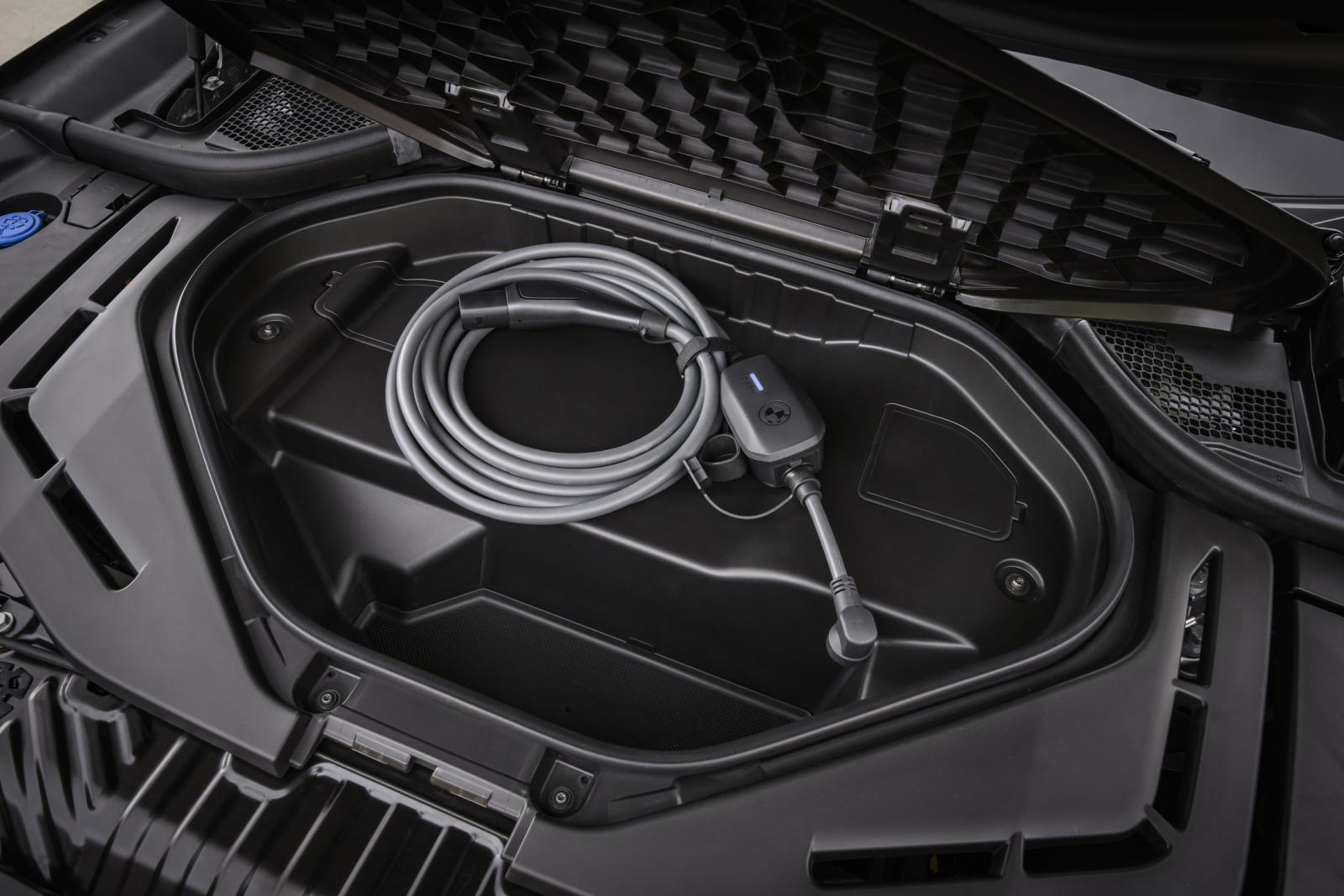
BMW lists 655 litres of luggage space, expanding to 1,850 litres with the rear seatbacks folded, plus 53 litres of front storage. The everyday benefit of the latter is straightforward: the charging cable remains accessible when the rear is full of suitcases. The stated braked towing limit is 2,700 kg with the appropriate equipment. Towing range is a different question, since extra mass and aerodynamic drag change energy demand. Luggage and towing specifications.
The hardware: a large battery and substantial power
Gen6 uses an 800-volt architecture with an electric motor on each axle. A battery-electric powertrain becomes part of the familiar X5 family, allowing buyers to choose an energy system within an established model line. That is an important role for the iX5: it attempts to fit electrification around the expectations people already bring to this class of vehicle. The new X5 family concept.
| Specification | BMW iX5 60 xDrive |
|---|---|
| Output / torque | 425 kW (578 metric hp) / 805 Nm |
| 0–100 km/h | 4.6 seconds |
| Usable battery, current family specification | 141.2 kWh |
| WLTP range, October data | 724–850 km |
| WLTP consumption, October data | 19.3–22.5 kWh/100 km |
| Peak DC / maximum AC power | 460 kW / 22 kW |
| 10–80% DC, current family specification | 22 minutes in suitable conditions |
| Unladen weight, current family specification | 2,900 kg |
These are European manufacturer figures, chiefly from the electric section of BMW Hungary’s current X5 family technical page. BMW’s 22 October photo metadata also confirms the range, while its autumn announcement lists the updated consumption. They describe a specification range, not a universal configuration or guaranteed motorway result. Wheels, equipment and market can affect the applicable figures. Technical table; October photo specifications; autumn update.
Why do 845 km and 23 minutes still appear elsewhere? The June launch information and separate iX5 technical page retain 645–845 km, 141 kWh and a 23-minute DC session. The family specification page downloaded directly on 27 October instead showed 724–850 km, 141.2 kWh and 22 minutes. BMW’s pages are not fully synchronised. This does not establish a hardware change or an improvement applicable to every car; use the specification attached to the ordered configuration. Separate page retaining the earlier values.
What 460 kW does — and does not — tell you
Peak charging power is only the highest point on a curve. Refilling a large battery quickly also requires a high average through the stop. As an illustrative calculation, 70 per cent of 141.2 kWh is 98.84 kWh. Replacing that amount in 22 minutes implies roughly 270 kW of average power into the battery. This is not a measured curve and excludes losses; it illustrates why the headline peak cannot describe the entire charging experience.
In practice, charger capability, battery temperature and starting state of charge all matter. Navigation-linked preconditioning is consequential precisely because it prepares the battery before the stop. At home, using the stated maximum 22 kW AC rate requires a suitable electrical supply and charger. Local connection standards and available power differ, so the onboard charger’s rating should never be treated as a promise of that speed at every property. Charging and battery preparation.
Range needs the same careful reading. Winter motorway travel, a roof box and sustained high speed create different energy demands from a test cycle. A large battery can provide substantial reserves, but it is propelling a vehicle weighing close to three tonnes. The interesting question is how that translates into actual travelling freedom: the spacing of stops and the predictability of each charge. A documented road test, rather than a specification sheet, will answer it.
A smooth stop can matter as much as a fast start
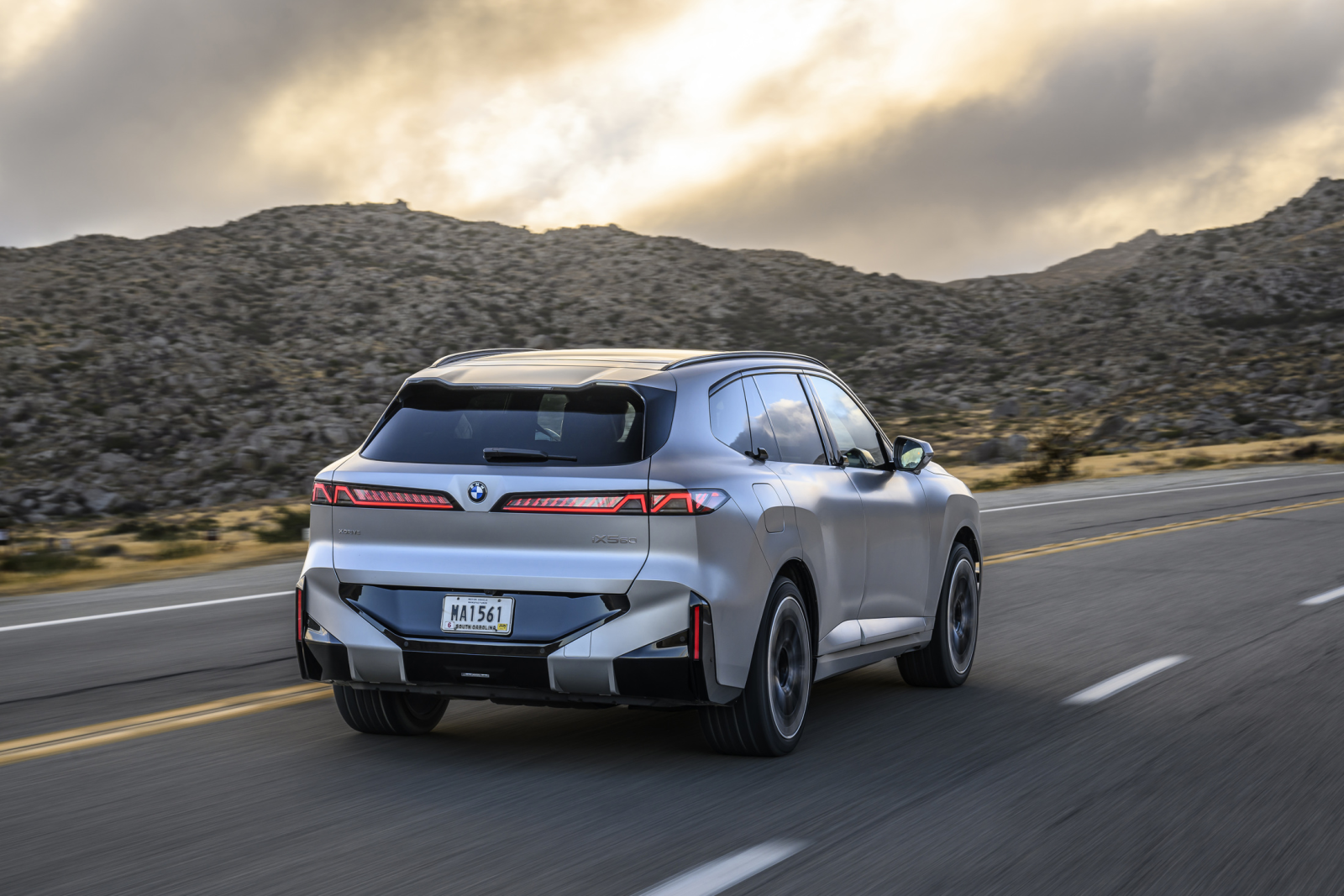
Heart of Joy coordinates power delivery, braking and energy recovery, while Soft Stop aims to make the final moments of deceleration smoother. BMW’s claims about how this feels remain manufacturer claims here. The direction is nevertheless interesting: passengers in a large family vehicle may appreciate an unobtrusive stop far more often than a full-power launch. Good control software should make the machinery behind the experience difficult to notice. Driving-dynamics systems.
Market context: check the local specification, not a converted headline
Prices and specifications need a market label. BMW’s US launch announcement put the iX5 60 xDrive at $79,800 MSRP plus $1,450 destination and handling, with introduction planned for the first quarter of 2027. Those are US announcement figures, not a global price or a current dealer offer. The same release’s 435-mile range was a preliminary BMW estimate using EPA procedures, not a certified EPA result and not directly interchangeable with European WLTP figures. US launch announcement.
European deliveries, option packages and prices must be checked country by country. The European launch information places the electric model’s market introduction in early 2027; an individual delivery date is a separate commitment. Home charging access and regular routes will influence ownership more than converting a foreign list price into the local currency. European launch timing, Hungarian press communication.
What the iX5 has to prove
The most interesting promise is the conversion of visible technology into everyday ease. Panoramic information succeeds if it is easier to read. Front storage succeeds if it saves unloading the boot. The battery succeeds if it reduces the mental effort of planning journeys. Slate succeeds if it feels as special on an ordinary morning as it looks in a photograph. Together, those details will determine whether the electric X5 meaningfully advances luxury. BMW has assembled an intriguing proposition; everyday use must now substantiate it.
Sources12
- BMW Magyarország: rendelhetőség és magyar bruttó listaárak, 2026. október 15.
- BMW Hungary: current X5 family technical data, electric iX5 60 xDrive section
- BMW Hungary: separate iX5 technical page with earlier figures
- BMW Magyarország: Az új BMW X5, 2026. június 30.
- BMW Group: The new BMW X5 — detailed international press kit, June 2026
- BMW of North America: The New BMW X5 and iX5, June 30, 2026
- BMW Group: The new BMW X5 — Additional Media Assets, October 22, 2026
- BMW Group photo P90661007: iX5 60 xDrive, October 2026
- BMW Magyarország: modellfrissítések 2026 őszén, szeptember 30.
- BMW Group: The new BMW X5
- BMW Group: The new BMW iX5 Hydrogen, July 1, 2026
- BMW Group PressClub: Legal Notices, updated August 6, 2026