Neue Klasse is BMW’s major electric reset: new batteries, an 800-volt electrical architecture, centralized drivetrain control and a redesigned interface arrive together. The useful question is how much of that becomes shorter charging stops, more comfortable journeys and a car that remains good to own. The technical improvement is already measurable; long-term battery reliability is still too early to establish.
Status: October 17, 2026. We examine the iX3 already on sale, the new i3 sedan arriving in autumn 2026, and the announced iX4 and M60 flagships. Manufacturer figures, independent measurements and future plans are identified separately. Neue Klasse refers both to a dedicated EV architecture and a broader technology renewal: a new display or Gen6 drivetrain does not mean every BMW shares the same platform.
An old name and roughly five years of new development
The name reaches back to the BMW 1500 unveiled in 1961. The original Neue Klasse helped define BMW’s sporting midsize-car identity. Today’s use of the name recalls that fresh start: the connection is its role and ambition, rather than shared engineering. BMW historical overview.
BMW publicly announced the modern programme on March 17, 2021, targeting a 2025 launch. Its 2025 annual-report retrospective describes one year of intensive concept work and four years of predevelopment. That points to a programme spanning roughly 2020–2025; the 2020 starting point is an inference, not a disclosed project-start date. BMW’s underlying electric-drive and battery research predates this programme. The 2021 announcement; the development retrospective.
| Date | Milestone |
|---|---|
| 1961 | BMW 1500 unveiled; the historical Neue Klasse begins. |
| March 2021 | Public announcement of the new Neue Klasse programme. |
| September 2023 | BMW Vision Neue Klasse sedan concept unveiled. |
| Autumn 2025 | iX3 debut and start of series production in Debrecen. |
| 2026 | iX3: European launch in March. i3: Munich production starts in August, autumn market introduction. |
| 2027 – planned | iX4 launch in March; M60 variants and the next step for fully electric BMW M. |
Additional timeline sources: Vision Neue Klasse, iX3, i3 production start, iX4, electric BMW M.
What did it cost? The €10 billion scale and the missing final bill
Le Monde reported in September 2025 investment exceeding €10 billion in the new technology, including Debrecen. That is a reported programme scale, not a separately audited engineering bill. The BMW sources reviewed do not provide a final account isolating total Neue Klasse R&D expenditure.
| Reported amount | Scope | How to read it |
|---|---|---|
| More than €2 billion | Debrecen factory and battery-assembly investment announced in 2022 for completion by 2025. | Industrial capacity, not a standalone platform-development bill. |
| €9.078 billion (2024) | BMW Group’s total annual research and development expenditure. | Many models and technologies combined. |
| €8.319 billion (2025) | BMW Group’s total annual research and development expenditure. | Again group-wide, not exclusively Neue Klasse. |
Sources: Debrecen investment announcement; 2025 financial results. Do not add these figures to the reported programme total: they describe different periods and partly overlapping spending categories. The defensible answer is a very large programme, reported above €10 billion, without a publicly isolated final development bill.
What changes beneath the bodywork?
Gen6 is BMW’s sixth electric-drive generation. Cylindrical cells go directly into the battery pack without separate modules, and the battery housing becomes a structural part of the body. The 800-volt system and BMW’s own Energy Master controller underpin charging, energy distribution and monitoring. Close integration can save space and structural components, but does not by itself establish cheaper accident repairs. BMW Gen6 technical overview.
BMW disclosed higher nickel content and less cobalt for the new cells, targeting more than 20% higher volumetric energy density than its previous prismatic cells. This is a cell-level comparison: it does not automatically describe the entire pack, and certainly does not prove longer life. Energy density, power capability, thermal control and durability are separate engineering considerations. Battery-cell development announcement.
The twin-motor drivetrain pairs an electrically excited synchronous rear motor with an asynchronous front motor. The rear unit provides the main propulsion, while the front adds all-wheel-drive capability. The design deliberately combines different motor types. Gen6 drivetrain concept.
Four central computers divide responsibility between driving dynamics, assistance and parking, infotainment, and comfort. Heart of Joy coordinates propulsion, braking and recuperation; Soft Stop aims for a smooth standstill. The everyday benefit is not the processor count itself, but the potential for more coherent acceleration, deceleration and traction control. BMW’s system description.
Large batteries and generous equipment: which models matter?
This comparison focuses on versions with the largest currently disclosed usable batteries in the dedicated Neue Klasse families. The 108.7 kWh figure is net capacity, not gross. Ranges are manufacturer WLTP maxima in favourable configurations, not guaranteed figures for fully optioned cars. The September i3 and October M60/iX4 data are still marked provisional in their sources. Power is shown in metric horsepower, PS, matching the Hungarian LE figures.
| Version | Usable battery | Power / torque | WLTP, up to | 0–100 km/h | Status |
|---|---|---|---|---|---|
| iX3 50 xDrive | 108.7 kWh | 345 kW / 469 PS / 645 Nm | 805 km | 4.9 s | European market since March 2026 |
| i3 50 xDrive | 108.7 kWh | 345 kW / 469 PS / 645 Nm | 912 km* | 4.7 s | Autumn 2026 introduction |
| iX3 M60 xDrive | 108.7 kWh | 450 kW / 612 PS / 875 Nm | 754 km | 3.9 s | Production planned for spring 2027 |
| iX4 50 xDrive | 108.7 kWh | 345 kW / 469 PS / 645 Nm | 828 km | 4.9 s | Market launch planned for March 2027 |
| iX4 M60 xDrive | 108.7 kWh | 450 kW / 612 PS / 875 Nm | 777 km | 3.9 s | Announced for spring 2027 |
Manufacturer sources: iX3 50, i3 50 technical sheet, iX3 M60, iX4 50 and M60. *The i3 sheet gives 912 km as achievable in an individual configuration and up to 911 km in its EnVKV row. The separate First Edition equipment example had a June maximum of 906 km. These are not one interchangeable figure applying to every car.
iX3 50 xDrive: the family choice already available to try. A generous specification can combine M Sport Pro with multifunction seats, three-zone climate control, a heated steering wheel, panoramic roof, 3D head-up display and Harman Kardon audio. M Sport Pro does not buy a larger battery: sporting appearance and comfort options are separate decisions. Check package compatibility in the local configurator. iX3 equipment.
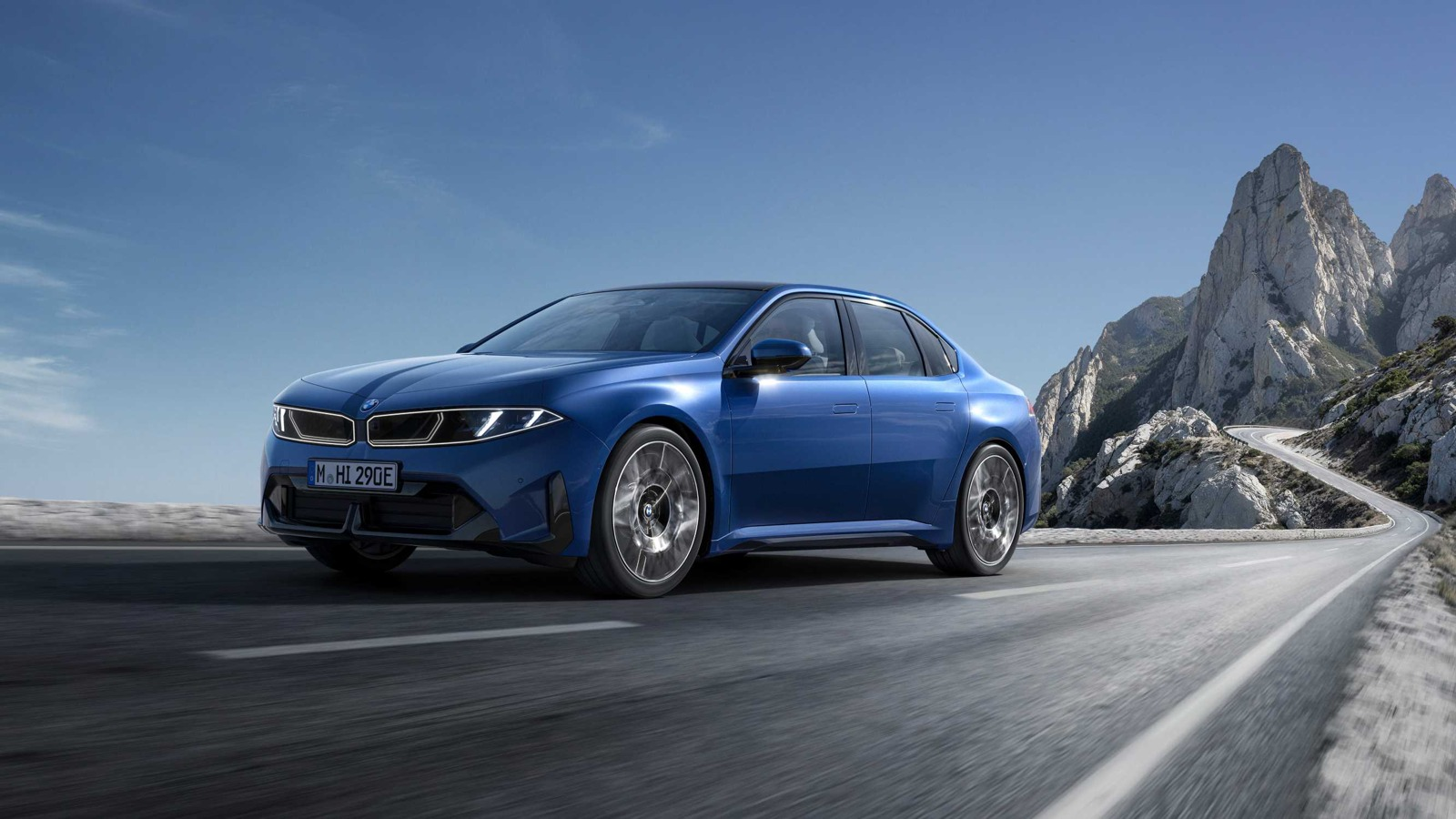
i3 50 xDrive: the sedan focused on range. Ireland’s First Edition provides a concrete example of a rich specification: powered multifunction front seats, three-zone climate control, heated steering wheel, 3D head-up display, Harman Kardon audio and 22 kW AC charging. A panoramic roof, rear-seat heating and some driving/parking assistants remain optional even here. This is an equipment example, not a claim about Hungarian standard specification. First Edition details.
iX3 M60: the announced sporting flagship. Beyond more power, meaningful changes include adaptive M suspension, a rear M Sport differential and M Sport seats with massage. Ordering is planned from late January 2027, with Debrecen production in spring. Its battery is no larger than the 50’s, and the performance upgrade also costs some official range. M60 announcement.
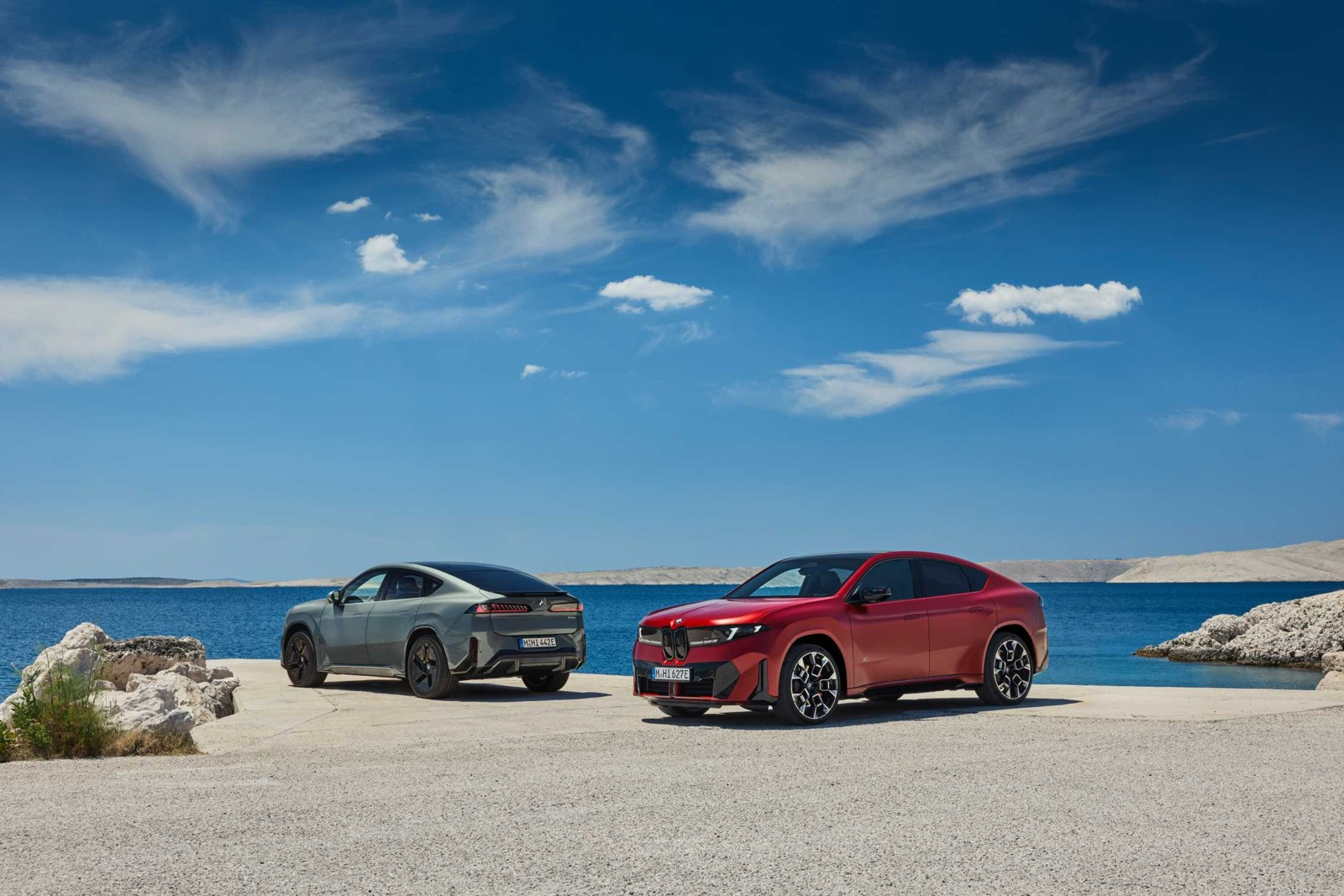
iX4 50 and M60: styling or performance. With the same battery, the 50 version of the coupé-shaped SUV claims a higher WLTP maximum than the iX3. The M60 shifts the balance toward dynamics, with adaptive M suspension and ten-way powered M Sport seats. BMW also lists adaptive suspension as an option for other iX4 variants. We do not present ride comfort or rear headroom as independently tested here. iX4 technical and equipment description.
If the largest Gen6 battery is the priority, the iX5 deserves attention too. The electric iX5 60 xDrive in the new multi-powertrain X5 family lists 141 kWh usable capacity, up to 845 km WLTP and a 460 kW DC peak. This extends Neue Klasse technology into a different vehicle family and architecture, so it is separate from our dedicated-model table. More kWh alone still does not beat the more aerodynamic i3’s range. Official X5 and iX5 introduction.
Comfort and quality: a display cannot replace a good seat
Panoramic Vision displays information across the lower windscreen area, alongside a 17.9-inch central screen and optional 3D head-up display. It is a substantial change from a conventional instrument cluster. On a test drive, I would check readability from my seating position, climate controls and steering-wheel buttons: an impressive demonstration cannot establish how natural the interface feels while driving. Panoramic iDrive.
In supported markets and conditions, the motorway assistant can provide hands-free assistance, but it remains SAE Level 2: continuous driver attention is required. Parking functions, subscription-based digital services and voice-control languages need separate checks. A technical capability does not establish that the service is active immediately in a Hungarian-delivered car. BMW’s i3 assistance description.
ADAC’s independent iX3 test criticized some cabin materials and the absence of adaptive dampers on the tested 50 xDrive. That is a finding about a particular test car, not a quality verdict on every Neue Klasse model. ADAC test. New M60 and iX4 equipment announcements must be considered separately.
Editorial buying approach: I would start a generously equipped car with suitable multifunction seats, climate control, good lighting and assistants I will actually use. The largest wheels and most sporting seats are not necessarily the most comfortable. Compare candidate versions on the same route and wheel size; check the rear seats, boot opening, noise on broken surfaces and frequently touched cabin materials too.
Range: what does BMW claim, and what did ADAC measure?
ADAC achieved 669 km with the iX3 50 xDrive in its own test cycle, with consumption of 18.3 kWh/100 km including charging losses. This was not a constant 130 km/h motorway test. Its 300 kW charger delivered a measured 296 kW peak, with 25 minutes for 10–80%. It therefore did not test BMW’s 400 kW/21-minute claim under equivalent conditions. ADAC measurement and methodology.
WLTP helps compare versions but is not a journey promise. Cold, rain, headwinds, roof loads and higher speed can all change consumption. A large battery’s main benefit is often not its full catalogue range, but long driving legs while retaining a comfortable charge reserve. We do not automatically transfer the iX3 test result to the i3, iX4 or M60 variants.
Charging: flexibility matters alongside the 400 kW headline
| Example | Maximum AC | Maximum DC | Claimed DC 10–80% |
|---|---|---|---|
| iX3 50 xDrive | 11 kW; optional 22 kW* | 400 kW | 21 min |
| i3 50 xDrive | 11 kW; optional 22 kW | 400 kW | 21 min |
Sources: iX3 introduction, i3 data sheet. *The initial iX3 document listed the 22 kW option from March 2026 production. The individual order specification determines what is fitted. Claimed times assume a suitably warm battery and a charger capable of supplying the required power.
400 kW is a peak, not a sustained rate throughout the session. Seventy percent of 108.7 kWh is about 76.1 kWh; divided by 21 minutes, that implies roughly 217 kW average power reaching the battery, excluding losses. This is our arithmetic approximation, not a measured charging curve. Charger voltage/current limits, shared power, battery temperature and starting charge level all affect stop duration.
The iX3’s switching matrix also enables charging at 400-volt DC stations. That provides useful compatibility, not a promise of 400 kW from every older charger. BMW charging description. When planning a route, check the charger’s capabilities as well as its connector, and use the car’s battery preparation function.
Home charging poses a different question. A 22 kW onboard charger helps only with a suitable electrical supply and charging point; it does not turn an 11 kW wallbox into a 22 kW one. At a regularly used public AC point with sufficient capacity, it can shorten parking time. Daily energy needs and available time matter more than how long a completely empty battery takes to fill.
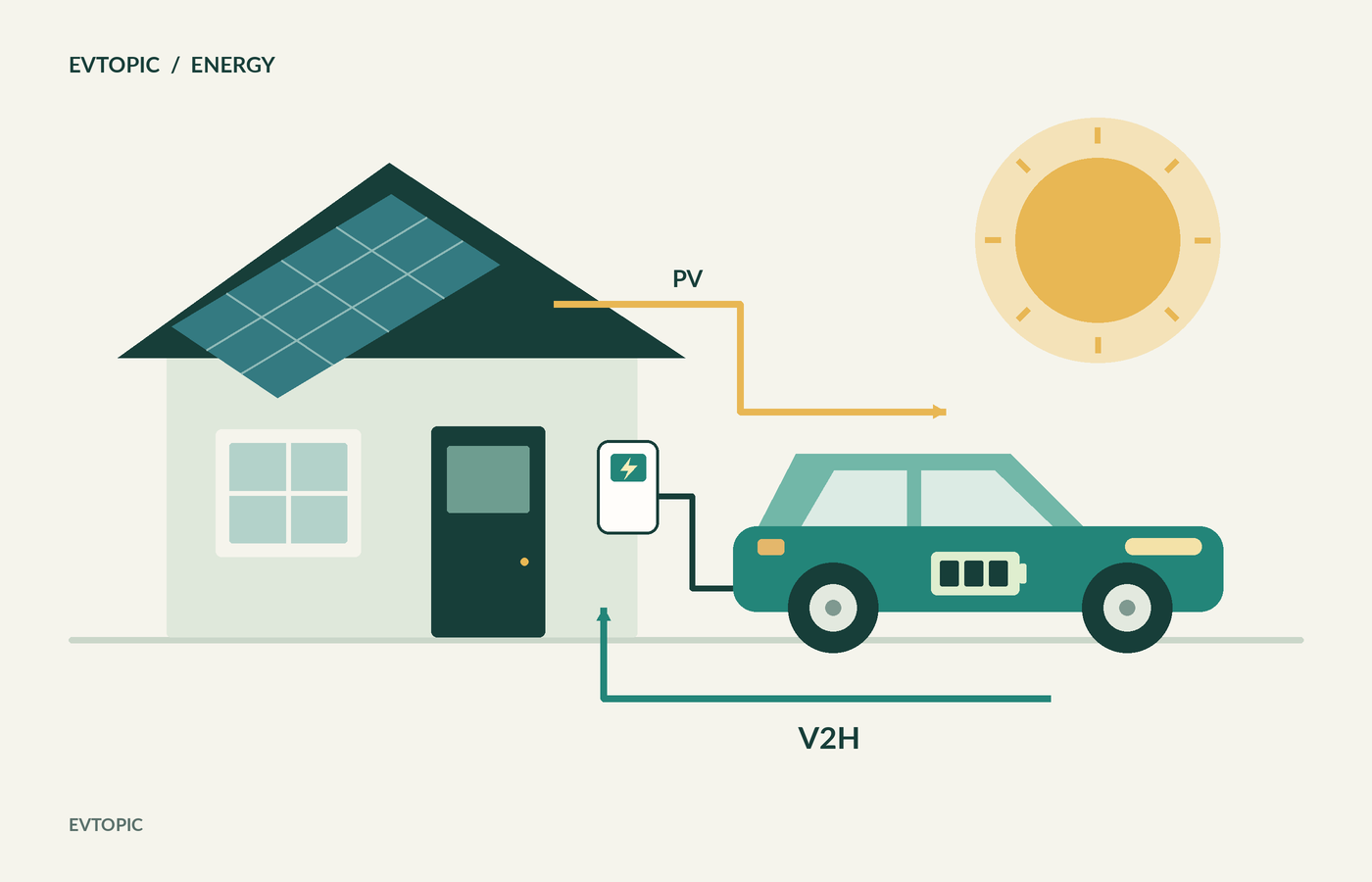
Bidirectional use covers three different tasks: V2L powers appliances, V2H returns energy to the home, and V2G feeds the grid. The i3 specification lists optional V2L at 3.7 kW and V2H/V2G at 11 kW. Manufacturer power ratings. Operation requires suitable vehicle equipment, an adapter or bidirectional charger, home installation and sometimes utility support. A compatible car alone does not establish a working Hungarian V2G service or power-cut backup.
Battery reliability: what is known, and what needs more time?
In October 2026, there is no 8–10-year real-world evidence for Gen6. The design is young; higher energy density, modern controls and successful manufacturer tests cannot replace independent data from ageing vehicles. Gradual capacity loss, a rare cell failure, a battery-management fault and system repairability are separate questions. We do not compress them into an apparently precise reliability score.
BMW’s Hungarian Gen5/Gen6 terms cover material defects and available energy falling below 70% for eight years or 160,000 km, whichever comes first, subject to the contract. The remedy can be repair or replacement and need not restore 100% capacity. Prescribed maintenance and use matter. This is warranty protection, not a prediction of service life or degradation. Full Hungarian terms.
For long-term ownership, I would obtain the individual car’s warranty document, record its initial battery health, and retain service and software records. Follow the model’s own manual for high-charge storage, temperature and everyday charging habits. For repairability, ask which damage or failures allow component repairs and when a larger assembly might need replacement. A structural battery does not automatically mean either “unrepairable” or “cheap to repair”.
What is BMW working on now?
Announced production models are the developments closest to customers. Cell-chemistry research and industrial recycling may shape cars over a longer period. Their certainty differs substantially: a test vehicle is not an orderable product, and target years can change.
| Development | Officially disclosed | Still unproven |
|---|---|---|
| iX4 and M60 models | 2027 introduction plans; i3 M60 also announced. | Real consumption, ride and long-term fault rates. |
| Fully electric BMW M | From 2027; four motors and over 100 kWh usable capacity. | Final prices, all production specifications and sustained track performance. |
| Solid-state cells | Joint BMW, Solid Power and Samsung SDI development; test-vehicle work. | A firm mass-market launch and final production-car specification. |
| Direct recycling | Salching competence centre and mechanical material recovery. | A closed material loop for the entire production fleet. |
| iX5 Hydrogen | Production model planned for 2028, with flat tank packaging. | Launch in every market and suitable local refuelling infrastructure. |
BMW says its next fully electric high-performance M cars will use four individually controlled motors, one per wheel. Development includes a disconnectable front drive, power-focused Gen6 cells and revised cooling. This is distinct from the two-motor M60 models above. The M badge will therefore cover different engineering levels; the four-motor programme’s figures must not be assigned automatically to the i3 M60 announced for 2027. BMW M development programme; i3 M60 announcement.
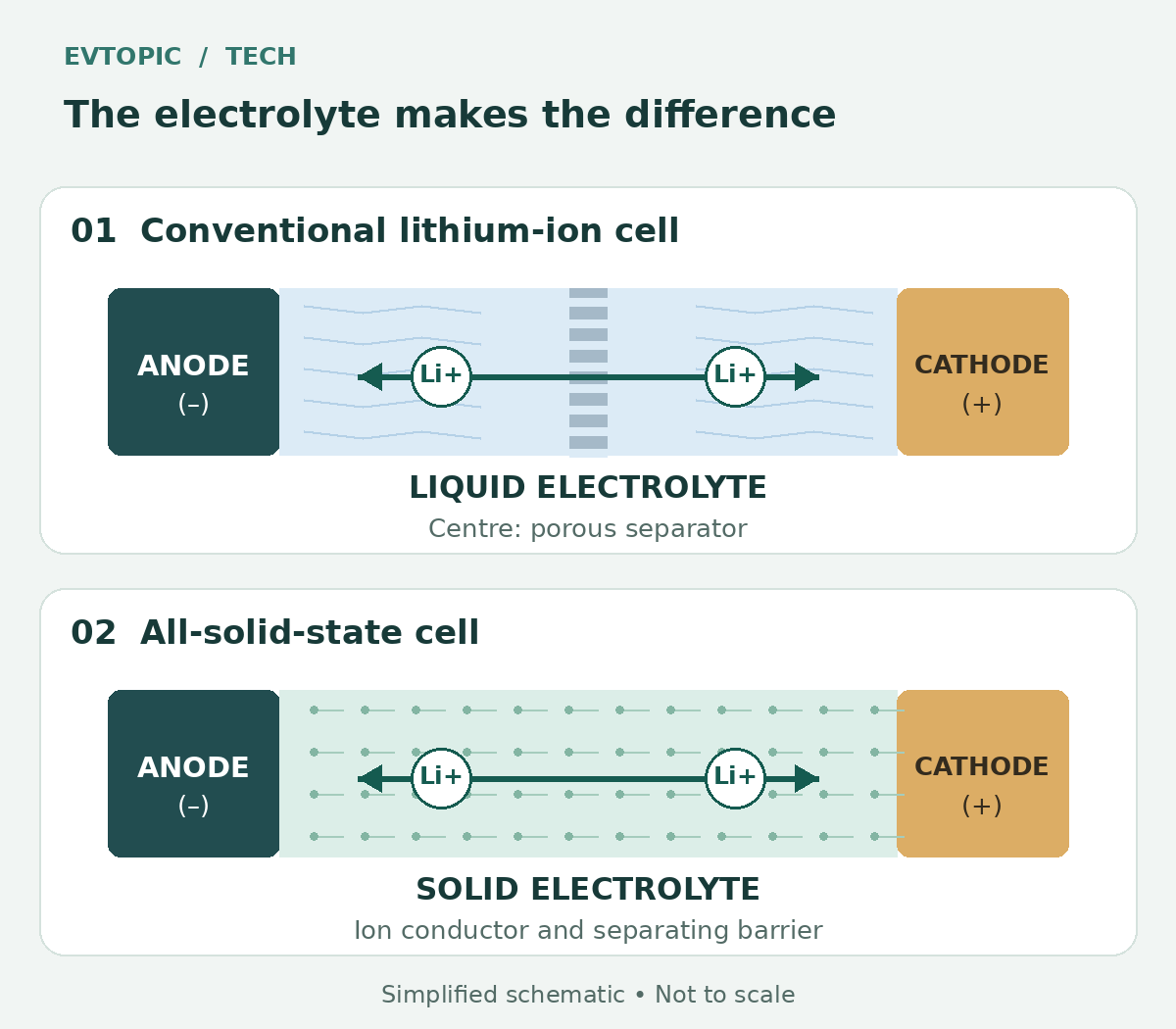
Solid-state batteries remain a research direction. BMW brought Samsung SDI into its work with Solid Power and is testing such cells in an i7 development vehicle. These experiments must address temperature, cell pressure, cycling durability and manufacturability. They do not establish that the next orderable Neue Klasse will use this chemistry, or that its final cost and service life are known. ASSB collaboration announcement.
Direct recycling in Salching is a less visible but important development, using mechanical processing to return battery-production material to use. Its initial role concerns development and pilot-production material streams, rather than a finished solution closing the loop for every retired BMW battery. BMW and Encory direct recycling.
BMW is also developing the iX5 Hydrogen planned for 2028, with a new flat hydrogen-storage arrangement. This is a parallel fuel-cell project, not the next Neue Klasse battery generation. Its value to buyers will depend on accessible refuelling infrastructure as well as the vehicle itself. iX5 Hydrogen development.
Which would we choose, and what would we wait to learn?
Our editorial assessment: a generously equipped, comfort-focused iX3 50 xDrive is currently the most assessable family choice because independent testing is available. For a sedan buyer seeking long range, the i3 50 xDrive is especially interesting, although an independent test resembling the intended use will matter more than a WLTP record. The iX3 M60 and iX4 M60 appeal to buyers who will use the extra performance and chassis technology and accept waiting until 2027. Anyone prioritizing the largest Gen6 battery should compare the iX5 separately.
Neue Klasse’s strongest argument is the combined system: substantial usable energy, rapid charging, multiple charging options and new controls. Its lasting premium value will depend on battery ageing, software maturity, cabin durability and repair costs. These BMWs deserve to be taken seriously as an engineering step forward while being evaluated carefully as young designs.
Sources27
- BMW Group — The Neue Klasse: a new era (2024)
- BMW Group — A new era, a new class (17 March 2021)
- BMW Group Report 2025 — We are Neue Klasse
- BMW Group — BMW Vision Neue Klasse (2 September 2023)
- Le Monde — German manufacturers at the Munich motor show (8 September 2025)
- BMW Group — More than €2 billion for Debrecen by 2025 (2022)
- BMW Group — Annual financial results 2025 (12 March 2026)
- BMW Group — The new BMW iX3 (5 September 2025)
- BMW Group — iX3 complete press kit (September 2025)
- BMW Group — The new BMW i3 (18 March 2026)
- BMW Group — Start of series production of the BMW i3 (2026)
- BMW Group — BMW 3 Series technical specifications (September 2026)
- BMW Group Ireland — i3 50 xDrive First Edition (18 June 2026)
- BMW Group — BMW 3 Series complete press kit (September 2026)
- BMW Group — The new BMW iX4 (8 October 2026)
- BMW Group — BMW iX4 complete press kit (October 2026)
- BMW Group — Der neue BMW iX3 M60 xDrive (8 October 2026)
- BMW Group — The new BMW X5 (30 June 2026)
- BMW Group — 800V electric drive concept for Neue Klasse (February 2025)
- BMW Group — New round battery cells (9 September 2022)
- ADAC — BMW iX3 2026: test (1 October 2026)
- BMW Hungary — Gen5/Gen6 high-voltage battery performance warranty
- BMW Group — Fully electric BMW M models from 2027 (14 January 2026)
- BMW Group — BMW, Solid Power and Samsung SDI ASSB development (31 October 2025)
- BMW Group — Direct battery recycling now underway (26 January 2026)
- BMW Group — New BMW iX5 Hydrogen tank system (9 April 2026)
- BMW Group PressClub — Rights of use