AI translation.
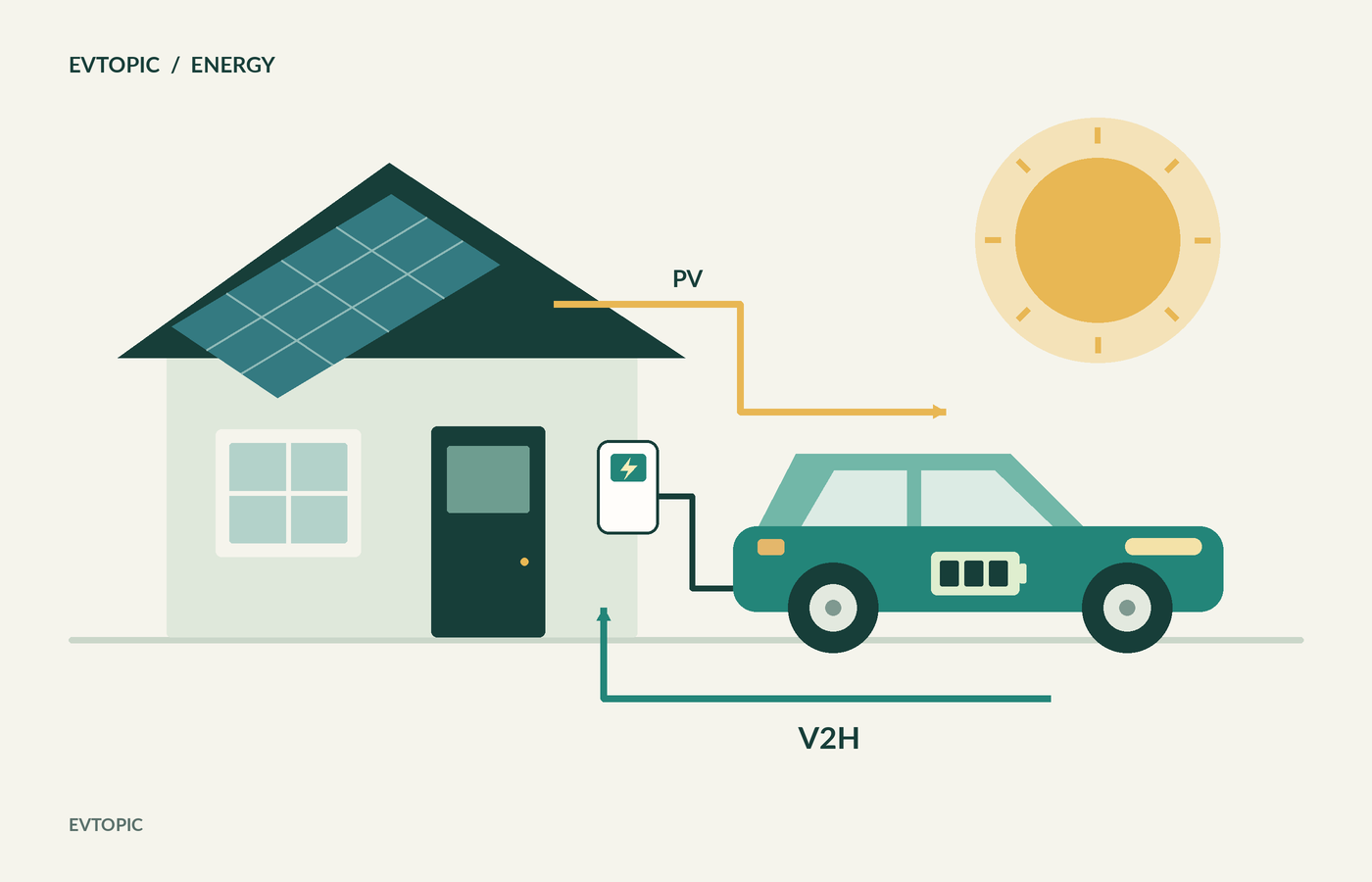
At midday the roof generates electricity; in the afternoon the car takes the family out; in the evening the same battery supplies the house. This is already possible. Making it work, however, requires much more than plugging an electric car into an arbitrary wall charger. Solar charging is widely achievable, while returning energy to the home depends on the vehicle, charging equipment, software and often a country-specific service.
Status checked: October 17, 2026. This international overview compares the shared technology with market-specific examples from Europe, the United States and Japan. The vehicle selection covers documented systems, not every available model. A capability offered in one market does not establish availability, grid approval or warranty coverage in another.
Home charging starts with your daily energy needs
Before choosing a home charger, establish how much energy you need to replace each day. kW measures power; kWh measures energy. Charging at 11 kW draws up to 11 kWh at the charger over one hour; losses mean less reaches the battery. The wall unit’s rated maximum is only one limit: the vehicle’s onboard AC charger and the home’s electrical connection also matter.
Consider a transparent example: 50 km per day at 18 kWh/100 km of battery-side consumption requires 9 kWh to be replaced. At an assumed 90% charging efficiency, 10 kWh must enter the charger. This is not a test of a particular vehicle: winter conditions, short trips, battery heating and low-power charging can change the result. ADAC’s testing also shows that charging method and partial-load operation matter. ADAC charging-loss study.
| Continuous input power | Calculated time to draw 10 kWh | What the example shows |
|---|---|---|
| 2.3 kW | about 4 hours 21 minutes | Low power may cover modest daily needs; connection safety is a separate question. |
| 3.7 kW | about 2 hours 42 minutes | A longer stay at home can comfortably replace the day’s energy. |
| 7.4 kW | about 1 hour 21 minutes | Check both the single-phase supply and the vehicle’s limit. |
| 11 kW | about 55 minutes | A three-phase AC example; household supply configurations differ by market. |
| 22 kW | about 27 minutes | Usable only when both vehicle and household supply support it. |
The table uses energy divided by constant input power; these are not manufacturer 0–100% charging times. Its power levels include examples from European AC installations. US home charging commonly uses 120 V Level 1 or 240 V Level 2 equipment, so the available current and the car’s onboard charger determine the actual kW. The energy calculation works in either setting. If the car stays home overnight, reliable scheduling and solar integration may matter more than maximum power. US Department of Energy: charging at home.
For regular charging, plan a professionally installed charging point with suitable protection. An old garage socket and extension lead cannot automatically be assumed suitable for hours of continuous load. An electrician should assess the wiring, earthing, protection and available capacity. ADAC safety and efficiency assessment.
Dynamic load balancing helps when the oven, heat pump or other major loads operate alongside the charger. Using measurements at the household connection, the system reduces vehicle charging and raises it again when capacity becomes available. This requires suitable metering and compatible control; having a phone app does not by itself establish that capability. Fronius: metering and load-control requirements.
Solar and the car: timing matters as much as the roof
Solar generation can first meet the home’s immediate demand; what remains is the solar surplus. A surplus-following charger directs as much of this as the vehicle can accept into its battery. Total roof generation and the surplus available to the car are therefore different numbers. A V2H-capable car is not necessary: controlled one-way charging alone can increase the local use of your generation. ADAC: how surplus charging works.
Some European AC systems also have a minimum power threshold. In the Fronius Wattpilot example, charging starts at 6 A, around 1.4 kW on one phase or 4.2 kW on three phases. Phase switching can help capture surplus in weaker sunlight, where both vehicle and charger support it. These figures describe that electrical configuration, not a universal setting for every country or charger. Fronius operating instructions.
The biggest practical question is simple: is the car there when the sun is shining? Leaving in the morning and returning in the evening separates the roof’s generation from the car’s availability. Working from home, weekend charging or workplace solar can help. A stationary battery can shift energy into the evening, but adds investment and conversion losses. Charging the car directly from solar is generally the simpler route when the schedules align.
Annual energy totals are insufficient for sizing. Even if the panels generate the car’s annual charging requirement, substantial winter imports and summer surplus can remain. Storage can bridge hours or days within its available capacity; it cannot carry unlimited summer production into winter. Assess the household’s and car’s actual consumption over time, parking schedules and the roof’s expected generation profile together.
V1G, V2L, V2H and V2G are different capabilities
| Function | Where does energy flow? | Purpose |
|---|---|---|
| V1G / smart charging | Grid or solar → car | Scheduling, solar-surplus following and load control. |
| V2L / appliance supply | Car → separate appliance | For example, powering a tool or fridge from the factory outlet. |
| V2H / home supply | Car → household electrical system | Domestic energy use; backup is possible with a system designed for it. |
| V2G / grid export | Car → public grid | Export and grid flexibility under appropriate service arrangements. |
The US Department of Energy’s technical overview explains these concepts. The IEA’s 2026 analysis describes conversion onboard or in external DC equipment. Connector shape or support for a communication standard does not establish complete system compatibility.
The Hyundai IONIQ 5 illustrates the distinction: European documentation describes V2L appliance supply up to 3.6 kW. That capability powers suitable separate loads; it does not by itself establish integration with household wiring or permission to export to the public grid. Check the exact vehicle and equipment available in your market. Hyundai: IONIQ 5 V2L.
Which cars can return energy to a home or the grid?
In the examples below, the solution is always the car together with its supporting system. A model name alone is insufficient: onboard charger, battery, model year and software can differ. V2G capability does not guarantee blackout backup either. Confirm that the complete combination can be installed, commissioned and supported where the vehicle will be used.
| European example | Documented capability | Key condition |
|---|---|---|
| Volkswagen ID., compatible 77 kWh versions | V2H with external DC equipment | The 2023 factory solution specifies 77 kWh net capacity, ID. Software 3.5 and a HagerEnergy S10 E COMPACT system. It is not a blanket promise for every ID. |
| Renault 4 / Renault 5 E-Tech, Alpine A290 | Dutch residential V2G offer, 2026 | V2G-compatible onboard charger, Solar Life charge point and, at launch, Hegg Energy contract; Dutch home, three-phase connection and smart meter. |
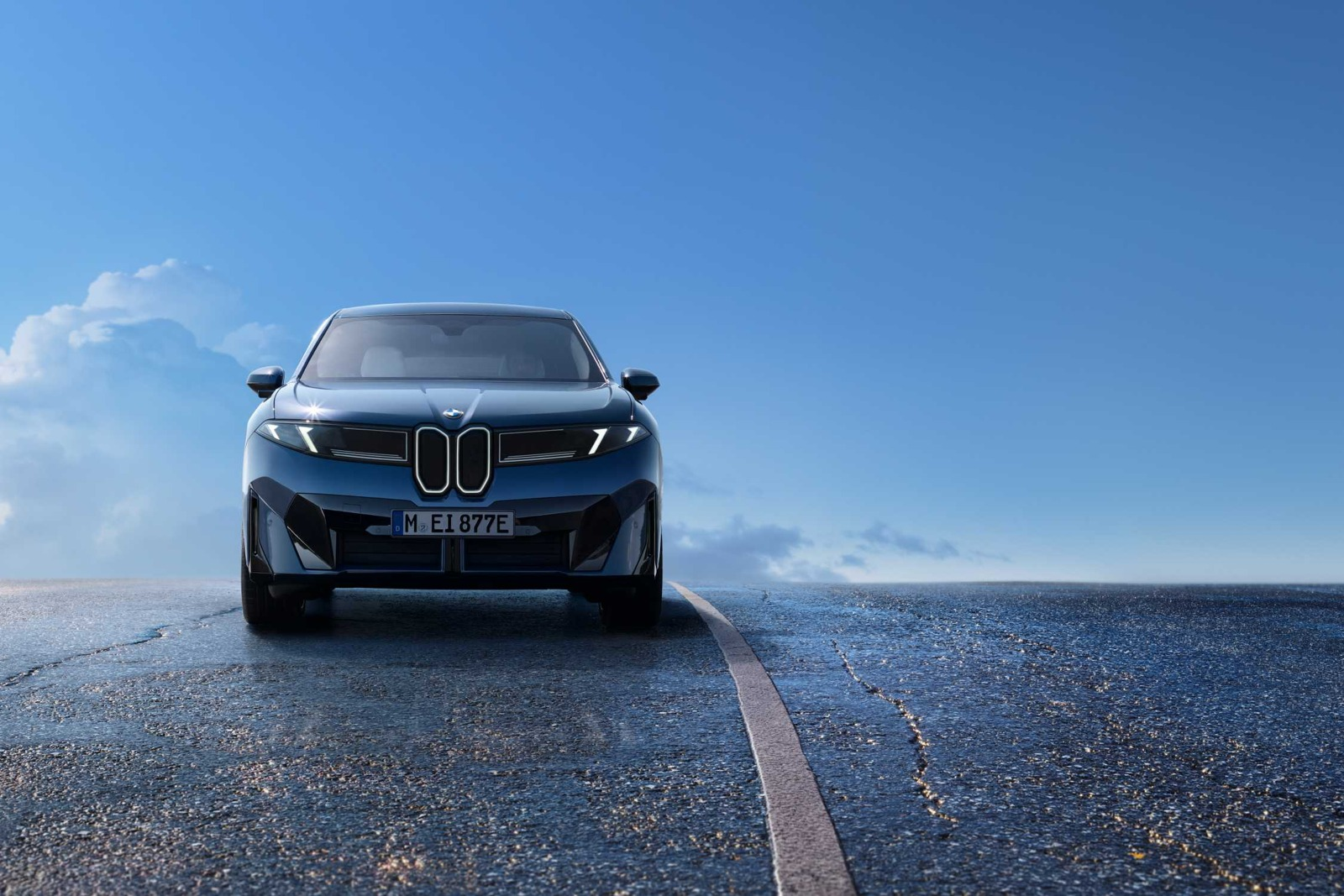
| BMW iX3 Neue Klasse; new i3 | iX3: German BMW/E.ON V2G; separate V2H rollout | SOLARWATT integration for the iX3 and new i3 is planned for late 2026 in Germany, Austria and the Netherlands, using Wallbox Professional. This new i3 is not the earlier small BMW i3. |
| BYD Dolphin, specifically V2G-enabled version | UK Octopus Power Pack V2G bundle | Specifically enabled leased car, Zaptec Pro and Octopus contract, plus grid approval. This does not describe every Dolphin or every market. |
Table sources: Volkswagen ID. system, Renault/Alpine Dutch launch, BMW/E.ON German offer, BMW/SOLARWATT rollout plan and Octopus/BYD bundle. The British offer, for example, requires availability while plugged in; its “free charging” is a contract- and mileage-limited credit, not unlimited free electricity.
Earlier Japanese systems still deserve attention
| Vehicle | What is documented? | What needs checking? |
|---|---|---|
| Nissan LEAF, earlier CHAdeMO generations | Japan’s LEAF to Home / Nichicon system has documented V2H operation since 2012. | Exact vehicle/equipment compatibility, local support and battery condition. Do not automatically transfer this capability to the new LEAF generation. |
| Mitsubishi Outlander PHEV, compatible versions | Japan’s DENDO DRIVE HOUSE combines solar, stationary storage and a V2H-capable vehicle. | Market- and model-year-specific system. A PHEV can supply energy too, but its smaller electric reserve and any engine operation need separate assessment. |
Sources: Nissan LEAF to Home and Mitsubishi DENDO DRIVE HOUSE. For a used-car purchase, this does not mean finding a cheap adapter will suffice. Identify a complete system that can be commissioned locally before choosing a vehicle around it.
United States: home-backup systems and their conditions
| Vehicle | Documented system / market | Important limit |
|---|---|---|
| Kia EV9, eligible US vehicles | Wallbox Quasar 2; the 2025 announcement offered pre-orders. | Blackout backup also requires a Power Recovery Unit. Confirm vehicle eligibility and installation availability in the local service area. |
| Volvo EX90, model year 2025, 400 V | US: 400 V dcbel Ara Home Energy Station. | Requires the Orin/Orin core computer. The factory announcement does not guarantee operation for later model years. |
| Tesla Cybertruck | Powershare home backup; grid programmes only in specified areas. | Without Powerwall, the system needs Powershare Gateway and Universal Wall Connector. |
| Tesla Model 3 / Model Y, eligible versions | US/Puerto Rico: orders after October 1, 2026, and some earlier cars. | Backup requires Powerwall, a suitable Wall Connector and activation. Verify Powershare Support in the car; this is not a general European capability. |
| Ford F-150 Lightning | US Home Backup Power system. | Requires Ford Charge Station Pro and Home Integration System; distinct from using the truck’s appliance outlets. |
Details: Kia EV9, Volvo EX90 with model-year restrictions, current Tesla Powershare compatibility and Ford owner’s manual. Tesla’s October eligibility rules make “Model 3 and Model Y can never return energy” too broad a claim. They remain specific to eligible vehicles in the stated markets; they do not establish worldwide support.
Kia illustrates how rollout differs by country: while naming a specific US EV9 system, its checked Dutch page still reports no suitable bidirectional charger availability for the EV3 and EV9. Treat V2X-ready, “prepared for” or “enabled by a future update” as future potential until the complete local service is confirmed. Kia’s Dutch V2X information.
How long could the car supply your home?
In our illustrative example, the vehicle has 80 kWh of usable battery capacity, starts at 80% charge and retains 30% for driving. That leaves 80 × (0.80 − 0.30) = 40 kWh available from the battery. Assuming 90% discharge-path efficiency, the house receives 36 kWh. This is a calculation example only: manufacturer reserve limits, battery condition and the system’s own consumption affect the real result.
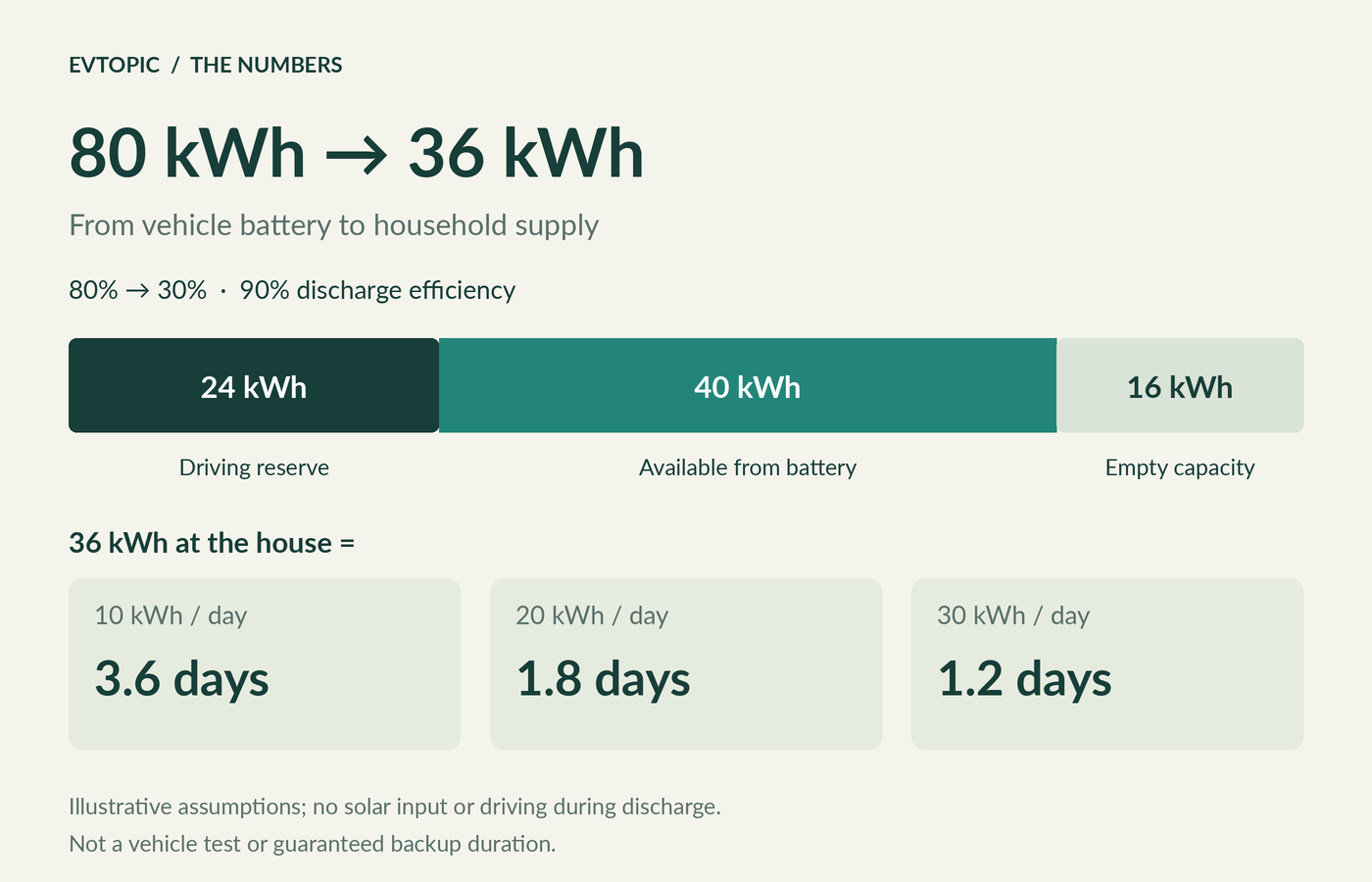
Alongside battery size, check output power. There may be enough kWh for days of lighting and refrigeration while the system cannot simultaneously support a hob, heat pump and a large motor starting. Planning must separately address which circuits receive backup, continuous and starting loads, and how long the vehicle actually remains connected. When you drive away, the mobile storage leaves too.
Electricity contracts and grid rules: the regional differences
The value of stored solar depends on what you avoid paying for imports and what you give up by not exporting. Some billing arrangements credit exports against consumption; others value the two flows separately. Even where the term “net metering” is used, eligibility and credit design need checking. The US Department of Energy explains that arrangements depend on the state and utility. Use the contract applicable to the installation, not a national average or a foreign example. DOE homeowner’s guide to solar.
European examples: the Dutch Renault/Alpine offer combines eligible vehicles with a specified charge point and energy contract; BMW/E.ON’s German offer and the UK Octopus bundle have their own equipment and participation conditions. These are country-specific services, not a single Europe-wide tariff. A time-varying import price can help schedule charging, but does not itself establish permission or payment for vehicle exports. Dutch Renault/Alpine launch; German BMW/E.ON offer; UK Octopus bundle.
United States: home backup and paid grid export are separate propositions. A system that can keep selected home loads running in an outage is not automatically enrolled in an export programme. The Department of Energy advises checking whether the serving utility’s interconnection agreement permits reverse power flow from EVs. State and utility rules for solar credits likewise do not establish a universal V2G payment. DOE: managed and bidirectional charging.
Across markets, check the complete installation: the approved operating mode, compatible vehicle and charger, metering, export limits and any equipment needed to isolate backup circuits during an outage. An existing solar installation does not by itself establish that an added bidirectional charger is covered by the same approval. The IEA identifies grid compliance and interoperability as separate requirements; a shared connector or communication standard is not sufficient evidence. IEA: grid requirements and interoperability.
When does it pay, and why is the energy not free?
Savings can come from three sources: using more of your own solar energy, moving charging into cheaper periods, and contractual payments for grid services. Calculate them separately. Surplus solar still has an opportunity value if it could otherwise be sold; cycling purchased electricity through losses makes little sense unless the difference between its purchase price and the avoided cost is large enough.
Illustrative only, not a current tariff or an exchange-rate conversion: assume avoided imports cost €0.30/kWh and forgone exports are worth €0.08/kWh. Store 10 kWh of surplus solar with an assumed 85% overall round-trip efficiency: 8.5 kWh becomes available later. The energy-only benefit is 8.5 × €0.30 − 10 × €0.08 = €1.75. The same method works in dollars or another currency using local prices consistently. Equipment, installation, subscriptions, standby consumption and battery-use costs have not been deducted. This is not guaranteed daily income.
An installation quote should therefore show the complete incremental cost: what would a good one-way solar charger cost, and what is the premium for bidirectional electronics, control, any metering alterations and backup operation? Do not count the same energy once as a driving saving and again as household supply. Available surplus, connected days and settlement terms determine the annual result.
Additional energy throughput, state-of-charge range and temperature matter for the battery; avoid basing a purchase on a blanket “no ageing” promise. Obtain written confirmation that warranty coverage includes the specific V2H/V2G system, whether energy-throughput or operating-hour limits apply, and who supports the software integration. The minimum charge needed for the family’s next journey should be a fundamental control constraint. IEA: technical and battery-lifetime issues.
Where are we now, and what comes next?
The reviewed sources point to three levels of maturity. Smart solar charging is established technology. V2H is available in specific vehicle-and-home systems. V2G has reached residential offers in some countries, but still depends on providers and approved equipment. A practical starting point is to assess what controlled one-way charging can achieve for the household, then compare the additional cost and confirmed local benefits of bidirectional operation.
The next major improvement would be reliable compatibility across a wider choice of vehicles, chargers and energy providers. Communication standards help, but cannot replace grid compliance and warranty arrangements. Meaningfully expanding compatibility lists could reduce the risk of an expensive home installation becoming obsolete when its owner changes cars.
Another opportunity is coordinating the whole home: departure time, solar forecast, electricity price, stationary battery and water heating. Not every kilowatt-hour needs to pass through the vehicle battery. Daytime water heating can store energy directly as heat, while a smaller stationary battery remains at home when the car is away. Thinking about the complete system may deliver more value than simply choosing a larger battery.
Future grid services may coordinate many individual vehicle batteries. That requires an intermediary and contract connecting the driver’s acceptable availability, accurate metering, settlement and grid needs. Existing programmes demonstrate possibilities, but do not establish a launch date or annual revenue for every region and owner.
A car really can become part of a home’s energy storage. A sensible sequence is to understand your consumption first, choose smart charging and solar control around it, then add V2H or V2G once compatibility and workable settlement are confirmed. That captures benefits available today while leaving room for later possibilities.
Sources26
- US Department of Energy — Managed and bidirectional charging
- IEA — Vehicle-to-grid technology (20 May 2026)
- ADAC — Charging at household sockets: safety and efficiency
- ADAC — EV charging losses (2026)
- ADAC — PV surplus charging
- Fronius — Wattpilot operating instructions
- Fronius — Wattpilot installation guide
- MVM Next — HMKE bruttó elszámolása
- MVM Next — D árszabás
- MVM Hálózat — Háztartási méretű kiserőművek
- MVM Hálózat — HMKE invertermegfelelőség (2 June 2026)
- BMW / E.ON — German V2G offer (9 February 2026)
- BMW / SOLARWATT — Bidirectional home energy integration (18 May 2026)
- Volkswagen — First ID. models support bidirectional charging (6 December 2023)
- Renault Group Netherlands — Power V2G for private drivers (20 May 2026)
- Octopus Electric Vehicles — Power Pack Bundle
- Nissan — Expansion of vehicle usage / LEAF to Home
- Mitsubishi Motors — DENDO DRIVE HOUSE (2 October 2019)
- Kia America — V2H for eligible EV9 drivers (4 March 2025)
- Kia Netherlands — Home charging / V2X FAQ
- Volvo Cars US — EX90 bidirectional charging (18 November 2025)
- Tesla — Powershare support and compatibility
- Ford — 2025 F-150 Lightning owner’s manual: home backup
- Hyundai Europe — IONIQ 5 features / Vehicle-to-Load
- US Department of Energy / AFDC — Charging Electric Vehicles at Home
- US Department of Energy — Homeowner’s Guide to Solar