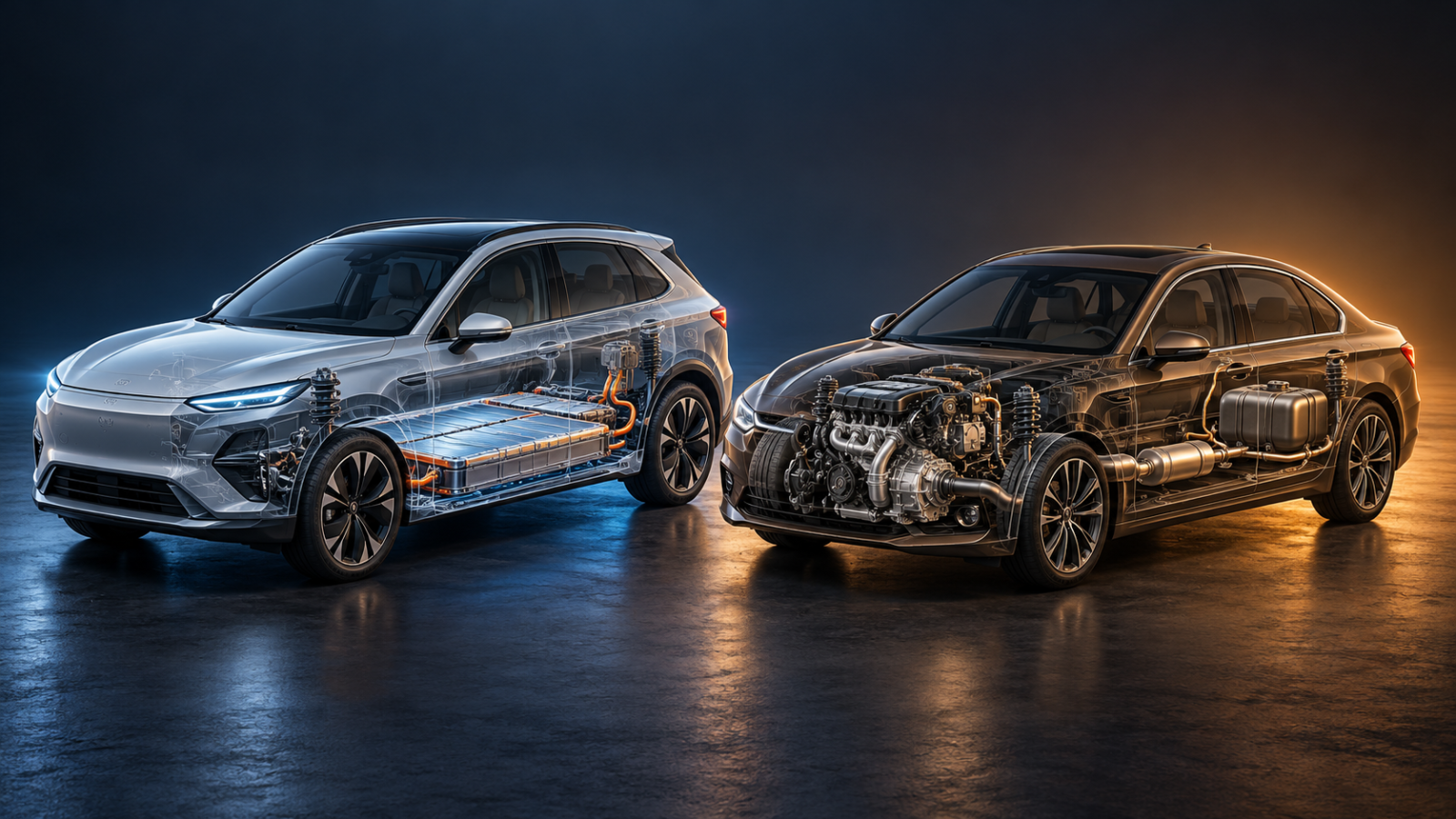
One of the most unsettling things about an electric-car fire is that extinguishing the flames may not end the emergency. A damaged battery can retain enough energy to ignite again later, a hazard documented by the US National Transportation Safety Board. It is easy to turn that fact into a broader belief that electric cars are more likely to catch fire in the first place. The available fleet statistics tell a different story. NTSB findings.
In several national records, electric cars account for fewer fires than their share of the fleet would suggest. That leaves plenty of reason to take battery fires seriously. Frequency and consequences both matter: an uncommon event can still require equipment, training and precautions that are specific to it.
Denmark provides a useful starting point. In 2025, its emergency management agency recorded one fire per 10,000 electric and hybrid cars, compared with four per 10,000 other cars. The distinction in the label matters: the Danish figures combine battery-electric and hybrid vehicles. They are not a BEV-only comparison. Danish emergency management agency figures.
| Year, Denmark | Electric and hybrid cars | Other cars |
|---|---|---|
| 2024 | 1.2 fires / 10,000 cars | 3.8 fires / 10,000 cars |
| 2025 | 1.0 fires / 10,000 cars | 4.0 fires / 10,000 cars |
The same report contains a useful warning about raw totals. Electric and hybrid car fires rose from 50 to 62 in a year. Taken alone, that sounds like worsening safety. Yet the corresponding fleet expanded faster, so the recorded frequency per vehicle fell. A growing number of incidents can accompany a declining individual exposure rate. Danish annual comparison.
Norway offers a battery-electric comparison. In TØI’s 2021–2024 compilation, BEVs represented 22% of the passenger-car fleet and 4.8% of the car fires counted. The series excludes incidents registered as crashes or building fires, so it is not a complete measure of every possible vehicle fire. Within its scope, however, it gives no support to the idea that EVs burn more often. TØI road-safety handbook.
US collision research asks a narrower question: are EVs more likely to catch fire immediately after a crash? A study of 2017–2021 crash records, limited to vehicles newer than model year 2010, found no disproportionate immediate fire risk for BEVs. Reporting differed between states and delayed fires were outside its scope. The result is reassuring within those limits, but cannot stand in for an annual all-cause fire rate. Stolle and colleagues, Transportation Research Record.
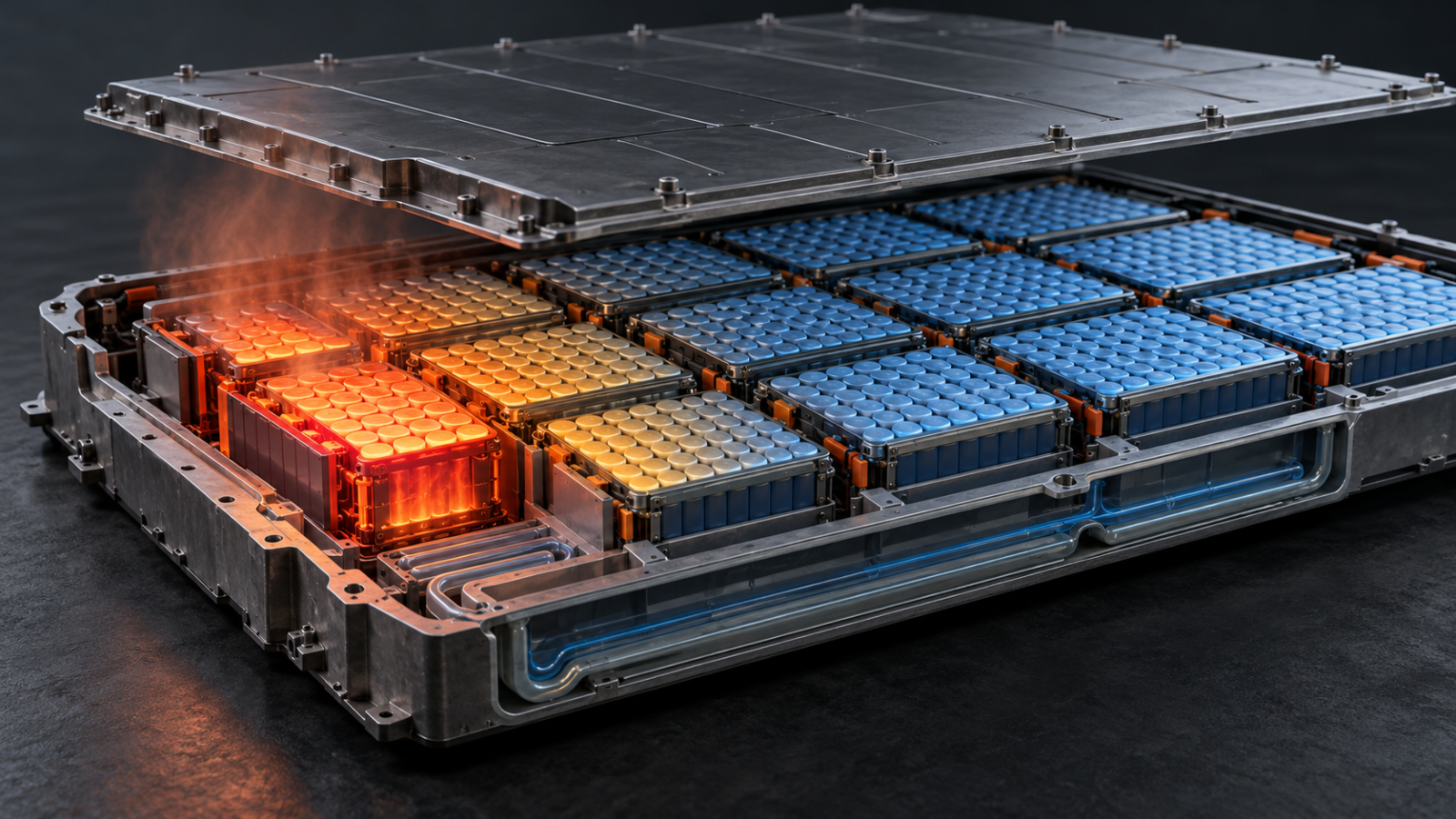
The battery deserves special attention even when the overall fire frequency is low. In a damaged cell, reactions can generate heat that accelerates further reactions. This is thermal runaway. Heat and gases are released, and neighbouring cells may become involved. Disconnecting the vehicle’s electrical system does not remove the energy stored inside its battery. NTSB explanation of battery-fire hazards.
That helps explain why an intervention may continue well beyond the point when the visible flames are gone. Crews may need prolonged battery cooling and must consider the possibility of reignition. Norway’s DSB guidance emphasizes cooling with water. None of those operational demands, however, tells us how frequently a particular powertrain catches fire. DSB fire-response guidance.
There is another distinction hidden inside the phrase “EV fire”. The Swedish authorities note that the battery played no role in some reported incidents involving electric vehicles; in others, its involvement was unclear. Knowing that the car was electric does not establish where the fire began or whether the traction battery burned. Swedish findings on battery involvement.
The encouraging fleet figures still leave an important question unanswered. Comparing a new EV with a twenty-year-old petrol car would hardly isolate the effect of the powertrain. Whole-fleet comparisons partly inherit that problem because electric fleets are younger. Age, use and maintenance all need to be separated from technology before we can make a strong claim about otherwise comparable vehicles.
An exploratory article published by SFPE even suggests that the difference could reverse as electric fleets age. It relies on fragmented records from different countries and estimated fleet ages, rather than matched individual vehicles. Its conclusion is a question for further research, not a settled forecast. Today’s fleet advantage cannot establish either lifelong superiority or an inevitable future reversal. Exploratory analysis of fleet age.
Reporting rules can also make impressive-looking multipliers unreliable. Sweden’s 2025 compilation includes 46 electric/hybrid passenger cars involved in fires, excluding arson. Its roughly 2,800 all-powertrain car fires include arson. A direct comparison would change the definition halfway through the calculation. Swedish compilation and exclusions.
A 2026 NIST study adds a warning about incomplete identification of electric and plug-in hybrid vehicle fires in US records. A database assembled from verified reports can be valuable for understanding hazards without being a complete census. That distinction matters whenever a worldwide percentage is presented with more decimal places than the underlying evidence can justify. NIST study of fire-data gaps.
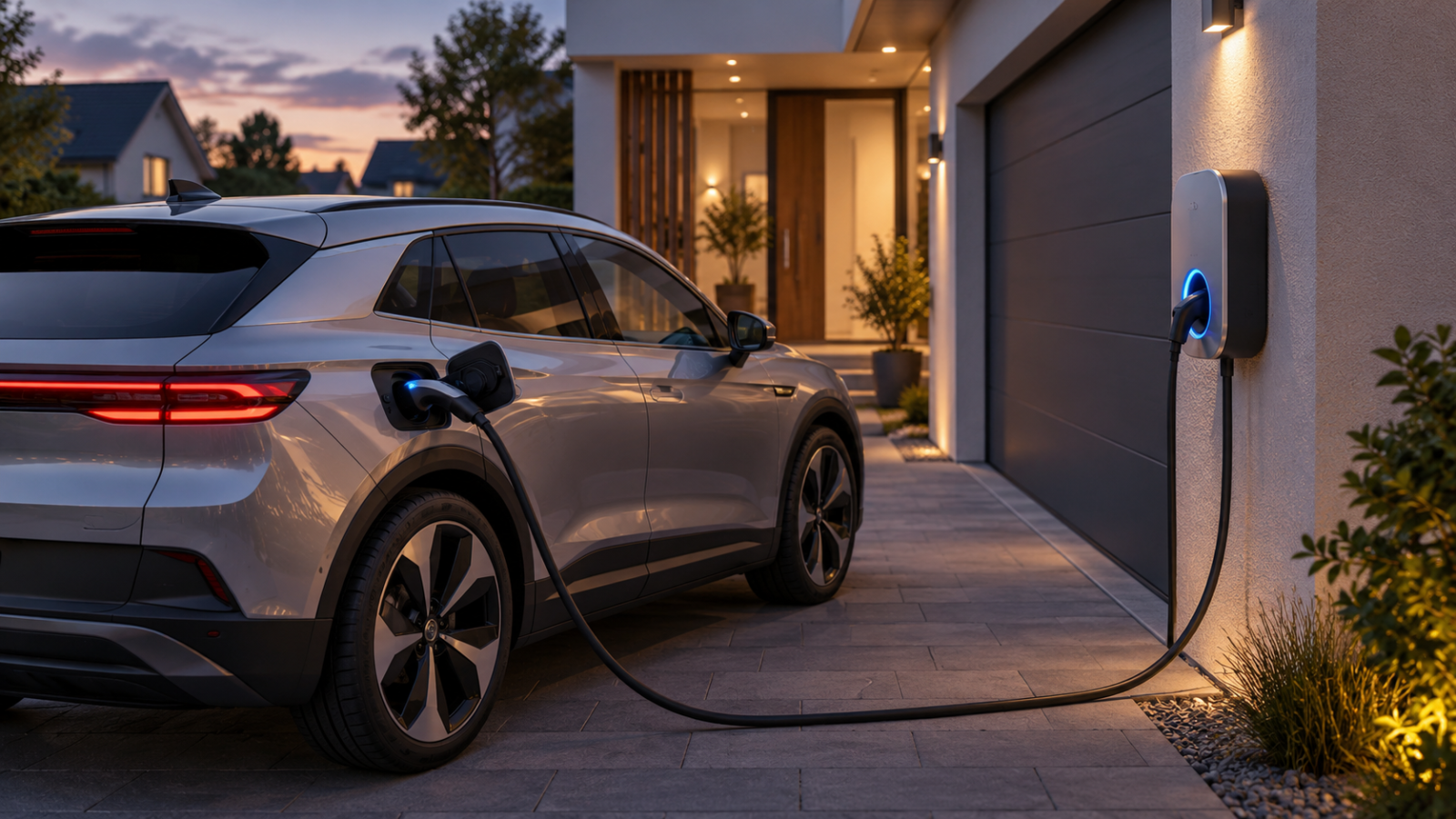
For an owner, the practical work often starts at the charging point. Hours of sustained load require a suitable installation, intact cables and sound connections. The car’s electronics cannot repair a worn socket or an improvised extension lead. DSB recommends professional assessment of the installation and warns against extension-lead charging. DSB home-charging advice.
After serious damage or flooding, a car that still appears operable may require professional assessment before further use or charging. A damaged high-voltage system can release hazardous gases or develop a fire later. If a fire starts, get everyone out and move away from the vehicle and smoke. Call local emergency services — 911 in the US or 112 in the EU. Recovering belongings or attempting to fight a traction-battery fire must not delay escape. NHTSA guidance for damaged vehicles.
Ruling out an electric car on fire risk alone would be difficult to justify from the available fleet evidence. Several national comparisons are less favourable to conventional cars. Battery fires still deserve trained responders, appropriate charging installations and careful handling after damage. A video of a burning car shows that a hazard exists. Understanding how often it occurs requires looking beyond the car in the frame.
Sources10
- Beredskabsstyrelsen: Brande i el- og hybridbiler 2025
- TØI: Trafikksikkerhetshåndboken, 4.35 Elbiler, revised 2026
- KTI Közlekedésbiztonság: Nem olyan gyúlékonyak, mint gondoljuk
- Myndigheten för civilt försvar: Sammanställning av inträffade bränder i elfordon
- Breunese and Both: Probability of fire in electric vehicles: a new perspective, SFPE Europe
- NIST Technical Note 2365: Understanding the Risk of Lithium-Ion Battery Fires, March 2026
- Stolle et al.: Evaluation of Run-off-Road Crashes Involving Battery-Electric Vehicles
- NTSB: Risks to Emergency Responders from High-Voltage, Lithium-Ion Battery Fires
- DSB: Veileder for lading av elbil
- NHTSA: Electric and Hybrid Vehicles — Battery, Charging and Safety