The Tesla Roadster went airborne at its own unveiling. At SpaceX’s test facility in McGregor, Texas, on the evening of October 15 — the early hours of October 16 in Hungary — a prototype drove upside down along a curved ramp, launched into the air, rotated and made a controlled landing. The “flying car” was a special demonstration version of the Roadster. Event report
The spectacular return comes almost nine years after the 2017 prototype. The newly revealed car brings a changed shape and a complex aerodynamic system; its most extreme configuration adds thrusters that allow movement through the air. A successful demonstration and the start of series production remain separate milestones. Background
What holds it to the ramp, and what lifts it?
On the ramp, a system extracting air from beneath the Roadster helps it grip the surface. Tesla says it can produce enough downforce to hold the car upside down even while stationary. The thrusters perform a different job: the reaction force of expelled gas influences the vehicle’s motion. Together, the two systems explain the unusual maneuver shown at the unveiling. Technical background
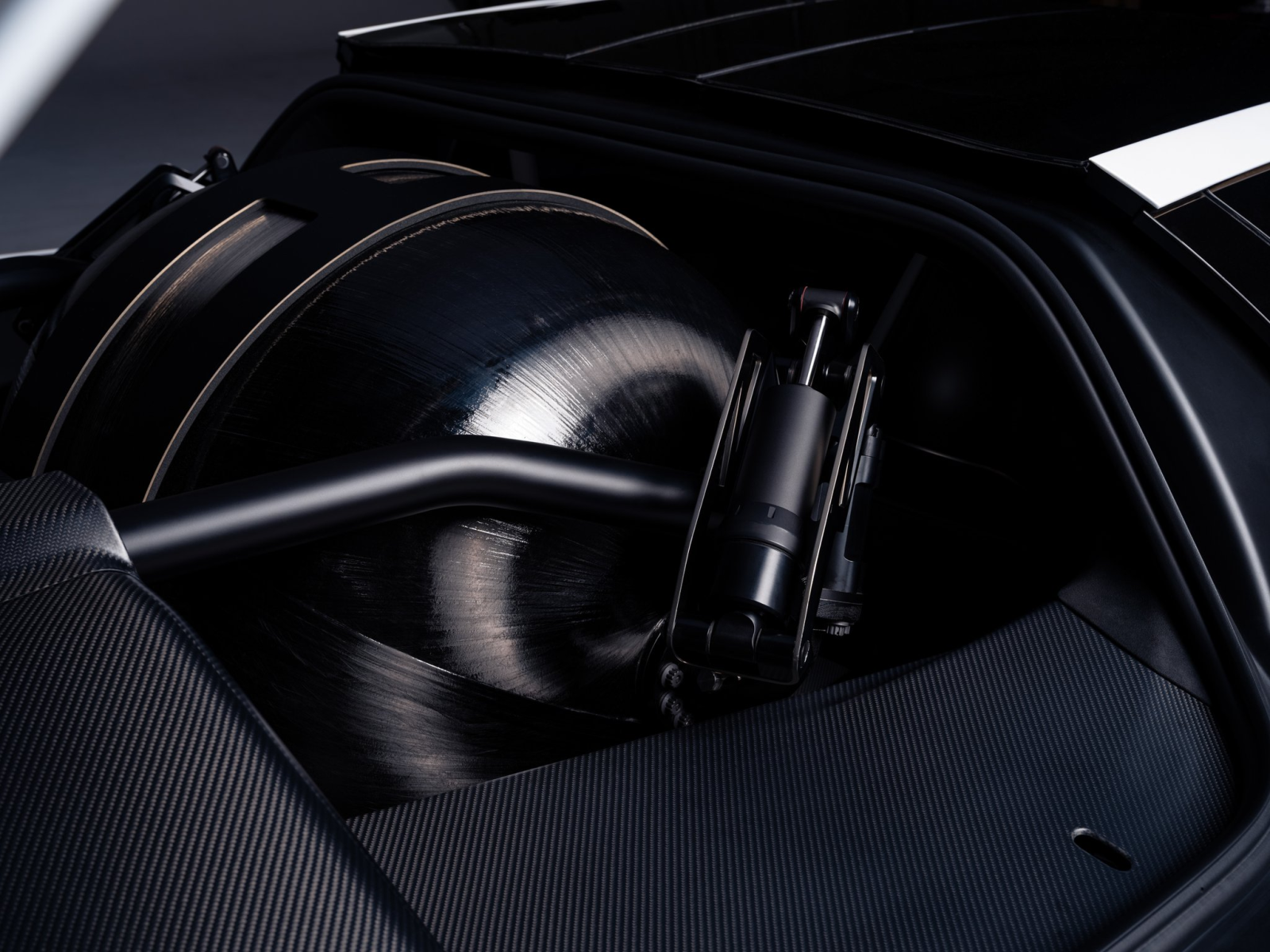
According to Tesla, adapting the SpaceX approach to a car required new hardware and controls. Compressed gas is stored in carbon-fiber-overwrapped pressure vessels. This technology needs space and dedicated systems inside the vehicle, so battery charge alone does not describe its operating limits. The information released does not establish a sustained flight duration or an airborne range. Tesla: vessels and thrusters
Sub-second acceleration — to which speed?
The demonstration included a claimed 0–60 mph time of 0.8 seconds. Converting 60 mph gives approximately 96.6 km/h, so this is not a 0–100 km/h figure. It is a manufacturer demonstration result; the cited report does not describe an independent instrumented test. Car and Driver
Tesla explains the thrusters’ role through the tires’ traction limit: the company says the system can generate several times the force the tires can transmit. The headline therefore extends beyond electric-motor output. Compressed gas supplies part of the additional accelerating force. A meaningful acceleration comparison also needs the test conditions and the extent of thruster use. Tesla: force and grip
Three configurations with different roles
| Configuration | Seats | Announced system and role |
|---|---|---|
| Performance | 2 | Active aerodynamics and multi-mode suction; the base configuration intended for road use. |
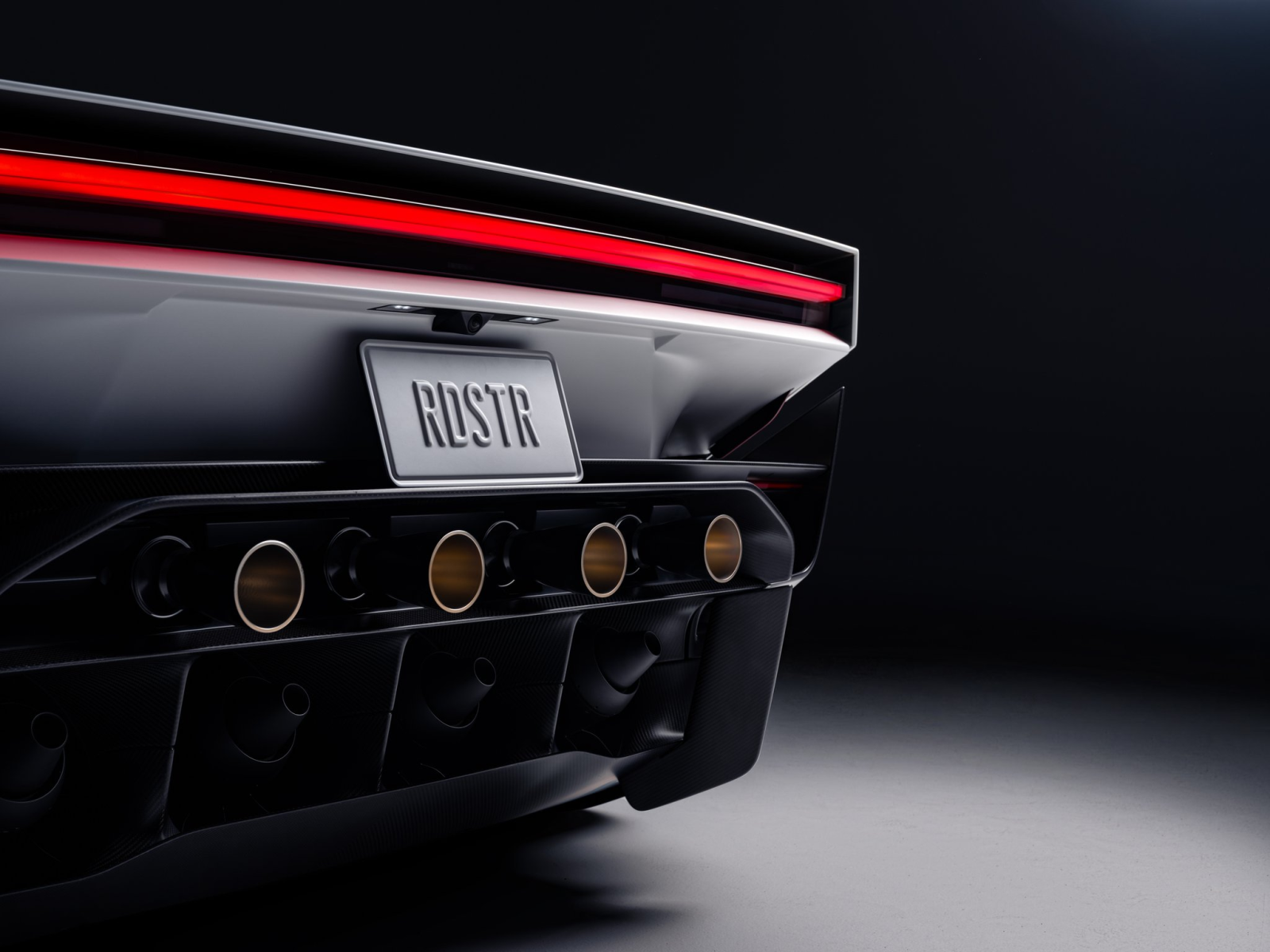
| Thrust | 2 | Rear cold-gas thrusters; a performance augment intended for track use. |
| Rocket | 1 | Thrusters around the body for upward and rotational motion. Not approved for public road use. |
Tesla’s official announcement describes the Performance and Thrust; Electrek’s report also records the Rocket details and its public-road restriction. The airborne stunt is therefore not a general capability of every Roadster configuration.
The design takes a new direction too
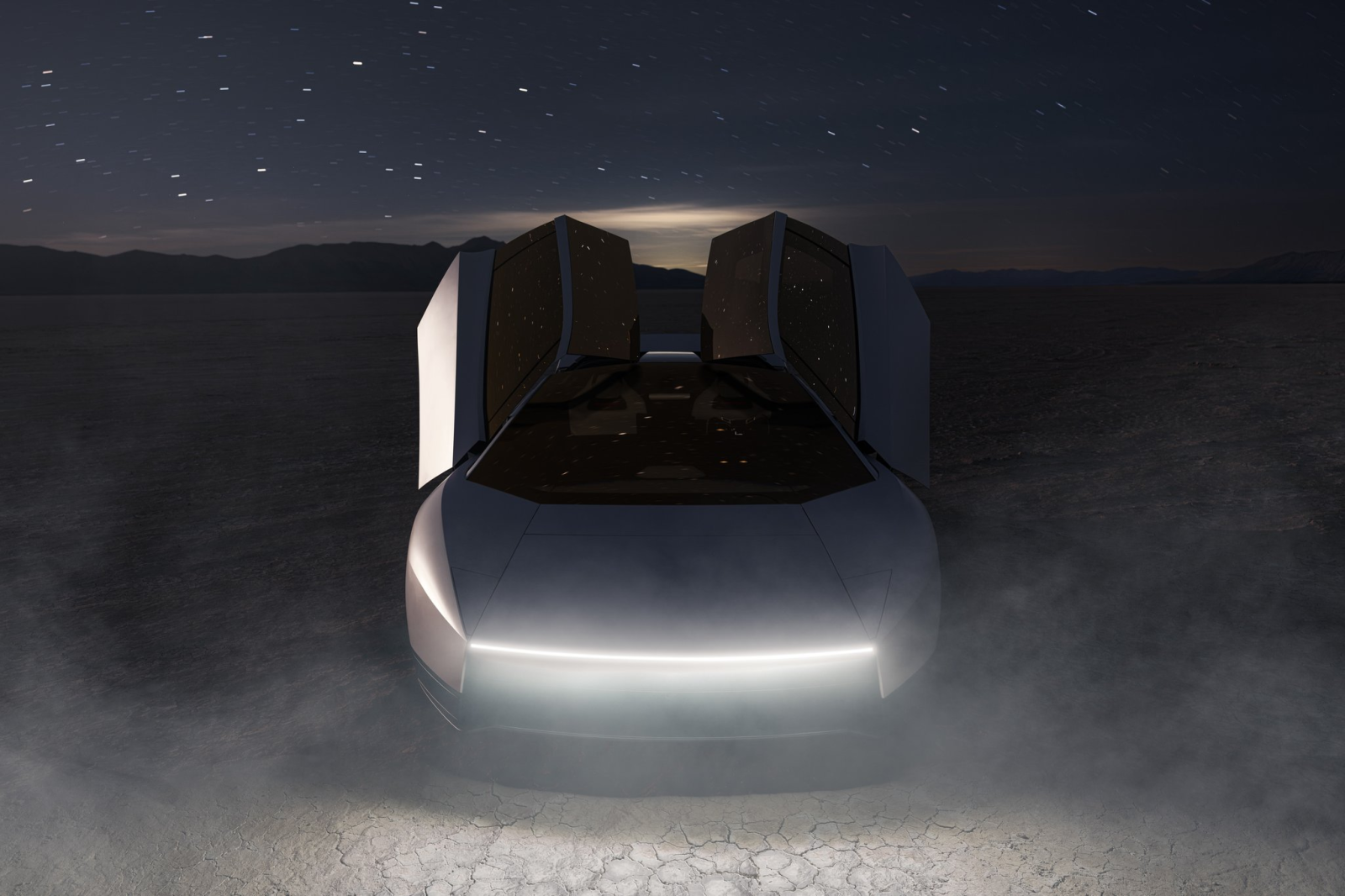
Tesla names the SR-71 and F-35 aircraft as design inspirations, linking the change to the design language of Cybertruck, Cybercab and Optimus. The official opening image shows an angular wedge-shaped body, a slim front light bar and upward-opening doors. Alongside the polished presentation imagery, visible engineering elements — including the rear thrusters — help define the car’s character. Tesla: design background
The manufacturer also uses the actuator system developed for Optimus to operate the active aerodynamics. Tesla says Track Mode transforms the car’s aerodynamic configuration. Comparable lap times and independent measurements will be needed to assess the size of the benefit on a circuit. Tesla: Track Mode
Production is the next major milestone
At the unveiling, Elon Musk put the start of production in 2028. That is the current target, not a guaranteed delivery date. Final pricing was not announced either. The Roadster is consequently both a striking technology demonstration and a product still in development: the next question is which final capabilities each configuration will offer, under what conditions, and when customers will receive it. Edmunds; Electrek
Sources10
- EFE — Tesla presenta un Roadster capaz de volar
- Car and Driver — Revealed! New Tesla Roadster Takes Flight with SpaceX Thrusters
- Tesla — Roadster design, official manufacturer post
- Tesla — Roadster configurations, official manufacturer post
- Tesla — SpaceX thrusters and pressure vessels
- Tesla — Thruster force and tire grip
- Tesla — Roadster Track Mode
- Electrek — Tesla unveils Cyberfied new Roadster that can kickflip
- Edmunds — Tesla Roadster Revealed: 0–60 MPH in Less Than 1 Second
- Tesla Gallery — official media-use terms