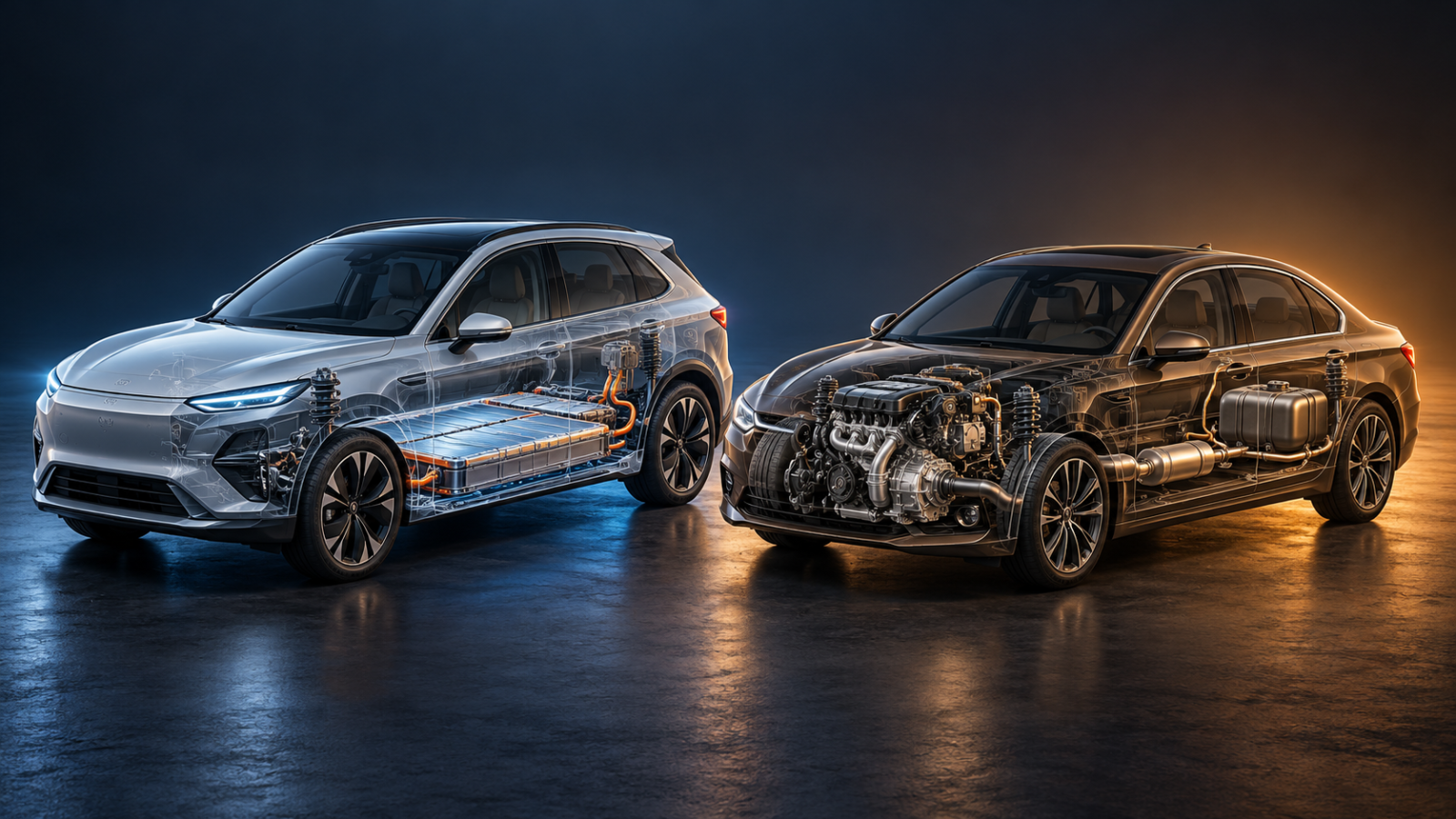
Four turbochargers, carefully matched gearing and all-wheel drive made the BMW M550d one of diesel engineering’s most striking showcases. Alongside it, imagine an electric family car that can carry the children and the weekly shopping after the acceleration run. Their claimed times to 100 km/h are less than a second apart. Petrol supercars, meanwhile, still set a very different pace.
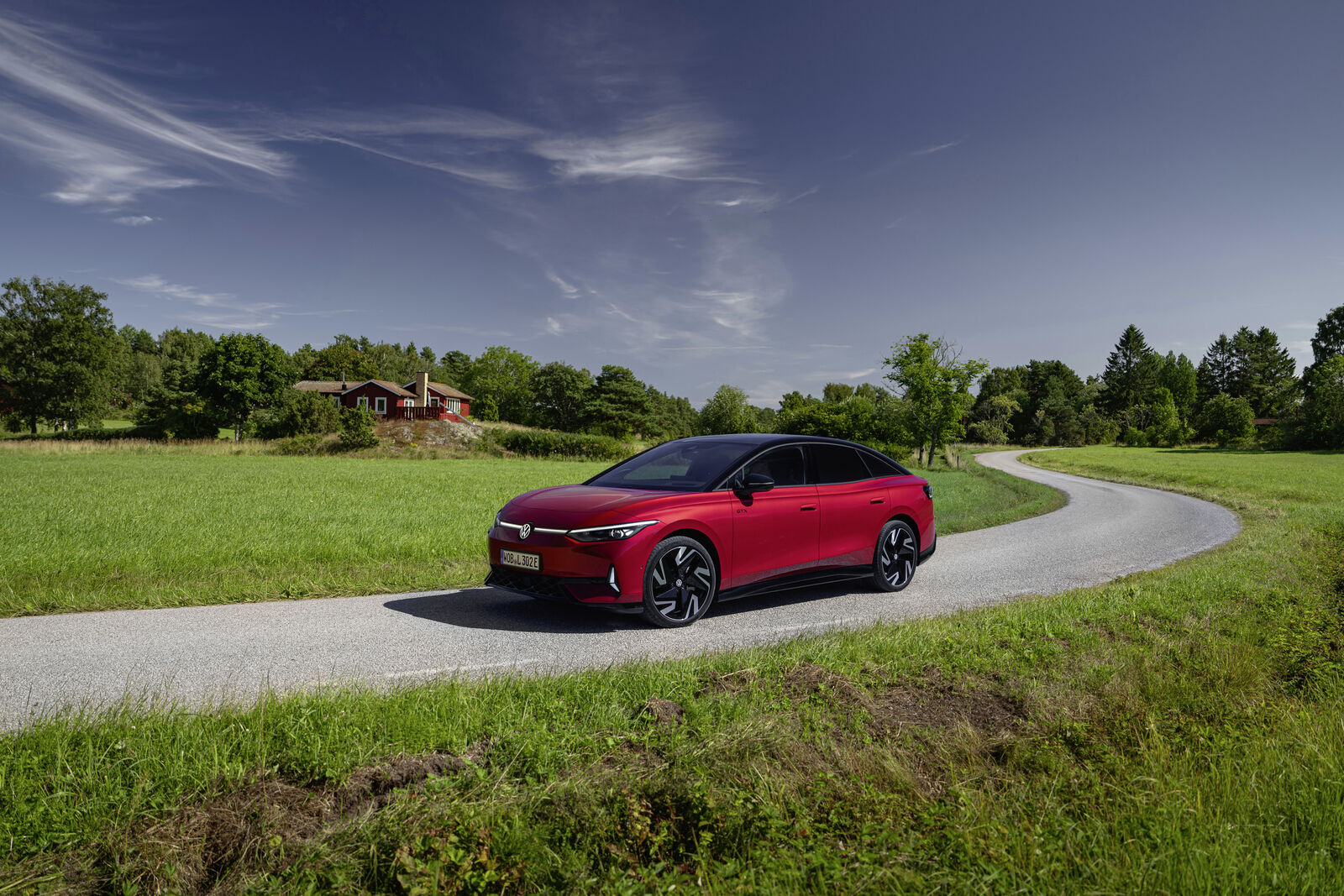
Our reference is the Hyundai IONIQ 5 84 kWh AWD: two electric motors, 325 PS and 0–100 km/h in 5.3 seconds. This is the all-wheel-drive family version, rather than the IONIQ 5 N. We also include the 340 PS Volkswagen ID.7 GTX, with a claimed time of 5.4 seconds. Both sit within the 4–6-second band now available in ordinary family-car body styles. Hyundai; Volkswagen.
Here, “ordinary EV” describes everyday usability. The 4–6-second band belongs to the more powerful part of the market; it is not a calculated average for all electric cars sold. The long-range, rear-wheel-drive version of the same Hyundai is a useful counterexample, taking a claimed 7.5 seconds. Naming the model alone is therefore insufficient: the powertrain version matters. Hyundai.
Six cars, one target speed
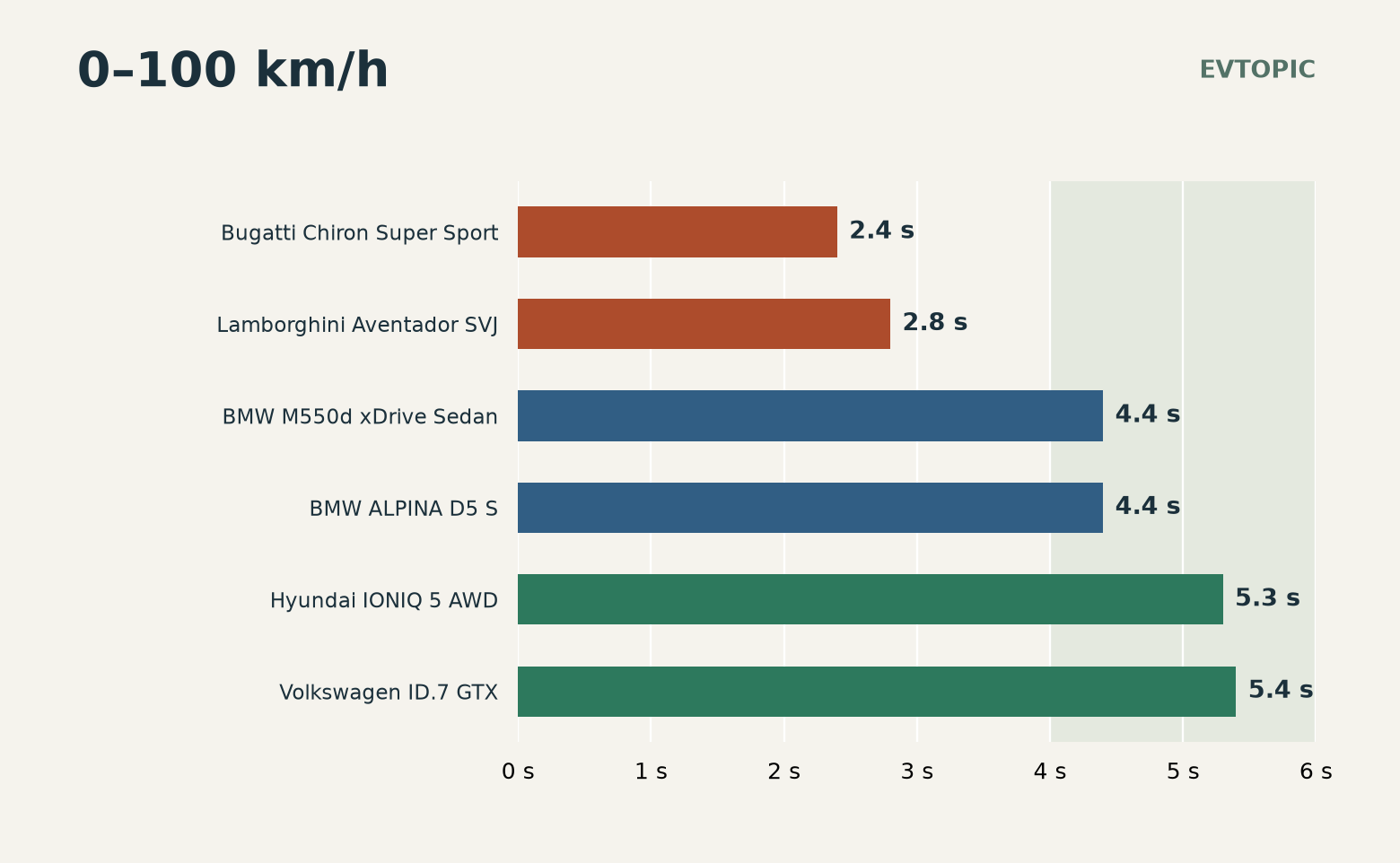
Every entry below is a manufacturer-claimed 0–100 km/h time. These are not results from a shared test session or a complete world ranking. The combustion-engine examples are two petrol-only supercars and two particularly quick diesel saloons. Earlier flagship models are compared with the current electric family-car category; each figure applies to the specific version named.
| Model and version | Powertrain | 0–100 km/h | Difference from IONIQ 5 |
|---|---|---|---|
| Bugatti Chiron Super Sport | Petrol | 2.4 s | −2.9 s |
| Lamborghini Aventador SVJ | Petrol | 2.8 s | −2.5 s |
| BMW M550d xDrive Sedan (2017) | Diesel | 4.4 s | −0.9 s |
| BMW ALPINA D5 S Limousine (2020) | Diesel | 4.4 s | −0.9 s |
| Hyundai IONIQ 5 84 kWh AWD | Electric | 5.3 s | 0.0 s |
| Volkswagen ID.7 GTX | Electric | 5.4 s | +0.1 s |
A negative difference means a shorter acceleration time; these differences are our calculations from the manufacturer figures. Sources: Bugatti technical specifications; Lamborghini; BMW; ALPINA brochure; Hyundai; Volkswagen.
Diesel flagships are within reach
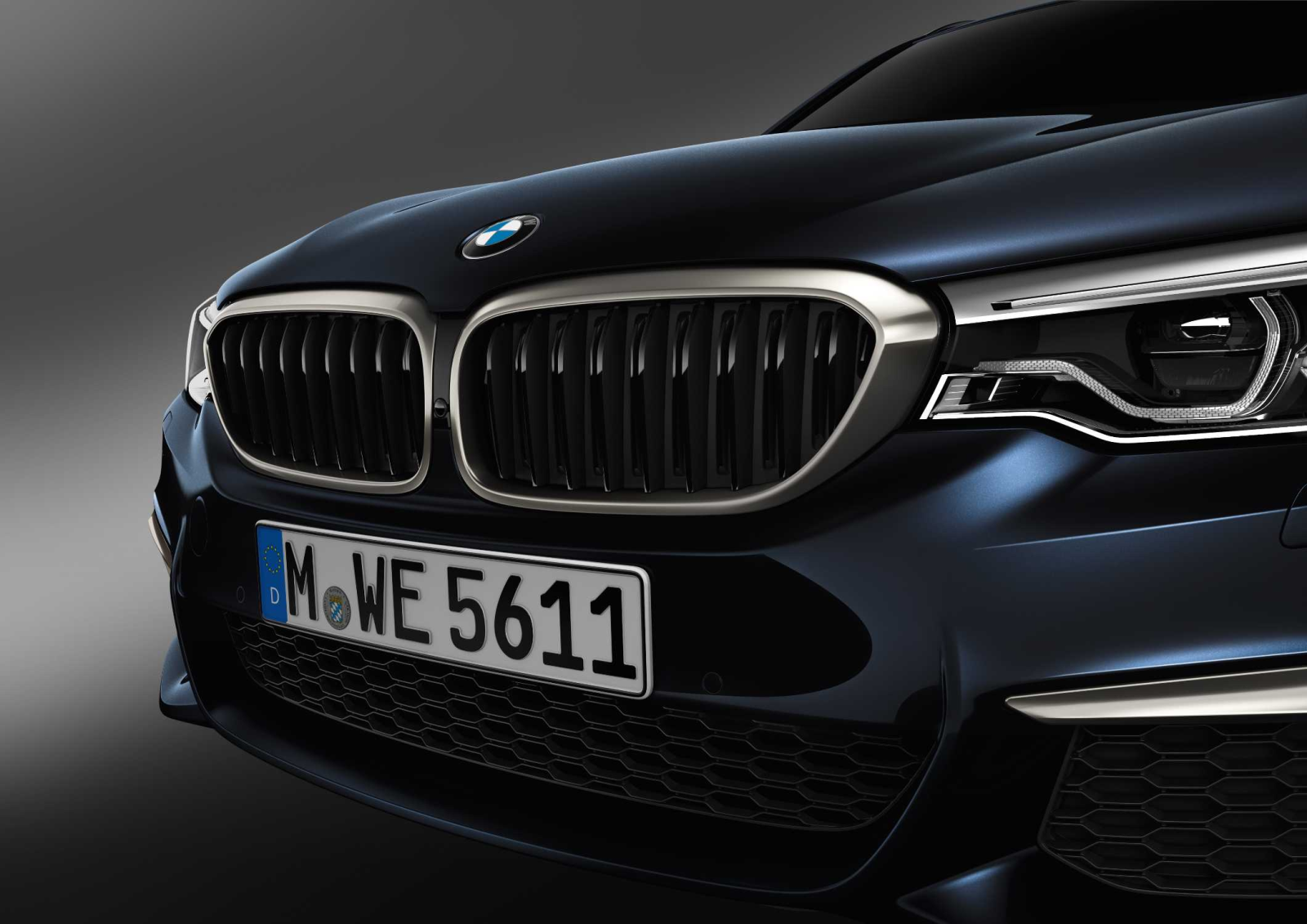
BMW extracted 400 PS and 760 Nm from the 2017 M550d’s three-litre straight-six diesel. Four turbochargers cooperate across different operating conditions, supported by an eight-speed automatic transmission and xDrive all-wheel drive. The manufacturer quoted 4.4 seconds for the saloon and 4.6 seconds for the Touring. Our table uses the quicker saloon. BMW.
The 2020 ALPINA D5 S brochure also gives the saloon a 4.4-second time. The IONIQ 5 therefore reaches 100 km/h 0.9 seconds later than either diesel. That is a meaningful acceleration gap: an EV taking around five seconds does not automatically beat the diesels. Yet it is striking that an electric family model can get this close to their upper tier. ALPINA.
The outcome changes across the 4–6-second band. An EV taking exactly 4.0 seconds would beat these diesels by 0.4 seconds, whereas one taking 6.0 seconds would trail them by 1.6 seconds. These are illustrative differences, not measurements of additional cars. A blanket victory claim for all electric vehicles would therefore miss the point.
Extreme petrol cars retain a huge advantage
The Lamborghini Aventador SVJ combines a 770 PS naturally aspirated V12 with all-wheel drive for a claimed 2.8-second sprint. That is 2.5 seconds less than the IONIQ 5 needs. Sound, styling and a low seating position can amplify the experience, but the figures alone make the difference clear: the electric family car is a long way behind. Lamborghini.
The Bugatti Chiron Super Sport has an eight-litre W16 producing 1,600 PS. Its November 2021 technical sheet lists 0–100 km/h in 2.4 seconds and 0–200 km/h in 5.8 seconds. Subtracting those figures gives just 3.4 seconds for the second hundred. This is a calculated interval, not a separate 100–200 km/h test. Bugatti technical specifications.
The Bugatti therefore needs only half a second longer to reach 200 km/h than the Hyundai needs to reach 100 km/h. Few comparisons illustrate the gulf more clearly. A 5.3-second electric sprint is strong in everyday terms, but insufficient against these extreme petrol machines. This compares specific cars; it does not establish the performance limit of electric propulsion.
Why can the electric car feel so forceful?
The response between pressing the accelerator and feeling the car accelerate is a different experience from the complete 0–100 km/h time. Rapid electric-motor torque build-up and uninterrupted delivery through a single-speed drive can feel particularly immediate. In a combustion car, the selected gear, any downshift, engine speed and, in a turbocharged engine, boost build-up also shape that response. A launch-control start can prepare and optimise many of those conditions in advance.
The torque figure in a brochure is not an acceleration ranking. Gearing converts motor or engine torque into wheel torque; wheel size, vehicle mass and usable traction also matter. High power does not guarantee a strong launch if the tyres cannot transmit it to the road. At higher speeds, available power and increasing aerodynamic resistance become more significant. A short sprint to 100 km/h cannot therefore establish high-speed superiority on its own.
The stopwatch shows only part of the picture
A fair instrumented comparison needs the same surface, similar weather, documented tyres and a consistent timing method. Battery state of charge and temperature can also affect an EV’s available power. Moreover, 0–60 mph ends at approximately 96.6 km/h, and some tests exclude the initial one foot of travel through rollout. We have not mixed those measurements with the 0–100 km/h figures in the table.
An 80–120 km/h test would add information about overtaking, a 100–200 km/h test about higher-speed acceleration, and repeated runs about sustained performance. We do not have a consistent set of such measurements for these cars, so we do not rank them on those measures. Purchase price, energy consumption, braking distance and lap time likewise cannot be read from a 0–100 km/h result.
The real change is how accessible strong acceleration has become in everyday cars. The quad-turbo M550d remains quicker than our chosen Hyundai, but the difference is only nine tenths of a second. A car from the quicker end of the 4–6-second electric band can move ahead of those diesel flagships. Lamborghini and Bugatti still demonstrate how far beyond that the extremes of combustion engineering reach: the family EV is reaching 100 km/h while the Chiron is approaching 200.
Sources6
- Bugatti Chiron Super Sport — technical specifications, November 2021
- Lamborghini Aventador SVJ — official model specifications
- BMW M550d xDrive — official 2017 introduction
- BMW ALPINA D5 S — 2020 international brochure
- Hyundai IONIQ 5 — 84 kWh AWD and RWD performance
- Volkswagen ID.7 GTX and GTX Tourer — international media drive, August 2024